Posted in Christian Living

On This Rock

PhotoFunia-river

When I was young, my Sunday school teacher explained that the Bible was such a great book, in part because it was too complicated for the most intelligent person to completely figure out and yet the simplest mind could understand its core messages.

By spending regular time in the Word, you discover that what you read can often be applied to whatever you are currently experiencing. Make Bible reading a part of your regular routine. For example, I read my Bible every day as I walk on my treadmill.

During the last week, my reading gave me several verses to help me cope with stress. They reminded me of God’s power and His intent to take care of me, no matter what bad happens to me in this world of evil.

When the psalmist says, “Make me hear sounds of joy and gladness; let the bones you crushed be happy again” (Psalm 51:8), I find someone who feels like I sometimes feel–beat down by the world’s cares but wanting to feel weightless again.

This feeling of reaching for the light is further emphasized in Psalm 51: “Give me back the joy of your salvation. Keep me strong by giving me a willing spirit (12).” I am reminded that I am supposed to have joy in this world because of my salvation through Christ, but that I need to have a can-do attitude that is willing to reach for peace when I feel most tumultuous.  If I choose to find joy in my salvation, God will help me rise above the challenges of day-to-day living.

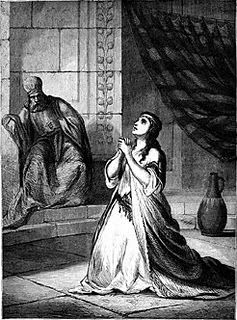
Hannah Praying for a Baby

Do you remember the story of Samuel? His mother, Hannah, was barren, ridiculed by her husband’s first wife because Hannah could not have children. In a culture where children were the measuring stick of success, Hannah was an abysmal failure. In the psalmist’s terms, her bones had indeed been crushed.

Hannah could have wallowed in despair. Instead, she poured her sorrow out before the One who could help her. She promised God to dedicate her child to His service if she ever had one. Shortly after Hannah’s heartfelt plea, God indeed blessed her with a son, Samuel, who later became a renowned leader of the Jewish people.

In thankfulness for her blessing, Hannah sings a song of praise, in which she says:

There is no one holy like the LORD. There is no God but you; there is no Rock like our God. (1 Samuel 2:2)

God had indeed served as Hannah’s rock. Her faith in Him helped her survive years of being barren and blessed her finally with children.

As a person with anxiety, I too must strive to make God my Rock, especially on my bad anxiety days.

How does God as your Rock look? To me, He is the boulder held fast in the midst of a raging river. The mist of roiling water might soak me eventually, but I will not drown. No matter how high the water rises, my Rock will always rise above it.

And rising higher still than the rapid water is the clear, blue sky that stands for the joy of my salvation, for the ultimate gift of a loving God that makes this life livable.

If you don’t already, make Bible reading one of your daily habits. Build upon the Rock of your salvation with the Word of God. You will always find something of use in your daily life there.

Posted in Writers, Writing

Resources for Writers

PhotoFunia-writers write

If you love to write for the sake of writing, then you will find a way to write no matter what.

If you think that you have the great, American novel in you, there are plenty of people out there willing to take your money with the promise of helping you somehow get there.

What I love about this internet world that we live in is that we all can write and reach a fairly wide audience as long as we are willing to share our writing while knowing we may never see monetary remuneration, but only know the intense satisfaction that comes when even one person other than a blood relative has read something of ours and been moved by it.

Through the last few years of writing a blog, self-publishing novels, and studying marketing for my day job, I have come across several free services and tools that may help others with their writing goals. Here are some of these resources:

To Publish:

Kindle Scout:

If you’re willing to release some control of your book for the sake of potential exposure to readers, this program through Amazon might be the ticket. Basically, Scout allows you to put your story in front of potential readers, who vote on the books they would like to see published.

I have opted to try this for my latest project, Camden Meets His Match, which is a continuation of my last book, The Texas Stray.  You can check out my campaign page here. Thanks in advance for taking a moment to check out my book and, hopefully, vote for it.

Even if you don’t get published through the Scout program, you can e-publish your book by creating a direct account with the major publishing outlets: Barnes and Noble, Amazon, and Itunes. Amazon has created an e-book on how to format your book for Kindle that will help you create  novel pdfs that are compatible with any E-Reader.

PhotoFunia-Camden

Lulu:

There are several direct publishing houses on the internet. These publishing houses practice publishing on demand, so that you can have a physical copy of your book. They literally wait to publish a copy of your book when the book is actually ordered.

I have used Lulu.com for this process in the past. Besides providing the hard copy book, Lulu also has made my books available in the major outlets for either hard or electronic copies. The only cost to the writer is ordering one copy of your book to approve before Lulu distributes the finished work.

As long as you are comfortable with your editing abilities and cover design, you can create your own book with this resource without having to pay exorbitant fees.

To Market:

Internet:

If you want to have an internet presence, you need a website (like a blog), an email where readers can reach you, and at least one social media account. Each blog you post should also post on your social media sites. Most PR people would also insist you have an email list where you can send newsletters to potential readers.

Obviously, WordPress offers what I think is the best platform for blogging. I maintain a free site for my writing, but I have also created a paid site for my day job. Both have found readers and are easy to study stats, key words, etc. Google also offers a free blog service called Blogspot.

A Facebook page costs you nothing unless you decide to advertise your page. Postplanner is a low cost Facebook service that helps you find interesting things to post if following other pages isn’t sufficient for you.

If you have more than one Google+ page like I do, you might want to check out Hootsuite, a service that allows you to schedule posts for Google+ pages.

Constant Contact is a great email service, though it costs you according to how many people you have on your email list. Speaking of email, do you have your blog or web address listed in the signature line of your personal and business email? This is a simple, often overlooked, way to promote your author endeavors.

PhotoFunia-share what you love

Business Cards:

With sites like Office Depot and Vistaprint.com, you can create very professional business cards that promote a particular project or yourself as an author at rather inexpensive cost to you. These can be handed out at events you attend, in your daily course of living, and left at cooperating businesses. Let people know where they can find your books, where to find you on the web, and even your author email address in case they need to communicate with you directly.

The Library:

People do still get books from the local library. I visited my local branch and donated a copy of my first two books. After a review process, they went onto the circulating shelves. Now, I show up in any search of the library catalog, and I have made my books available to even more readers.

Pictures:

There are so many wonderful programs for designing graphics, many of which are free (especially for noncommercial use). Here are just some of the programs I have used:

  • Canva.com–graphics and pictures. Some elements cost money, but if you don’t use them, the service is free. Also, the graphics are available in pre-set sizes, including Kindle book covers!
  • Photofunia.com–upload your picture into pre-designed graphics like bulletin boards, canvases, etc. The site also has several pictures that just take text to help you make a quick graphic for a blog post.
  • Picmonkey.com–fun picture editor that has a free and paid version.
  • Freedigitalphotos.net–gobs of stock photos you can use for FREE as long as you follow the attribution requirements.

Whenever I search for images online, I always use the extra search tools in whatever search engine I am using to narrow down the search to those images which are public domain or otherwise valid for my use (not protected by copyright). I have never worried about my own images enough to figure out how to set the copyright for myself, but it’s worth some investigation if you put a lot of effort into your picture and graphics work.

Other Resources:

I have found quite a few of the tricks I have mentioned here through a couple of emails I get each week: Author Experts and Publicity Hound.

Goodreads is another great resource to connect with readers. You can easily create an author page, make your books available to readers, etc. through this free organization.

Finally, I’m convinced that Amazon has some of the best SEO practices on the planet, which means establishing an author page with them is very helpful. They send regular emails with helpful tips. You can also increase traffic/interest in your own site by doing other authors the great favor of reviewing their books.

This is not an exhaustive list by any means, but hopefully I’ve mentioned a few resources you did not know about. Also, please share any resources you regularly use that I have failed to mention.

If you don’t enjoy writing, do something else. If you do enjoy writing, make full use of the variety of resources available to modern writers to make your finished works the best they can possibly be.

 

Posted in Christian Living, Faith

Are You A Weed?

photo books

There are two kinds of people in this world: those who bear fruit for God and those who do not. In the parable of the tares, Jesus defines these two types of people as the wheat and the weeds. Even though they are both sown at the same time, God waits until the harvest to separate the two.

What does it mean to be wheat instead of a weed? What does bearing fruit for God look like? Paul tells the Ephesians:

For we are God’s handiwork, created in Christ Jesus to do good works, which God prepared in advance for us to do. (Ephesians 2:10)

Good works may best be understood as James defines it: “Religion that God our Father accepts as pure and faultless is this: to look after orphans and widows in their distress and to keep oneself from being polluted by the world” (1:27). The more we do things to honor God and extend the mercy He has shown us to others, the more practically we ensure that we are growing into wheat, the fruit of the harvest, instead of the weeds to be burned when the harvest is done.

Becoming wheat involves a conscious decision every day to do the will of God. Joshua puts it this way:

Now respect the LORD and serve him fully and sincerely. Throw away the gods that your ancestors worshiped on the other side of the Euphrates River and in Egypt. Serve the LORD. But if you don’t want to serve the LORD, you must choose for yourselves today whom you will serve. (Josh 24:14-15a)

These words were spoken as an entreaty to the Israelites who had conquered the promised land with God’s help. They promptly swore to serve the God who had led their ancestors out of Egypt. But, as the story continues, the people very quickly forget this sincere promise, turning to the very gods they had sworn to Joshua to forget.

photo tv

How easy it is to become distracted from the promise of heaven by the immediacy of the material things in this life. Just like the Israelites, we too place more importance on things than on our devotion to God. But we don’t have to be that way.

Being wheat instead of a weed can be as simple as having bottles of water to hand to the beggar on the side of the road, spending a few hours each week visiting a nursing home, sending cards to people who are recovering or serving overseas. Being wheat means embracing Jesus’s imperative that we love others as we ourselves wish to be loved.

At first, risking looking stupid by extending a part of ourselves to strangers will be scary. Pray about it. Remember that God promised us that the Holy Spirit will give us words even when we have none. Know that even when we look most stupid in the eyes of the world, we may be shining the brightest in the kingdom of heaven.

James contends that faith without works is a dead faith:

What does it profit, my brethren, if someone says he has faith but does not have works? Can faith save him? If a brother or sister is naked and destitute of daily food,  and one of you says to them, “Depart in peace, be warmed and filled,” but you do not give them the things which are needed for the body, what does it profit? Thus also faith by itself, if it does not have works, is dead. (James 2:14-17)

If you really believe on a loving God who died to save you, James is saying, then how could you not do good things for other people? How could you not put love first when God’s love for you is your only chance for eternal life?

Extend some living water to those who are thirsty around you. Be wheat.

Posted in Christian Living, Faith

The Sower of Seeds: A Parable of Jesus

PhotoFunia-grain

Jesus often taught His lessons to the masses in the form of parables–spiritual truths gleaned from comparison to everyday experiences using analogy.  The parable of the sower of seeds is one such parable, which gives us a good picture of the different kinds of responses that are possible to the message of Christ.

The sower’s seeds fall on four different kinds of ground:

  1. Beside the road
  2. On rocky places
  3. Among thorns
  4. On good soil.

The seeds beside the road never have a chance to grow because the birds eat them up before they can take any root.  These represent people who have no response to the message of salvation.  They hear His Word but don’t understand because Satan snatches the message away before they have a chance to believe.

The seeds that land on rocky places spring up quickly, but have no roots.  Without roots, these same seeds just as quickly whither when the sun beats down on them. These seeds represent the emotional response to the Word. The rocky soil person hears God’s Word with joy, but because he has no root in himself, he gives up at the first challenge to his faith.

The seeds among thorns spring up, but get choked out by the thorns that surround them. This is a worldly response to the Word. Even though this person allows the seed to grow, very soon the worries of this world, the charms of wealth, and the pleasures of this world choke out the core message of the Word.

The seeds on good soil yield crops one hundred, sixty, thirty times the quantity of the original seed. These seeds represent the fruitful response to the Word, those people who understand Christ’s Truth and act in such a way as to bear fruit for the Kingdom of God because of that belief:

“But the seed in the good soil, these are the ones who have heard the word in an honest and good heart, and hold it fast, and bear fruit with perseverance.” (Luke 8:15)

Even though we cannot earn salvation, once we attain salvation through our faith, we don’t have any choice but to do the works that are the natural result of a true faith. The Ryrie Study Bible (NASB) explains it this way: “Both Paul and James define faith as a living, productive trust in Christ.” James writes,

What use is it, my brethren, if someone says he has faith but he has no works? Can that faith [which is a dead faith] save him? . . . You believe that God is one. You do well; the demons also believe, and shudder. But are you willing to recognize, you foolish fellow, that faith without works is useless? (James 2: 14, 19-20)

The seeds in good soil bear fruit, whether that is taking a meal to a widow or paying a compliment to a perfect stranger to brighten someone’s day. Any action that reflects the light of the Lord takes a step in faith of bearing fruit. “For just as the body without the spirit is dead,” James concludes, “so also faith without works is dead” (2:26).  To grow our roots, we have to work to create the good soil that will foster our faith in the One and Only.

Perseverance is the key to making the parable of the sower a reality in your own life. Without perseverance, you might let the worries of this world choke out your faith. Without perseverance, you might fail to attain the roots you need to hold on to your faith when the troubles of this life challenge you. We fertilize our good soil by studying the Word, praying continually, and finding fellowship with other believers.

In good soil, we can truly persevere to bear fruit that is the end result of a faith that is fully awake.

*Note: The parable of the sower, made during Christ’s sermon on the seashore, can be read in Matthew 13:5, Mark 4:3-8 and Luke 8:5-8.

Posted in Christian Living

This House Divided

House divided

Rather than take away tomorrow’s trouble, worry voids today’s strength.  –Max Lucado, from Come Thirsty

Everyone talks about worry being a waste of time, but my morning reading pointed out to me a much more compelling reason to avoid this wasteful habit.  Worry actually divides my mind, keeping me from putting everything I have into today.

When Christ spoke about a house divided, He meant a couple of different things.  One time, He uses this metaphor to argue against the accusation that He is from the devil since He could cast out demons.  Why would Satan, Jesus reasons, do something to hurt himself?  Another time, Christ uses this metaphor to explain why it is so important to put our whole selves into the pursuit of our love of God instead of being distracted by the things of this world that tarnish and will do us no good in heaven.

When worry takes my mind away from the things of today, it also takes me away from my closeness to Christ.  I want to be engulfed in that closeness, not separated from it, for as Paul explains:

Don’t worry about anything, but pray about everything. With thankful hearts offer up your prayers and requests to God.  And God’s peace, which is so great we cannot understand it, will keep your hearts and minds in Christ Jesus.  (Philippians 4:6-7)

Paul’s words give us the steps for living what contemporary thinkers term “with mindfulness:”

  1. Pray about everything– I need to concentrate on what is happening to me and around me in every moment.  When we pray about something, we naturally focus our minds to what is most important.  By voicing what concerns us to God, we might even realize how ridiculous some of our concerns actually are.
  2. Be thankful– Gratitude makes us be more truthful with ourselves.  Often, my inner voice tells me things that are downright lies, but it can be hard to call myself on these unless I bring my mind to what is actually true.  When I take the time to name the many things I have to be thankful for, I inevitably unearth some of the lies I have been letting my worries tell me.
  3. Never stop– Paul says not to pray at certain times of the day or week, but about everything. It is possible to have hearts and minds that are in Christ as long as we actively engage our ability to foster our relationship with our Father.  We cannot be thankful and worry at the same time.  If we bring our concerns to God in prayer, we will find that what was a worry is overshadowed by the peace that is found in the presence of Christ.

How often because of worry have I raced through a day without giving full attention to really living it?  By being a house divided, I have lost many opportunities to fully participate in the gift of life God mercifully grants to each of us.

The next time I catch myself being engrossed more by my worry than by the beauty of the day, I think I will imagine the scene from II Kings, where Elisha and his servant face a horde of enemies, assured of victory because of the “invisible” army of fiery chariots prepared to defend them:

When the servant of the man of God got up and went out early the next morning, an army with horses and chariots had surrounded the city. “Oh no, my lord! What shall we do?” the servant asked. 

“Don’t be afraid,” the prophet answered. “Those who are with us are more than those who are with them.”

 And Elisha prayed, “Open his eyes, Lord, so that he may see.” Then the Lord opened the servant’s eyes, and he looked and saw the hills full of horses and chariots of fire all around Elisha. (II Kings 6: 15-17)

Just as God protected Elisha, we are assured that He also has our best interests at heart.  He will be there for us during good times and bad.  He did not design us to worry, but to follow the two commands that Jesus said summed up everything:

He answered, “‘Love the Lord your God with all your heart and with all your soul and with all your strength and with all your mind’; and, ‘Love your neighbor as yourself.’” (Luke 10:27)

If I am truly working to follow both these important instructions, what time do I have to worry?  Indeed, if I truly love God with everything I have and then extend that love to others, when will I ever have time to worry?

A mindful life is truly a house undivided, unified in its goal to love God, obey His commands, and be thankful.  May your prayers leave you with a mind unified in the love of Christ.

Posted in Faith

This Voice of Truth

PhotoFunia-Music

God moves in mysterious ways, His wonders to perform.

Have you noticed how God often reaches out to you in ways and in places where you least expect Him to?  Maybe He allows you to barely miss having an accident on the road.  Maybe He has a stranger compliment your appearance on a day when you are feeling low.

Earlier this week, He reached out to me through the words in a familiar song when I flipped from the ’50s station on my Sirius to our local Christian station, KSBJ.  The song was Voice of Truth by Casting Crowns, and the words that really spoke to me come from the chorus of this Christian staple:

But the voice of truth tells me a different story
The voice of truth says, “Do not be afraid!”
The voice of truth says, “This is for My glory”
Out of all the voices calling out to me
I will choose to listen and believe the voice of truth

I’m sure this song speaks to you whether you are just dangling your toe in the water or have fully immersed yourself into the Word of God, but for those who really know their Bible, the depths of this chorus speak to promises God’s Word makes for all who believe in Christ.

First, when you hear the encouragement to not be afraid, you must reflect on verses like:

Peace I leave with you; my peace I give you. I do not give to you as the world gives. Do not let your hearts be troubled and do not be afraid. (John 14:27)

Therefore do not worry about tomorrow, for tomorrow will worry about itself. Each day has enough trouble of its own. (Matthew 6:34)

“Are not two sparrows sold for a cent? And yet not one of them will fall to the ground apart from your Father.  But the very hairs of your head are all numbered. So do not fear; you are more valuable than many sparrows.” (Matthew 10:29-31)

Second, the phrase, “this is for my glory,” reminds you that God can turn even our most dire circumstances into an ultimate good:

And we know that in all things God works for the good of those who love him, who have been called according to his purpose. (Romans 8:28)

And we all, who with unveiled faces contemplate the Lord’s glory, are being transformed into his image with ever-increasing glory, which comes from the Lord, who is the Spirit. (2 Corinthians 3:18)

The heavens declare the glory of God; /the skies proclaim the work of his hands. (Psalms 19:1)

In a world full of voices–the voices of the media, the voices on the internet, the voices of teachers, family, bosses, coworkers, friends–it is important to remember that the voice of truth comes, not from any of these earthy realms, but from the Logos of Heaven.

When I say, I can’t cope, the Voice of Truth says, We cope together. When I try to figure out what I will do about a potential problem two weeks from now, the Voice of Truth says, Concentrate on today and let tomorrow be My concern. When I think, what’s the point, anyway, the Voice of Truth says, Your greatest joy will come when you know that your life helps to glorify your Heavenly Father.

The last line of this wonderful chorus is perhaps the most important because it emphasizes the key element of a life lived to the full glory of God.  I choose to say no to the negative things that I hear either from my own voice or from others.  I choose to know the truth that is written in the Bible and to lean on that truth instead of the “crazy” things that often go through my own, type-A head.  I choose to believe that God’s Word has more validity than my fears.

I was blessed to be reminded that my current trials are part of God’s greater plan for a world where He wants each one of us to accept Him as Savior.  I may not be able to see right now how He will use my difficulties to glorify His name, but I feel more confident about facing each new day in the knowledge that God has the ultimate hand in my life.  No planning I can do will change what He wills.

For your edification, here is the complete lyrics of this great song.  I hope you have the opportunity to listen to it for yourself soon:

Voice of Truth

By Casting Crowns

Oh what I would do to have
The kind of faith it takes
To climb out of this boat I’m in
Onto the crashing waves

To step out of my comfort zone
Into the realm of the unknown where Jesus is
And He’s holding out His hand

But the waves are calling out my name
And they laugh at me
Reminding me of all the times
I’ve tried before and failed
The waves they keep on telling me
Time and time again. “Boy, you’ll never win!”
“You’ll never win!”

[Chorus]
But the voice of truth tells me a different story
The voice of truth says, “Do not be afraid!”
The voice of truth says, “This is for My glory”
Out of all the voices calling out to me
I will choose to listen and believe the voice of truth

Oh what I would do to have
The kind of strength it takes to stand before a giant
With just a sling and a stone
Surrounded by the sound of a thousand warriors
Shaking in their armor
Wishing they’d have had the strength to stand

But the giant’s calling out my name
And he laughs at me
Reminding me of all the times
I’ve tried before and failed
The giant keeps on telling me
Time and time again. “Boy you’ll never win!”
“You’ll never win!”

But the stone was just the right size
To put the giant on the ground
And the waves they don’t seem so high
From on top of them lookin’ down
I will soar with the wings of eagles
When I stop and listen to the sound of Jesus
Singing over me

I will choose to listen and believe the voice of truth

© HALL, JOHN MARK / CHAPMAN, STEVEN CURTIS
For non-commercial use only.
© Sony/ATV Music Publishing LLC
For non-commercial use only.
Posted in Faith

What If You Choose?

PhotoFunia-ChooseFaith

What does faith look like?

I don’t think we really know what faith looks like in ourselves until we are faced with the kinds of challenges we least want to face.  Perhaps, this truth is why Paul tells the Romans:

And not only this, but we also exult in our tribulations, knowing that tribulation brings about perseverance; and perseverance, proven character; and proven character, hope; and hope does not disappoint, because the love of God has been poured out within our hearts through the Holy Spirit who was given to us. (Romans 5:3-5)

Challenging times are the reason why living as much like Christ as possible even during regular times is so important.  The more your Christianity is a way of life, the less likely you will allow stressful times to direct you away from God.

I have been paying particular attention to the ways that other people with challenging times handle them lately because I am personally juggling so many things.  Those Christians I’ve observed who seem to stay close to Christ during hard times share a unique trait.  They have the distinct ability to choose to love Christ and follow His ways, no matter how many bad things happen to them.  Here are three examples of this choosing ability:

  1. The author, Charles Martin, on blogging about his natural fears about his dad’s serious cancer diagnosis, concluded, “Lord, the promise of Your Word is truer than my fear.”  Instead of blaming God for his dad’s illness or giving in to doubt, Martin reminds himself that the Bible is full of promises that God has our back, even when we are at our lowest point.  God promises us peace, a burden that is light, and to keep our paths straight.  David writes, “For he will hide me in his shelter in the day of trouble; he will conceal me under the cover of his tent; he will lift me high upon a rock” (Psalm 27:5).
  2. A young woman of my acquaintance who is a generation younger than I am has been teaching me quite a few lessons about choosing lately as she shares her challenges about the divorce her husband insists on getting from her.  One day, she talked about how low she had been feeling earlier in the day.  The only way she was able to lift her mood was to remind herself that she had joy in Christ to claim that she was not going to let Satan steal from her.  I was profoundly moved by this attitude that shows such a spiritual maturity.  So many times, I forget to claim the joy that is believing in Christ because I am busy worrying.  My young friend’s reminder that the devil is a real person who takes every opportunity to get between me and God was a strong lesson in the power of our ability and need to choose.
  3. Finally, a good friend said to me the other day that “sometimes you just have to adopt a Pollyanna attitude.” As a Christian, that means I need to embrace the promise God makes to work all things to the good for those who believe in Him (Romans 8:28).  Every time I have a negative or worrying thought, I can choose to stop myself and believe instead that God will help me through whatever happens to me.  I cannot expect to live a life without challenges, but if I choose to look at those challenges with a positive attitude, I am that much closer to persevering and feeling the love of God.

Choosing to believe that God loves me is what it means to walk by faith.  But that choosing isn’t just a one-time thing.  I have to make choices every day, from moment to moment, about how I will think and what I will do that will keep me close to God, which means grabbing the peace that is the promise of Christ.

Posted in Faith

Like Walking THROUGH Water

air-bubbles-230014_640

I believe:

  • God will work all things to the good for me.
  • I am never alone because I have accepted Christ as my Savior.
  • The LORD is my shepherd, my rock, my soft place in the Valley of the Shadow.
  • (As writer Charles Martin puts it:) The promise of His Word is truer than my fear.

I believe all of these wonderful things about our God in Heaven, and yet, like the man who proclaimed to Jesus, “I believe; help me with my unbelief,” I struggle daily.


When God parted the Red Sea for the Israelites to escape the Egyptians, He created a metaphor for a daily walk in this Fallen world, especially for a person like me who struggles with an anxiety disorder.

For example, living with anxiety is like walking between those two walls of parted water, having to believe that I will not drown, that the only way I will get wet is from the spray that is inevitable when that amount of water is being held back only by the invisible hand of a mighty God.

Just as the Israelites had to step through that muddy surface that must have been the bottom of a sea now exposed, I often feel that every step I try to take forward, I am being held back by the mire.  Besides slowing me down, my anxiety is like constantly looking back to make sure that I haven’t left a shoe in the mud.

When you are constantly anticipating how things in your life can go wrong, it’s also like feeling the breath of the enemies’ chariot horses snorting behind me as I hurry to reach my goal of the other side of a sea I shouldn’t even be able to walk across.

On really bad days, even breathing as I strain to see the other side of the sea proves difficult. Most of the time, I don’t even realize that my breathing has been shallow until the end of the day when my shoulders really scream at me.

And then there are the days when I am not even really able to see my goal.  On these days, only my sense of responsibility and the learned discipline of a lifetime of this anxiety battle help me put one step in front of the other.

But what would it look like if I could go through all of that and really live my belief?  What if I would fully trust that God is holding the water back until I reach the other side of my challenges?   What if I fully embraced the knowledge that God works to the good all things for those who trust in Him, as Paul writes in his letter to the Romans?

Someday, hopefully sooner than later, I will know what a walk across a parted sea looks like on a daily basis instead of the fragmented moments I can claim this day.  Until that day, I will continue to study His word, pray to Him, fellowship with other believers, and consciously seek to be saved from my unbelief.

“To learn strong faith is to endure great trials. I have learned my faith by standing firm amid severe testings.” ~ George Mueller

Posted in Christian Living, Love

For Those Whom We Remember

PhotoFunia-especially love

The people who make a difference are not the ones with the credentials, but the ones with the concern.  –Max Lucado, And The Angels Were Silent

In a world where a YouTube video can make a dancing toddler or wacky kitten “famous,” it doesn’t hurt to step back every once in a while to gain some much-needed perspective.  Max Lucado gives this perspective with just a few questions:

  • Can you name the last five Nobel Peace Prize Winners?
  • How about the Pulitzer Prize Winner from last year?
  • Name five people who had a profound impact on your life.
  • How about ten people you have a great memory about?

Like me, I’m sure you had a difficult, or impossible, time with the first two questions, but a much quicker response to the final two questions.  Lucado explains that the difference in your ability to answer these questions comes from the value of the second set of people in your life.

Nobel and Pulitzer Prize winners may be the best in their area of expertise, but knowing how to write a profound play, ultimately, doesn’t mean as much to me as experiencing the helping hand I really need from a person who knows me and cares enough to do something for me.

Isn’t the difference between credentials and concern summed up in Hosea, in the verse that Christ repeats during one of his encounters with the Pharisees?:

If you had known what these words mean, ‘I desire mercy, not sacrifice,’ you would not have condemned the innocent (Matthew 12:7).

The truth of Christ’s sacrifice for us is that God’s main desire is not the continued spilling of blood (Christ gave the ultimate sacrifice for us once and for all on the cross), but our earnest striving to be kind, to love, to show concern.

How do you measure your success?  Do you spend too much time, like I often fall into the trap of doing, measuring yourself against the kinds of jobs other people have, or what’s in your bank account, or what kind of clothes you wear?  Even when you think you are trying to measure yourself according to God’s standards, do you fall into the trap of thinking bigger is better?  In other words, if you aren’t building a church or working on a mission trip, do you consider yourself a failure?

Luckily for us, God has a different measuring stick.  If we can be that concerned person for even one other, then we have made strides in His kingdom we may never totally fathom.  Do you want to think according to God’s measurement of success or man’s?

I always answer God’s to that question, and I always find myself slipping back into a laundry list of credentials instead of concern!  So, I propose thinking about success from a concern perspective.  How will that look?  Where do I begin?

It seems one of the best places to begin is by thinking hard about the people, outside of my family, who have shown the most concern for me in my life.  What impact did they have, exactly?  What did they do to make me feel appreciated, worthy, loved?

I might begin with Miss Patty, who taught me the Bible every Sunday during a particularly trying time in my life.  She was the one who walked me through the path to salvation as it is explained in the book of Romans.  She pointed out the verse in Ephesians that assured me I had been “sealed in that holy spirit of promise” when I had my first doubts.  She checked up on me long after I was in her Sunday school class.

Then there were the “mighty four,” a group of women a generation older than I who befriended me as I entered full adulthood.  We worked together at a community college, shared meals and miseries, my first real gang of friends.  When they teamed up to surprise me for one of my birthdays, I felt like one of the most important people in the world.  They probably won’t even know that until they read this paragraph. These are the women whose love will be in me for the rest of my life.

Some of those who show concern are in my life for but a moment.  Every time a gentleman opens a door for me, I feel respected and thankful.  When I walk into a place I haven’t been in a while and yet someone remembers me, I feel “important.”  Even when more than one person seems genuinely interested in seeing me on a Sunday morning, I think, wow, maybe I’m not such a pain. Like Sally Field, my inner self thinks, “They like me; they really like me.”

And no, I am not always a pathetic dweeb whose self talk is negative.  I often have to humble myself or be humbled.  But, my point is that because others have focused on concern and not credentials, I have been drug out of many a down moment.  And don’t we all have down moments that could use a little concern now and again?

I think that’s the kind of love God uses to measure us by, the treasures in heaven that Jesus admonishes us to strive for.  So, the next time I try to berate myself for not doing enough, I think I’ll make sure my measuring stick is marked with concern and not credentials, with kindness and love instead of silver and gold.

In Christ,
Ramona

Posted in Uncategorized

Favorite Verses

This post says so much about the beauty and vitality of God’s Word, that I just had to share it. I hope you enjoy these thoughts and are as moved by the Spirit as I was. Thanks, Cassandra, for letting the Holy Spirit work so amazingly through you.

Casandra Martin's avatarCasandra Martin

I took an informal poll among my Facebook friends. I asked them to share their favorite Bible verse with me. Verses poured in, and my smile grew. It is such an encouragement to read a verse and picture the face of my friend. These verses are the ones that have deeply shaped their hearts, providing courage and comfort as they make life’s journey.

The Bible is a gift. It contains the voice of God speaking to us from His heart. In its words, we find direction, grace, peace, healing, teaching, prodding, warning, comfort, encouragement, and a constant invitation. His Word holds precious promises, tantalizing glimpses of heaven, and an intimate portrait of God’s heart. It warns us about the heartbreaking consequences of sin, and spotlights Jesus on the cross as the answer to our deepest need.

As we walk through the next several weeks, I want to share some of…

View original post 175 more words