Posted in Christian Living

One “Greedy” Reason to Bear Fruit

We inherit salvation by grace, but how we bear fruit is another reward altogether.

In a final day so secret that no being save ONE knows its exact date, a great scroll will unfurl, and all souls gathered will join in a celebration like no other, for their journey as mutual heirs to the most mighty kingdom of all will be complete.  On that day, what every soul yearns for, to be re-united with its eternal Creator, will wonderfully come to pass.  From those who committed a lifetime of fruitful living, like Paul, to the criminal who died on the cross beside Christ believing only moments before he died, every person who confessed the deity of the Son of God and accepted the gift of Grace will realize their kinship as heirs to the kingdom of heaven on that day.

This Grace provides us with an inheritance like no other.  Paul writes to the Ephesians:

So that in ages to come He (God) might show the surpassing riches of His grace in kindness toward us in Christ Jesus.  For by grace you have been saved through faith, and not of yourselves, it is the gift of God; not as a result of works, so that no one may boast.  For we are His workmanship, created in Christ Jesus for good works, which God prepared beforehand so that we would walk in them (2:7-10).

In the final lesson of “Amazing Place,” pastor Rick Atchley’s series on what heaven will be like, he makes a distinction between our inheritance as heirs to the kingdom of God, which is equal to all Christians, and the kind of judgment (actually a rewards system) that will be taking place in heaven.  Of course, we believers who have accepted Christ want to fulfill the promise of good works God put us on this earth to complete for Him, but Atchley’s comparison of inheritance versus judgment in heaven also gives us a very “human” incentive to do our best while we are here on earth.

First, let’s make it clear that those who have asked for the redemption bought for us with the very blood of Christ, are no longer under the yoke of judgment that cloaks a fallen world:

“He who believes in Him is not judged,” John writes; “he who does not believe has been judged already, because he has not believed in the name of the only begotten Son of God” (John 3: 18).  Jesus tells us, “For God did not send the Son into the world to judge the world, but that the world might be saved through Him” (John 3:17).  Paul assures us, “So now there is no condemnation for those who belong to Christ Jesus” (Romans 8:1).

True, the book of Revelations is full of examples of the kind of ultimate defeat that will happen when God once and for all finishes the destruction of evil that was begun when Jesus died and rose again.  However, the judgment that takes place for Christians at this time will be more like a reward system tallying how well we did at bearing the fruit of the Spirit.  My Ryrie Study Bible explains in the footnote to the famous verse of John 3:16 that the “eternal life” promised is “a new quality of life, not an everlasting ‘this-life.'”

Part of that new quality of life is casting off the sinful nature and becoming a “new creation,” as Paul puts it.  Christ admonishes us to “store up treasures in heaven” where nothing can rust or corrode what we have collected.  We all inherit equal amounts of Grace, but we do not all tally equal amounts of heavenly treasure.

As one of my life group members pointed out, this way of looking at inheritance versus judgment/reward puts a different spin on some of the more perplexing parables in the Bible.  When you read about the workers of the vineyard who come to work only in the last hour and yet get paid the same amount as the workers who have put in a full day, doesn’t the human nature in you think, how exactly is that fair?  Well, if you consider the wages of the story the inheritance of salvation, the parable makes a different kind of sense.  Surely, when it comes time to hand out the rewards for the work of that day, those who bore the most fruit will receive more of a reward than those who came in the final hour.  In the same way, some who worked unfruitfully for the entire day may actually receive fewer rewards than some who made the most of the less time in the vineyard they had to sow seeds.

So, if we really will see a reward system in heaven according to how well we have used God’s gifts to store up treasures in heaven and not on earth, doesn’t it give us something to look forward to about the Day of Judgment?  Instead of picturing myself cringing at every stupid and willful thing I have done in this life being shown to me on some huge type of movie-screen while everyone watches, I can look forward to seeing, hopefully, that I have managed to do some good things for God!

As a perfectionist who is pathetically seeking “A’s” in a reality that has been outside the classroom for almost two decades, the concept of getting a “well done” from the only Judge who really matters frankly gives me goose bumps.  I used to imagine Christ’s second coming as a moment of awe and love so wonderful, followed by a period of having to be shown all my mistakes during life so I can “start clean” in heaven.  There probably isn’t any theological reason for me to have been imagining the second coming that way.  It’s just the impression I had of the way things might go, even with the grace of God that is my salvation through Christ.

Now, instead of dreading Judgment Day, I actually have something to look forward to.  I also have even more reasons to strive to use my God-given talents to love, love, love while I am on this planet.

As heirs in Christ, we may get in by the skin of our belief, but let’s not spend eternity wishing we had done just a little bit more for Him while we were still here on earth.  Let’s build up as much treasure in heaven as we possibly can by doing as God commanded:  loving Him first and foremost and loving all others as we ourselves wish to be loved (Matthew 22: 36-40).

The Last Will and Testament of our LORD Jesus Christ is the most generous will of all time.  And, if you want to become one of His heirs, all you have to do is ask Him.


Posted in Christian Living, Faith

The Bucket Theory

water into bucket

Working in the office earlier this week, I handed our office phone to one of our younger employees to have her call our store.  She dialed the main number and then called to me, handing me the phone as if the landline were not working.  I put the phone to my ear, heard a busy signal, and hung up the phone.  After getting the employee an alternate number to call, I assured her the phone was working and went back to my part of the office.

In the back of my mind, I realized what had just happened.  I rounded the corner and asked her, “Was that the first time you have ever heard a busy signal?”  She shyly admitted that it was.

With our advances in technology, I suppose this isn’t as crazy at it seems, that a young woman of 19 might never have heard a busy signal before.  Most people have cell phones or voice mail, so that if you call them and they are already on the phone, you are sent to another voice, not exposed to the braaat, braaat that we older folk recognize as the signal to call again later.

The experience of feeling how quickly the world around us is changing (this 19-year-old could literally be the age of my own child if I had one) reminded me of an analogy my father-in-law has often shared with me, especially when I am taking myself too seriously (which is way more often than I would like to admit)–an analogy I like to refer to as “the bucket theory.”

Think of a bucket with water in it. If you stick your hand in, you become part of the bucket of water. But, if you remove your hand, rather than leaving a hole where your hand had been, the water rushes in to fill your vacated space, rather like you had never been there at all.

In this fallen world we humans call reality, “life” works just like a hand being placed in and out of a bucket. If you think your workplace won’t be able to function without you there, think again. Somehow, life finds a way. People figure out how to fill in the gaps your absence creates. Even when we lose those closest to us, life must eventually move forward.

Most fortunately for us, God’s reality is completely opposite to the idea that each one of us is replaceable. For God, every drop of water matters. In God’s bucket, there are many holes between the molecules where hands once had been because every person matters to God:

“For the son of man has come to save that which was lost,” [Jesus tells his followers]. “What do you think? If any man has a hundred sheep, and one of them has gone astray, does he not leave the ninety-nine on the mountains and go and search for the one that is straying? If it turns out that he finds it, truly I say to you, he rejoices over it more than over the ninety-nine which have not gone astray. So it is not the will of your Father who is in heaven that one of these little ones perish. (Matthew 18:11-14 NASB)

Several times in the gospels, Christ compels us not to worry. God has our back. He takes care of the smallest sparrow. He clothes the grasses of the meadow in splendor. In her great song, I Am, Nicole Nordemann puts the joy God takes in each one of us this way:

When life had begun, I was woven and spun/ You let the angels dance around the throne. / And who can say when, but they’ll dance again/ when I am free and finally headed home. . . .

I love these lines because they remind me to feel the complete awe of God’s love for me.  Imagine the angels of heaven actually celebrating my beginning, the time when I came to earth to begin my journey of growth that will prepare me for the rewards of our true home, and then celebrating again when I actually am there.

Earlier last week, I was having a rather bad morning after a disappointing day before.  My Bible reading took me to Isaiah.  The verses I read about God’s power to save His people spoke to me about the power He has to help me with my own problems, as long as I wholly put my trust in Him:

What sorrow for those who are wise in their own eyes and think themselves so clever. . . . Unless your faith is firm, I cannot make you stand firm.  (Isaiah 5:21/ 7:9b)

In Isaiah, besides God’s speaking through this prophet to assure the Israelites that there would come a time when the enemies who had oppressed the Jews would be defeated, there are also many promises about the coming of Christ, our ultimate source of salvation and personal relationship with God.

I was particularly struck by God’s admonition for us to:

Make the LORD of Heaven’s Armies holy in your life.  (Isaiah 8:13)

In a time when I most needed it, I was reminded how powerful it is to really place my problems in God’s hands.  I was particularly struck by the recognition that even as God was speaking the words to Isaiah that were speaking to me as I read that morning, He knew that I would need those words on that day as well!

In other words, we are all so important to God, that He knows what we will do and what we will need, even though we have the freedom of choice.  And His power is so awesome, that He knew all the things there are to know about me even as He spoke the universe into existence.

With an omnipotent, loving God, there is no bucket theory.  He wants and needs every molecule in His unlimited bucket.  The angels dance for us!  We should put every molecule in us into praising Him and growing our relationship with Him.  As Jesus once said:

“I tell you,” he replied, “if they keep quiet, the stones will cry out.”  (Luke 19:40)

What if we truly treated each other like we want ourselves to be treated?  In a world where the water fills in the gaps left by a hand removed, wouldn’t it be wonderful if we were still made to feel important for the role we had played in the bucket in the first place?  We could and should do that for each other.

But, most importantly, God does it for us everyday, and He already knows the days we will need Him most.

Don’t let the “bucket moments” of this life get you down.  It’s time to realize that when we put our faith in God to see us through our challenges, the angels dance!


Posted in Christianity, Faith

Is Your God Big Enough?

God is Big Enough

Ayiesha Woods’ song, Big Enough, asks us why we ever doubt the help that an uncreated God who created everything out of nothing can offer us:

You turned water into wine – how extraordinary
Gave sight to the blind – and still I carry
My own load when you told me
To take your yoke ’cause yours is easy

And I don’t wanna box you in
You’ve been doing big things since the world began
Sometimes I just don’t wanna believe
That you’re big enough – but you’re big enough yeah!

(http://www.lyricsmania.com/big_enough_lyrics_ayiesha_woods.html)

Jesus proclaims the definitive surety of our safety in the hands of an almighty God:

Look at the birds of the air; they do not sow or reap or store away in barns, and yet your heavenly Father feeds them. Are you not much more valuable than they?
Matthew 6:26

Still, we humans find it difficult not to worry when we are waiting for test results in a doctor’s office or watching serious weather bear down on us.  We even often get so caught up in worrying about our personal issues that we often forget to look outward, failing to help others because we are so busy trying to take care of our own problems that we suffer from a tunnel vision that keeps us from even seeing anybody else.

Besides keeping us from truly loving others because we are too busy worrying about ourselves, failing to trust that God is “big enough” also keeps us further away from Him.

In his series, “Amazing Place,” preacher Rick Atchley points out that besides worry, another thing that keeps us from fully trusting God is having too small a vision of what His promise of eternity really means.  If your idea of heaven is small, then what you manage to learn in this life in your preparation for the next one inevitably suffers.

But instead, if you embrace the infinite power and possibilities that our Creator God IS, then how you live moves towards the goal of His perfectness:

Now to Him who is able to keep you from stumbling, and to make you stand in the presence of His glory blameless with great joy, to the only God our Savior, through Jesus Christ our Lord, be glory, majesty, dominion and authority, before all time and now and forever. Amen  (Jude 1:24-25)

So, what does having a big enough God look like?  How about putting the needs of other people before your own, even people you do not know?  Or what about having the courage or gumption to help out at a local food bank, even though doing that is out of your comfort zone?  Maybe it looks like waking up in the morning feeling anxious and immediately saying a prayer that gives that anxiousness to God, that asks for the insight during the day to see the lessons He wants you to learn, that thanks Him for times in the past when He has proven that He will see you through tough situations.

God doesn’t lie.  People make mistakes.  People get zealous and condemn before learning all the facts.  People fail to keep their promises.  But God doesn’t lie.

And God has promised through His Son to save us from ourselves, to forgive us for every sin we profess as long as we are willing to accept Christ as our Savior.  But that forgiveness is the promise of more than just escaping eternal damnation.  It is the reality of an eternal existence that is so awesome, that even the apostle whom Christ most loved found it difficult to describe the vision he was given of it:

Then I saw “a new heaven and a new earth,” for the first heaven and the first earth had passed away, and there was no longer any sea.  I saw the Holy City, the new Jerusalem, coming down out of heaven from God, prepared as a bride beautifully dressed for her husband. And I heard a loud voice from the throne saying, “Look! God’s dwelling place is now among the people, and he will dwell with them. They will be his people, and God himself will be with them and be their God. ‘He will wipe every tear from their eyes. There will be no more death’ or mourning or crying or pain, for the old order of things has passed away.”  (Revelation 21:1-4)

God is big enough.

Posted in Christian Living, Faith

6 Lessons from 2014

2014

Truthfully, 2014 was a long year for me.  In fact, there’s a Mac Davis song about our shared hometown in which he laments, “I thought happiness was Lubbock, Texas in my rearview mirror . . . .”  When I think about this past year, I feel like happiness is 2014 in my rearview mirror.

But, just as Davis concludes that “happiness is Lubbock, Texas growing nearer and dearer,” I suppose there are actually quite a few lessons I have learned along the bumpy road that was this past year that I should carry forward into 2015.  For what the thoughts are worth, here they are:

Lesson 1: This isn’t a contest–life is hard for everybody.

I have been battling a lot of muscle pain that just keeps getting worse over the last several years.  I take supplements, go to alternative therapies, and have even resorted to prescription medications.  Finally, this year I ruled out everything except what it turned out to be, which is fibromyalgia.  This diagnosis goes along nicely with my hypothyroidism, polycystic ovary syndrome, generalized anxiety disorder, and clinical depression.

Despite facing physical and mental difficulties most of my life, I have always proceeded under the reality that I don’t have to look very far to find somebody who is facing something even more difficult.  Two of my relatives are currently under treatment for cancer.  A number of people in my Bible class lost loved ones after long illnesses and even unexpectedly this past year.

But this year, I had to learn to quit looking at life as a contest.  In other words, I had to go ahead and admit that I had my own problems to face, and it was OK to feel a little sorry for myself about that every once in a while.  I gave myself permission to have a bad day now and then instead of comparing myself to how other people seem to be handling their challenges and berating myself for not doing more.

I don’t mean that I took this lesson as an excuse to be lazy.  After all, God wants us to take pleasure in the work that we do.  He wants us to face life’s challenges to learn perseverance and build our character and relationship with Him. But I am learning to pay more attention to what I feel like, both physically and mentally, before I decide the next thing to do each day.

Lesson 2: Learning that cliches can be true hurts

Starting in June of 2013, my female Maine Coon began to have issues.  After an expensive visit or two to the vet, we discovered that she was suffering from an enlarged colon, apparently a pretty common problem for a 14-year-old cat of her type.

We changed her diet, added probiotics and other supplements to her daily routine, put up with smells no one wants to know about, and started having to place adult diaper pads in special places all over the house.  One evening in March, it became apparent that we were keeping our little darling alive for ourselves more than for the cat.  The next morning, the vet agreed.  I held her as the needle went in.

Now, if you know me, you know that I do a lot of complaining about the trouble it is to have my cats and how I was looking forward to not having to do all this work for such little payback (cats are not cuddlers, at least not mine).  In my defense, I always qualified my grumbling by saying I loved my cats.

But, it wasn’t until I had to say goodbye to Mitzi, the one cat who actually would sit in my lap, that I realized what it means when people warn you not to take things for granted.  I have taken the rest of this year to get over it.  I’ve bought a half dozen stuffed animal “replacements.”  I’m just a little ashamed to admit that I even take one of them with me on long drives.  Somehow, holding the stuffed animal seems to help a little bit.

I still have one male cat to care for.  He sometimes deigns to sleep between my legs at night so I can’t move.  He will even sit in the middle of the living room floor to keep an eye on me during the evening hours.  But he is my husband’s cat.

In case you want to tell me to just get it over with and go find another cat or dog, I am determined not to do so.  It took a while for me to adjust to even having animals.  Being an anxious person, I worried about the silliest things.  What my cats have taught me is another post-worth of lessons.  But, I do not intend to repeat the experience again for a long, long while.

Lesson 3: Even if it’s only a small thing that seems like nothing, still do something when it comes to your relationships with other people

As I mentioned earlier, a couple of my relatives have been in major battles against cancer this year.  Both of them live far away, and I have quite a few responsibilities of my own, as well as my health issues, so there really wasn’t much that I could physically do for them.

Of course, I pray and also have added them to my Bible class and Life Group’s prayer lists.  But another thing I knew I could do was send cards on a semi-regular basis.  Since I am a writer, it is a fun challenge for me to write something entertaining, caring, or hopeful in a card and send it off.

Because I had decided to do this, I added my 91-year-old Grandma to my card list.  (Being related to me, she isn’t much for talking on the phone.)  While I was at it, I dropped cards in the mail to people from church who were having difficult times.

Maybe I’ve only sent out a little over a dozen cards in total (I haven’t kept count), but each person has thanked me.  Being a post office kid, I know as well as anyone how much fun it can be to get a piece of mail that isn’t a bill or bad news.

My little something had another effect.  It made me feel better about myself during a year when I wasn’t feeling too swift about much of anything.

Lesson 4:  Learn when to say when

Especially now that I know I have fibromyalgia, I understand the importance of trying to pay attention to what my body is telling me.  Some days, I may need to do less than I do on other days.  If I get better at this, hopefully I will be in less pain.

Learning to say when will also help me get more control over my anxiety instead of having to rely on prescription medication.  The when here is knowing when to stop the obsessive thinking about problems that are not problems, business that isn’t my business, and negative thoughts about myself and others that are incorrect or not my place to have.

Lesson 5: Everyone has a perspective

One of the good things that occurred this past year was the improvement in my ability to understand that everyone has a different perspective on what happens in their world.  Trying to see things through the eyes of somebody else is one of my most difficult challenges.

Still, I think that I am getting better at just listening to what other people have to say without trying to think up an argument against their ideas.  Hopefully, I am making more room in my brain for these different ways of looking at the world.

When you have to slow down because your body is refusing to cooperate with where your mind wants to go, it is surprising how many real possibilities finally get to stand out in your brain.  There is room for God to get His message through to you when you give Him more silences in a day.

Lesson 6: Problems eventually work themselves out

Here’s the lesson I keep having to learn over and over and over again.  Did I mention I am a natural at worrying?  That means I am actively looking for problems that need solving all of the time.  It is exhausting work, and a job that no one has given me except myself.

Even God doesn’t want this burden for me.  Over and over in my life, He proves to me that He is in control.  Over and over I go back to acting as if that somehow makes no difference.  I will come up with a solution, even if it means I tie myself up in knots trying to think my way out of the box I have placed myself in!

This past year, I had a leak on a fairly new roof (one of my big fears).  It got fixed.  The year before that, I had a termite infestation.  Again, it did no discernible damage, and I now have treatment baits all over my house to guard against future attacks.  When I first moved into my house more than a dozen years ago, it took less than six months for the foundation to shift (another of my biggest fears).  A dozen years later, the latest checks on the foundation show that it is still doing well.

In other words, just like my Dad has been telling me since I was knee-high to a grasshopper–85% of the things I worry about never happen, and the 15% that do are never as bad as I think they will be.

2014 was one of those years that proved that bad things could happen, and I could survive anyway–not because of anything special about me, but because God is on my side.  Just as He gave His only begotten Son for me, He did the same for you.

And He is always there for ALL of us.  We just need to ask.

Here’s to a less challenging 2015.  I could do with a little fewer lessons in perseverance, but I will lean on God and accept, as always, that His will be done.

In Christ,
Ramona


Posted in Christian Living, Love

Looking Through God’s Glasses

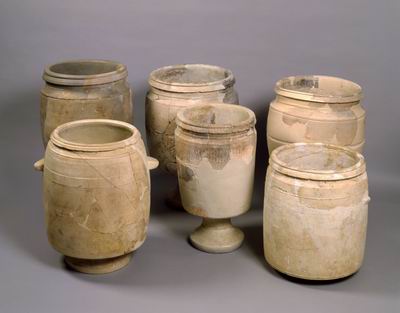
large stone jars

Each heart knows its own bitterness,
and no one else can fully share its joy.  (Proverbs 14:10)

One of my areas of study for my first degree was in cultural anthropology, where you quickly learn that worldviews across cultures can be vastly different and challenging to understand until you learn a sort of detached, non-judgmental stance with which to look at others’ ways of experiencing reality.

Even then, it can be difficult to realize that others may still see sincere value in ancient stories like one of the Pueblo creation myths that tells how Spider Grandmother wove the world into existence in stories that spindled out of her like a giant, interconnecting web.

If seeing the world through the lense of another culture’s experiences is challenging, learning to see reality through the perspective of someone who shares your same culture and background can be downright difficult.  How do you explain the sibling whose recollections from childhood make you think you must have grown up in two different households?  How do you manage to have a civilized, non-heated discussion with someone who sits on the opposite side of your particular political fence?

Part of the wonder of Christ on earth was His ability to see, not flesh and blood, but through our material selves to the very core of the person with whom He was interacting.  Seeing through God’s eyes, Christ knows the heart.  That means He sees and understands how each of us perceive the world around us.  He knows why some of us are afraid of spiders or don’t like romantic comedies.  More importantly, He knows why we make the choices we do in this life, even when those choices go against Him.

But, since it is God’s place to judge and our place to be gentle instructors, how do we approach other’s through God’s glasses and not our own human tendencies to jump to conclusions, see things from only our own experiences, and be quick to want revenge or “justice?”

Like all skills worth learning, this too takes practice.  We can start by asking questions, first of ourselves.  Why am I so angry?  What exactly do I think is wrong with this situation?  Is it really my place to step into this situation at all?  What might be another reason for what I have concluded besides the reasons I have already assumed?  Have I taken time to talk to the person in a non-judgmental way–asking questions that are not threatening but are designed to help me understand where the other person is coming from, what the other person is thinking?

CeCe Winans has a song about this topic called, “Alabaster Box,” that sheds some light on the grave mistakes we make when we jump to conclusions about others and pass judgment on them.  The song is about the episode in Luke 7 where the woman who had lived a sinful life found out Jesus was in town and approached Him with an alabaster box full of expensive perfume that she used to bathe Him.

The townspeople chastised the woman for wasting such a valuable resource.  They felt the expensive perfume could have been sold and the monies used to help the poor.  But Jesus, who sees through to the heart, didn’t feel the same way:

Turning toward the woman, He said to Simon, “Do you see this woman? I entered your house; you gave Me no water for My feet, but she has wet My feet with her tears and wiped them with her hair. “You gave Me no kiss; but she, since the time I came in, has not ceased to kiss My feet. You did not anoint My head with oil, but she anointed My feet with perfume. “For this reason I say to you, her sins, which are many, have been forgiven, for she loved much; but he who is forgiven little, loves little.” Then He said to her, “Your sins have been forgiven.” Those who were reclining at the table with Him began to say to themselves, “Who is this man who even forgives sins?” And He said to the woman, “Your faith has saved you; go in peace.” (Luke 7:44-50)

CeCe’s chorus puts this another way:

Until the day, when Jesus came to me and healed my soul with the wonder of His touch.  You don’t know the cost, of the oil in my Alabaster box.

The first time I heard this song, it had a profound effect on me.  Despite the fact that I had had training in seeing other cultural worldviews without being judgmental, I was a long way from being able to look at people from my own culture with the same magnanimity.  This song reminded me how much more work I needed to do in order to be able to look at people around me with love instead of trying to analyze what is right and wrong about the things that they do.

But this idea of perception goes deeper than just not judging other people.  If we are really serious about it, we will take pains to try to see things as if we were the other person.  This means we have to let go of more than just a little bit of ourselves and our need to be right.  Could the perception of the other actually have merits we haven’t taken the time to consider before?

Don’t get me wrong.  Trying to see through God’s glasses means we are still bound by the laws of right and wrong by which God is God.  But because we are not God, it is not our place to write somebody off.  It is our place to be concerned with our own right and wrong, which, if we are honest, is a full-time position.

Perhaps Will Rogers, one of my favorite cowboys, concludes it best:

Never miss a good chance to shut up.

The next time I feel myself propelled toward jumping to conclusions and saying something I will later regret, I will do my best to remember this sound advice.

Posted in Christian Living, Christianity, Faith

This Road to Love

road-61904_640

By his divine power, God has given us everything we need for living a godly life. We have received all of this by coming to know him, the one who called us to himself by means of his marvelous glory and excellence. And because of his glory and excellence, he has given us great and precious promises. These are the promises that enable you to share his divine nature and escape the world’s corruption caused by human desires.

In view of all this, make every effort to respond to God’s promises. Supplement your faith with a generous provision of moral excellence, and moral excellence with knowledge, and knowledge with self-control, and self-control with patient endurance, and patient endurance with godliness, and godliness with brotherly affection, and brotherly affection with love for everyone.

The more you grow like this, the more productive and useful you will be in your knowledge of our Lord Jesus Christ. (2 Peter 1: 3-8 NLT)

I have read these words from 2 Peter on many occasions, but they never cease to strike me as a clear roadmap to the kind of life that truly reflects a belief in Christ.  Still, no matter how clear this roadmap is, it also involves steps that we can only survive if we take them knowing we need God every step of the way.

So, let’s begin by spelling out the steps on the road to “love for everyone” that should be the end goal of every Christian.  As Peter makes clear, each step on the path to love leads to the next, as skills build upon skills to reach the greatest skill of all.  Here, then,  is the list of these skills:

  • Faith
  • Moral Excellence
  • Knowledge
  • Self-Control
  • Patient Endurance
  • Godliness
  • Brotherly Affection
  • Love for everyone

I just completed a trip to Disney World that proved my secret plan to spend the last decade or so of my life as a missionary in some country where my paltry retirement might actually keep me just above poverty level went up in smoke about as quickly as you can sing the Mickey Mouse Club theme.  Besides having no physical stamina, I ran out of patient endurance after the first three hours in an overcrowded theme park.  Self-control drifted skyward as I sighted the first Mickey sandwich ice cream trolley.  The only love I had for everyone was the kind where I would have loved for no one else to be in the park!

So, how do we achieve the seemingly unachievable?  Peter tells us we are able because of God’s promises to us: These are the promises that enable you to share his divine nature and escape the world’s corruption caused by human desires (2 Peter 1:4).  Becoming a Christian is as easy as admitting to God that you are a sinner who needs redeemed.  Becoming Christ-like is a daily, conscious practice of making one’s Christianity not a mantle to be put on and off, but the very act of being.

Because of faith, I seek moral excellence.  I want to say only what is uplifting and/or holy.  I strive to do what is right always.  As I grow in my ability to be right more than I am wrong, I gain a kind of knowledge that can’t be found in a book, the knowledge of ways to act in belief and the knowledge of the superior path of righteousness over worldliness.  As we realize that doing right feels better than doing wrong, we increase our ability to control the self.  When we can control ourselves so that we do not give in to the human desires that lead us further from the ways of God, we are more likely to actively be patient with our circumstances and with others.

A Godly person reflects the daily practice of sowing seeds of righteousness in good soil.  When we join like-minded people in our enthusiasm for living a Godly life, we approach the brotherly affection to which Peter refers.  Our brothers include all those who believe in Christ like we do (including, of course, our sisters as well).

When we can love those who think as we think (which is the easiest way to love), we may just be ready to step out in faith to love even those who do not believe what we believe.  Loving everyone else means turning the other cheek, as Christ instructs.  The Golden Rule is Golden because, not only does it make this world more bearable, it stores up for us the treasures in heaven that Jesus says are our end goal instead of the treasures on this earth where moth and rust can and will destroy.

Like the Fruit of the Spirit of Galatians 5:22, the steps to love of everyone in 2 Peter is your roadmap to a healthier relationship with Jesus, our Lord.  Remembering that our relationship with God must be on the right track for our relationship with other people to have a chance of growing is especially important.

As we enter the busiest time of our holiday season, I hope to bring to mind the lessons of 2 Peter as I wrangle through the increased traffic and crowds.  I will begin by remembering why we have this holiday in the first place: because our loving Creator chose to sacrifice a piece of Himself for the sins of all of us so that we all have the opportunity to grasp with both hands the promise of eternal life.

Now, that’s a road to love that I will gladly travel.  I look forward to seeing you on the journey.

Posted in Christian Living, Faith

His Faithful Love Endures

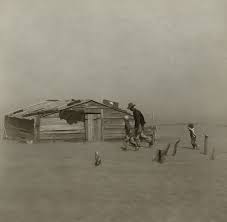
Challenges like the dust bowl of another generation are just one of many things we humans endure.

As a person with anxiety issues, I avoid the news as much as possible.  Being a fan of history, I realize the potential fallacy of this head-in-the-sand attitude.  But, since most days I have to overcome the challenge of worrying about what my logical mind knows are silly things–like the pine needles on my roof or whether the sugar ants I thought I had conquered in my kitchen will return again–I feel validated in my choice to remain mostly oblivious.

But, I do occasionally watch the news.  My first memory of seeing a newscast is standing in the kitchen of our 75-year-old house as the 13-inch black and white television flashed images of Russian soldiers with weapons moving through the woods as if they might burst through the back pantry door any moment.  The newscaster said that Russia had developed some kind of weapon that was superior to what our soldiers had in this time of relative peace known as the cold war.

In my fifth grade classroom, first my teacher told us about being a girl our age and hearing about Pearl Harbor.  She was a passionate storyteller who painted a vivid picture of her own, innocent world collapsing in around her.  Suddenly, the blue sky over the front lawn where she played on the tire swing or rode her bike was an ominous void where planes might bomb her into oblivion at any moment.

That same year, I stood in the library as a television blared reports that our President had been shot.  One of my classmates cheered.  There were rumors that the teacher standing next to me in the library had snuck out to her vehicle and cried.

I once told a friend of another generation that mine felt like one of the first generations in many to not really be challenged.  She, after all, had lost her fiancé in Vietnam.  I conveniently forgot that one of my own high school classmates had died serving our country in a war we are for all intents and purposes still fighting.

So, there is nothing new under the sun, it seems.  Each generation faces its own share of challenges, whether they be wars against brothers-turned-enemies, economic hardships, or the truly unrelenting power of nature.  Each generation must forge its own path to the perseverance that builds character.  And every day we choose to take one more step forward, we prove our own heroic spirit.

But the most heroic spirit of all is the humble one that realizes all things good come from the ONE who breathed everything into existence.

I was reminded of this truth as I read through the Psalms this week.  In these prayers to God, we learn what it is like to be created and yet in relationship with our Creator.  The various authors of the Psalms praise God, plead with God, bargain with God, and even get angry with Him!  But, they always, always, submit to God’s superior role in the petitioner’s life.

In Psalms 107 and 118, for example, we see the heights and the depths of the human experience:

Give thanks to the LORD, for he is good!  His faithful love endures forever. . . . Let them praise the LORD for his great love and for the wonderful things he has done for them. (Psalm 107:1, 8)

In both these Psalms, besides telling the story of all the good things God has done, the Psalmists also acknowledge their own failings, especially in the face of a perfect God.  They know they do not deserve help.  They know that they have been punished and may still continue to be punished.  But, they also believe in God’s faithfulness.  Even though we created things repeatedly reject Him, God never forgets us.

Believing that God is ever faithful, the Psalmist makes a declaration of belief, asking for success even though the Psalmist knows God may not immediately or ever grant it.  Still, in the end, the Psalmist knows that God will always love:

This is the day the LORD has made.  We will rejoice and be glad in it.  (Psalm 118:24)

Like Job who refused to curse God, even when it seemed like God had taken everything from him, for those who remain constant in the belief that God is faithful, the crazy things that happen in our fallen, cursed world can be placed in the always open hands of a loving Creator.  Somehow, knowing that makes facing a fallen world possible.

I commend those who endure so much, but I also acknowledge that any life is a certain act of endurance.  Since I have problems with anxiety, your mole hill is probably my mountain, but we both still endure.  In the end, the act of being human is not a contest of who had the greatest challenges.  It seems to me that the act of being human is all about enduring through our faith in a faithful God.

In a world full of headlines, I think I’ll stick with the banner that hasn’t changed in centuries:  HIS faithful love endures forever.

I hope we all walk in stronger faith in the coming days.  And if we stumble, then let us turn to the words of others who have gone before us along this same journey.  Open His Word to the Psalms and be ready to find a familiar friend who also loves God.

The LORD who shepherds David shepherds all of us.  I choose to fear no evil when I choose God.

Posted in Christian Living

This Debt I Owe

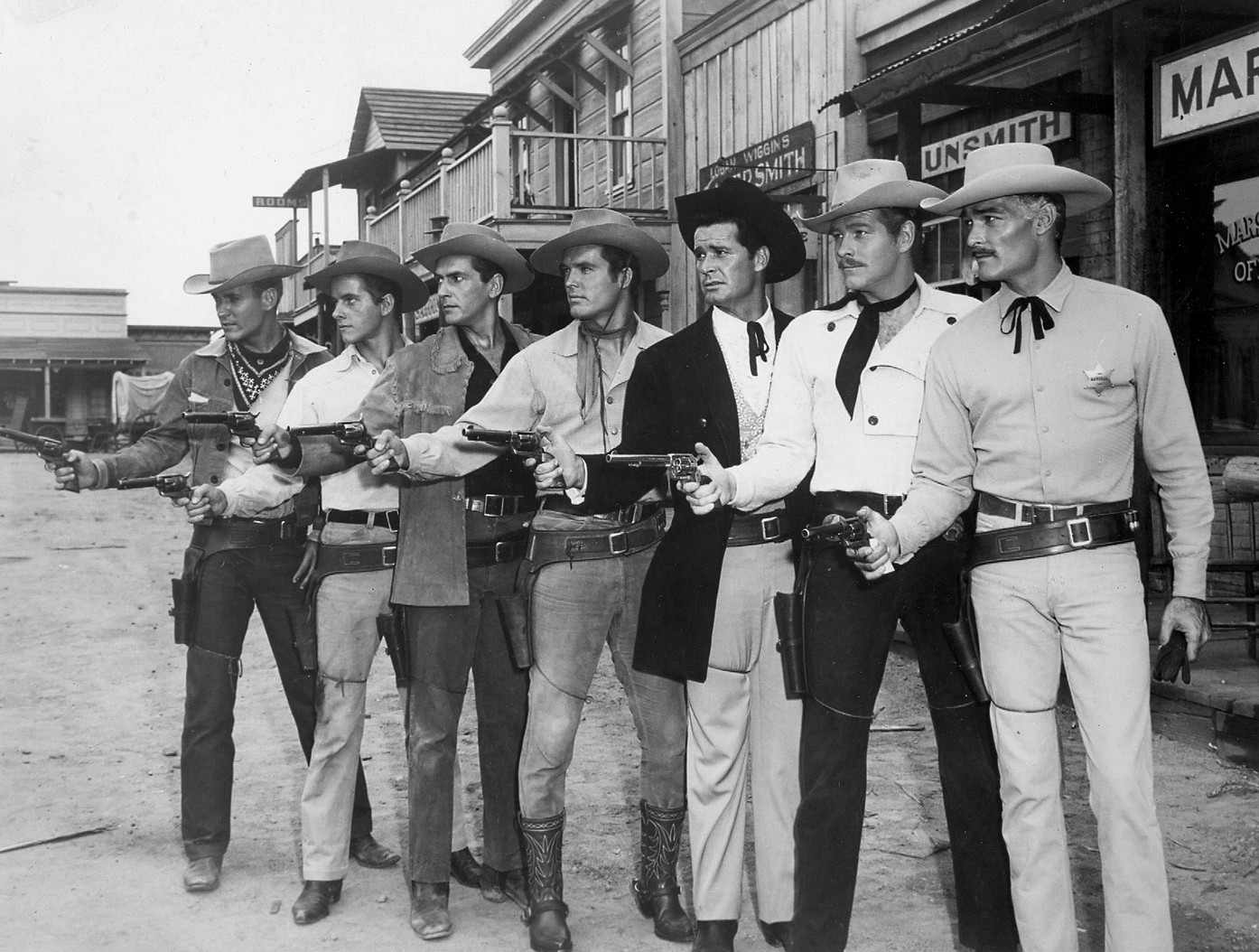
Warner_Brothers_television_westerns_stars_1959

I have a confession to make.  Despite knowing that vengeance belongs to God, I love a good movie where the hero systematically eradicates all the villians.  Even in a story like Eastwood’s Unforgiven, I’m glad to see him take out his enemies because, even though Eastwood has given them every chance to back off, they just won’t give up.  Eastwood may have ultimately lost a bit more of his soul in shooting it out with the bad guys, but as a movie-goer, I am really glad the bad guys bit the dust.

How different are the realities of a world where people live according to the belief that God has the only right to vengeance.  In our modern age, I’m not sure how many of those communities actually exist, but in the pages of my Bible, I find a history of God’s people asking for guidance in dealing with their enemies and giving full credit to God for any victories that they attain.  When the Israelites are on top of their faithfulness with God, no force in the world can beat them.  Vengeance is God’s.

I’ve been reading the Psalms this week.  In David’s Psalms, he repeatedly acknowledges his own sinful state and how little he deserves God’s help.  But, David also acknowledges how he can do nothing without God, how great God is all the time, how willing David is to accept God’s will, whatever that may be.  For David, whatever happens is the will of God, and God is good all the time–even when what God decides to do makes David hurt.

When you read that attitude coming from a man who lives under the weight of sin, you understand more and more just how much David had a heart like God’s.  What I mean is this: in David’s time, there was no such thing as grace.  In order to renew one’s relationship with God, you had to perpetually offer blood sacrifices to make right what you inevitably had done wrong in the sight of God.  Even as David pours his heart out to God in the Psalms, he knows that the only man on earth that can most closely speak to the Maker is the High Priest one day each year when the Holy of Holies is entered after much sacrifice and even more sacrifices are made in the very presence of God.  During that ceremony, tradition holds that the people would tie a rope to the High Priest in which to drag him back out of the Holy of Holies in case God did not find favor with him.

Because Christ died for our sins once and for all, we Christians in this modern world are living every day, truly, in a state of grace that it can be so easy to take for granted.  David, who was persecuted by Saul, lived a life of war, lost children, and had children rebel against him, could always remember that God is good and worthy of praise. David knew he himself had no right to be proud, even though he was a great king in the eyes of men, because he only ruled by the will of God.  David knew that at any minute he could die in a state of sin that separated him from the God he loved so much.

You and I have been given the gift of starting each day and ending it in relationship with God.  The Holy Spirit dwells in us at the point that we accept Christ as our Savior.  We owe such a debt to Christ for His sacrifice, and yet He presents it to us as a gift, lovingly given.  We do nothing to earn our salvation except to accept that gift and submit to Christ’s will.

If David, living under the threat of unforgiven sin, could devote so much of himself in praising his God for the love and protection and mercy God gave him, how much more should we who have been given the gift of relationship with our God be daily loving, praising, believing, and submitting to His will?  Even though we cannot earn our salvation, do we not owe so much more of a debt to our God that He was willing to die for us, once and for all?

Make no mistake, Christianity does not equal inaction.  As James puts it, “faith without works is a dead faith.”  Reading the Psalms of David reminds us of the debt we all owe to our loving God, who gave His whole self for us.

Thank You, Jesus, for the indwelling of the Spirit that allows me to know that when I cry out to You, You always hear me.  And so often, You are my one and only source of comfort.  My job is learning to lean into this awesome debt I lovingly owe.

Our God is truly an awesome God.

Posted in Faith

3 Ways to Fertilize Your Faith

Grow your mustard seeds of faith

That the communication of your faith may become effectual by the acknowledging of every good thing which is in you in Christ Jesus.  (Philemon 1:6)

 1: Know WHAT You are Fertilizing

When it comes to plant products that have been bottled to be sold as food supplements in a health store, I can tell you more than you ever wanted to know.  But, when it comes to real plants in the real world?  Well, I’ve been known to kill bamboo!

Despite my brown thumb, my West Texas roots have taught me that knowing your crop is the beginning key to success.  When to plant, when to harvest, when to pray for rain–these are just some of the elements that go into the very hard job of being a farmer.

Just like knowing the plant you want to grow before you can expect to succeed in growing it, you should also begin your goals to grow your faith by understanding what faith means.

Hebrews 11:1 tells us that faith:

is the substance of things hoped for, the evidence of things not seen.

Ralph Waldo Emerson states it this way:

All I have seen teaches me to trust the Creator for all I have not seen.

The heroes of faith are further examples to help us define the concept.  From Noah who believed enough to build an Ark to Mary who had the courage to bring the Son of God into the world, the Bible is replete with people who understood faith in the most profound way possible, by believing and doing.

The most important step of faith in this modern world is the one you take to submit your life to Christ as your Savior.  When you admit to Him that you are a sinner who has no chance of redemption without Him, you climb the first rung of the ladder toward a closer relationship with God that is the ultimate goal of faith.

“I believe in Christianity as I believe that the sun has risen: not only because I see it, but because by it I see everything else.”
― C.S. Lewis

Faith is believing in God when things are bleakest as well as when things are going well for you.  Faith is the beginning of hope, which is the most important quality for us to have if we expect to make it through the valleys of this life.  Faith is knowing that God IS and the He loves me.

2: Know HOW to Fertilize


With faith as small as this mustard seed, Christ says we can move mountains.


“God will not look you over for medals, degrees or diplomas but for scars.”  –Elbert Hubbard

As Elbert Hubbard explains, in order to grow a belief in God, we cannot expect to proceed easily.  Christ promises us a light yoke, but not a life without trouble.  In fact, it is through troubles that we learn perseverance, which builds character and ultimately leads to hope (Romans 5:4).

Faith is not the belief that God will do what you want. It is the belief that God will do what is right.
― Max Lucado, He Still Moves Stones

In order to grow our faith, we have to exercise it, like a muscle.  As with all things concerning our relationship with God, we can begin that exercise by studying His word, spending time in prayer with Him and joining in fellowship with other believers to share our belief.

“Never be afraid to trust an unknown future to a known God.”  ― Corrie ten Boom

Other ways to fertilize our faith is to learn to listen with intent to the voice of the Holy Spirit in us.  When we feel the pull to reach out to help a stranger or say something about our beliefs to our acquaintances, we should become more accustomed to following those feelings.  The more we know about what the Bible says, the more we will know it is God talking to us and not our own interests.

Fertilizing our faith will often be uncomfortable because it will mean stepping outside our normal comfort zones.  Sitting in my recliner writing a blog is not the easiest thing to do on a Sunday afternoon, since sitting here doing nothing at all would be easier, but writing has always at least been comfortable for me.  Making my way to church on Sunday is stepping outside my comfort zone.  As an introvert, I am highly challenged in group settings, and large groups can lead to sensory overload for me.

But, going to church improves my faith.  Besides learning things about the Bible I didn’t already know, my church attendance has also allowed me to meet a wide variety of people who share my same goals and struggles but who approach them in ways I would have never thought of but greatly admire.  I have learned better ways to approach life’s problems and even to pray by participating in church, fertilizing my faith.

3: Make Faith Personal

The beginnings of this blog post came when I was thinking about how helpful God has been to me in my life, despite my literally clinical problem with worry.

I have Generalized Anxiety Disorder, which comes with unhealthy bouts of depression.  With the proper medication, nutritional support, and help from my family and friends, I lead a pretty productive life.  But the thought that I had earlier this week was thinking about how I spend so much time worrying about things that are going to happen, but when something really does happen, I am somehow able to be really strong and make it through the bad thing.

My power in times of crisis doesn’t come from medicine or me, but from God.  So, as I was thinking about this earlier this week, I was asking myself, how come I’m not doing a better job at remembering how often God comes through for me when I let worry win out over my faith? 

So, when I suggest making your faith personal, I mean just that.  However you do it–journaling, scrapbooking, or making time to remember on a regular basis–make your faith stronger by building on your personal experiences with faith.  We don’t have to be prophets to have real experiences with God.

In fact, when Christ sent the Holy Spirit to dwell in us, He made it more possible than ever for “regular” people like you and me to experience God every day.  Of all the people in history, we can have as close a relationship with God as any of the heroes of faith you’ll find in Hebrews 11.

I will say of the LORD, “He is my refuge and my fortress, my God, in whom I trust.”  –Psalm 91:2

In Nicole Nordeman’s song, What If?, the singer asks:

What if you jump, just close your eyes?  What if the arms that catch you, catch you by surprise?
What if He’s more than enough?  What if it’s LOVE?

Faith is personal, but it’s not something to be hoarded.  Sharing our experiences of faith with others is what helps us spread God’s love in a broken world.  Faith has the courage to admit that what good we do comes from God and not ourselves.  Faith has the courage to step out knowing we may stumble.  Faith knows that even if we wind up with egg on our face, God catches us and always loves us.

“I know now, Lord, why you utter no answer. You are yourself the answer. Before your face questions die away. What other answer would suffice?” ― C.S. Lewis

Each time I hit post, I risk offending somebody, looking foolish, or making an actual mistake in a cyberspace where they say nothing ever actually goes away.  But faith without works, as James tells us, is a dead faith.  How can I not risk everything for the One who gave everything for me?

Grow your faith muscle this week.  If we truly believe, what other choice have we?

Posted in Faith

A Mustard Seed Idea for Halloween

KSBJ

Many years ago, my local, Christian radio station was offering free “seed” cards to give away at Halloween along with whatever other treats you had ready for the costumed minions who traipsed to your door.  Since one of the pick-up points for the seed cards was right by where I work, I stopped in and got some.

It took just an extra moment to add the card to the candy I was handing out.  Some of the kids would ask me what it was.  Others were too eager to get to the next house.  A few said they listened to KSBJ as well.

The next year, when I was handing out candy, more than one kiddo remarked, “Hey, you’re the card lady.”  That made me smile.

In the past few years, I haven’t been handing out candy at my door.  For one, I had a curious cat who might just slip out if I wasn’t careful.  For another, I’ve had other things I have had to do.

But, this morning, I was asking God to give me some much needed guidance because I’ve been feeling in a rut lately.  I wasn’t even thinking about Halloween being this week.  It was just one of those times when I really wanted one of His angels to be right there in front of me so I could have a two-way conversation and get some answers.  You all know the kind of praying I am talking about here.

Anyway, hours later, the memory of my seed card experience of years past popped into my mind.  The only thing I had never liked about it was trying to get the cards separated fast enough and candy out too so the kids could keep going.  I don’t want to slow down their excitement.

So, I realized that if I got some of those treat bags like you do for parties and filled them with goodies and the card, I could quickly pass out a fun treat for the kids who have been growing in numbers on our street as they want to enjoy the kind of old-fashioned Halloween fun like I had as a kid.

Now all I needed were the cards.  I popped open my Publisher program, picked a pre-design and created what you see above.  I had the blank business card forms on hand, so that was easy enough to print.  Now, I’m ready to put together my bag of goodies, which includes candy, funny rings, rubber balls, and more.

Maybe no one will look at my little card promoting a truly awesome Christian radio station.  But, I like to think that the one person God needs to see that message will get it because I asked for an answer, I think I got one, and I acted on it.

So, I guess what I’m saying is, don’t be afraid to put a lot of God into your celebration of a secular holiday.  What we’re really celebrating here is the coming of Fall, cooler weather, and colorful leaves wafting to the ground in orange and red piles to jump in.

Jumping into our faith is just what any day living with God at the center of your life is all about.  Focus on HIM, and you will not be lead astray.