
Posted in Christianity, Faith

This Cup of Wrath: Part 3 of 3

wrath

We all get angry, some more than others.  Think about the last time you got really, really angry, the kind of angry that makes your whole body shake as you clench your teeth.  Chances are the person who made you so angry is someone related to you or someone you otherwise know quite well.  Why is that the case?  Perhaps because we feel safe to be angry at that person.  They can’t make themselves unrelated to us, can they?  Perhaps it is because we share a past that is so similar that we do not understand how the person who made us angry could have made decisions so different from what we might have done.

But none of these examples of anger are comparable to the wrath of God.  He who made all things is the only One who has the right and full knowledge to be angry.  Pride, jealousy, hatred–the human emotions connected to anger have nothing to do with the wrath of God.  His wrath is reserved for those who refuse to follow His edicts, no matter how patient He is in explaining them to us.  The great essayist Annie Dillard explains it this way:

A high school stage play is more polished than this service we have been rehearsing since the year one. In two thousand years, we have not worked out the kinks. We positively glorify them. Week after week we witness the same miracle: that God is so mighty he can stifle his own laughter. Week after week, we witness the same miracle: that God, for reasons unfathomable, refrains from blowing our dancing bear act to smithereens.

Who can believe it?

The greatest wonder of all is that the same God whose wrath can and has wiped out the entire human race (don’t forget Noah), is tempered by an even greater love.  Because of God’s love for us, He sent His one and only Son, who took on the wrath of God unto Himself, the wrath that you and I deserve, so that we would be saved from it.

In his series on the book of Revelations, preacher Rick Atchley spends some time discussing the cup of wrath that is mentioned throughout the book.  Rick makes a clear connection between the full, judgmental wrath of God that will be poured out on all who do not repent at the end of times with the cup that Jesus prays to God about in the garden of Gethsemane before He was sacrificed on the cross:

“Father, if you are willing, take this cup from me; yet not my will, but yours be done.”  Luke 22:42

In dying on the cross for my sin, Christ drank the cup of God’s wrath for me.  None of us is perfect.  None of us can say we are without blame, without reason for God to be angry or disappointed with us.  But because Christ drank from the cup of wrath, we are free to face God and feel the full force of His love for us. 

As you take your next Lord’s Supper, think about the cup you drink not only as a symbol of Christ’s sacrifice, but also as a symbol of the wrath of God you so deserve but from which you have been so lovingly spared.  You may, as I, find it hard to actually swallow.

There is no greater knowledge than this: that God’s love for us is such that He gives us what we need and not what we deserve. The cup of wrath is real, but not a thing to fear for those who believe in Christ.  Instead, we Christians should use the cup of wrath as a reminder to be more patient, more loving with others, just as Christ is patient and loving with us.  We have been saved from God’s wrath.  Shouldn’t we long to help Him in His quest to see that all are saved?

Because of Christ, God’s wrath is like words scrawled on the sandy shore, where the waves can wash them out to sea over and over again, holding nothing against us.
Posted in Christianity, Faith

This Cup of Wrath, Part 2 of 3

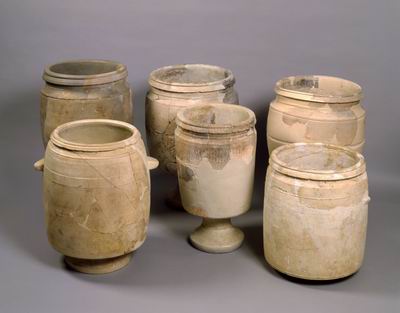
large stone jars

I have to write some hard things.  I have to ask some questions that have no clear-cut answers.  I have to begin with the assurance that despite what I have to write today, the end of any thoughts on the cup of wrath is the promise of the mercy of God that gave us Christ to save us.

Before the New Testament, people who sinned had to “get right” with God through the offering of different sacrifices.  The Book of Leviticus spells out what sins call for different animal or grain offerings and just how those offerings were to be carried out.  Then, Leviticus starts to spell out what makes a person unclean.  Touching dead animals, being a woman in her cycle, even having a boil can make a person unclean, requiring yet another set of procedures–different procedures for each different circumstance.  In one instance, the poor, afflicted person had to go around with a shaved head outside of the camp for a week or more, covering his/her mouth and saying out loud, over and over, “unclean, unclean.” 

Maybe 4000 years ago, people didn’t get acne like we do today.  Maybe words didn’t carry the same power so that a person having to call out their uncleanness all the time would really believe their own cleanness when the priest finally declared it.  These are questions God knows the answers to, and my faith has to leave at that.

But, what I realized as I read through Leviticus this morning was that once the book covers the sin offerings, it very clearly delineates that the cleanliness procedures have to do with ceremonial cleanness.  When God saved the Jews from Egypt, He was beginning to establish the practice of worshipping one God, HIM.

Part of establishing monotheism among a people who had always believed in Him but also still worshipped other gods was making those people understand just how perfect, pure, powerful and different the God of the Jews really was.  Remember how there were several of the plagues in Egypt that even the Egyptian magicians could imitate?  As slaves, the Jews had been surrounded for more than 400 years with masters who worshipped a pantheon of gods.

To set Himself apart, God rightfully wanted His people to understand the Holiness of His temple.  Only Moses spoke with Him directly, and afterward Moses’ face glowed so that he had to cover it because the glow scared the Jews.  To enter even the outer sections of the temple that was dedicated to the one and only LORD, therefore, God needed to make very clear-cut delineations between what was clean and unclean.  Those who did not take God’s commands seriously, literally died.

Fast-forward to a New Testament world, and I come to the tough questions.  These are the kind of questions that can keep Christians apart, even though they really shouldn’t be “deal breakers.”  I only ask them because they came to me as I contemplated the importance placed on ceremonial cleanliness in Leviticus.

First, the only reason we have the right to enter the Holy of Holies is through the sacrifice that Christ made for us.  With the indwelling of the Holy Spirit that comes from our acceptance of Christ as our Savior, we have full access to the one and only God.  But, in a modern world where we have tried so hard to make our churches “welcoming,” have we gone too far away from the symbolic importance of the Holiness of the worship sanctuary?

In the church I attend, some people wear jeans, others wear dresses and suits.  The church has a coffee bar in the Atrium, and people bring their coffee into the worship service.  It is a friendly, comfortable environment, but is it Holy?  In other words, I’d like to think that we humans have advanced in the last 4000 years, but I also know that in the 2000 years since Christ declared His kingdom, we haven’t put forth the greatest track record.  We are all stubborn and stiff-necked people.

Would wearing our best (or the equivalent of the Sunday best that the least affluent member of the church is able to wear so that church doesn’t become a glamour contest) and entering the sanctuary with only our Bibles in our hands make us more cognizant of the honor we have in being able to worship God in this way?  Have we lost a bit in translation by making our worship centers more comfortable than sanctified?

I’m not making any judgments or trying to start any arguments here.  I think this is a practice each person can decide for him/herself.  I, for one, am going to stop the habit I had begun of taking a drink into the sanctuary just because others were also doing it.  I didn’t feel right about it for myself from the get-go.  After being reminded about the importance of ceremonial cleanliness to God in the time of the Old Testament, I feel that I need to uphold the sanctity of the sanctuary  in this way even though I am already sanctified by Christ.

As I heard a preacher once remark, if God wanted this much from us before He sacrificed His one and only Son, what makes us think He would want less of us now that that sacrifice has been made?

It seems like foregoing a beverage and dressing with care before entering the sanctuary on Sunday are some simple steps I can take to remind myself of the holiness of the worship in which I am about to partake.  Leviticus serves as an awesome reminder of the depth of God’s love for His people and the extent of His wrath when His very, very long patience finally wears out.

Posted in Christianity, Faith

This Cup of Wrath, Part 1

Photofunia cups

My Bible reading in the last week has brought me back through the Exodus and into Leviticus.  These books are filled with the story of an omnipotent God establishing His singular status among a people He had claimed as His own generations before, but who were stubbornly clinging to the idols of this world.

Even after He parted the Red Sea for them and then closed it over their enemies, the Egyptians, even after He led them through the desert, feeding them and giving them water when they cried out for it, the Jews continued to mess up.  While Moses stayed 40 days on the mountain speaking with the one and only God, his compatriots created a golden calf to worship!

We humans are a stupid lot, unworthy of the grace and patience and mercy that God continues to show us.  But, unless you have brazenly broken a commandment of late, when was the last time you really took a long moment to feel the depth, and height, and breadth of your need for God’s forgiveness?

Reading the graphic descriptions instructing the Jews on how to perform their sacrifices that Exodus portrays, I realized a benefit to reading the Old Testament that I had not exactly thought about before.  If you put yourself in the shoes of a “pre-Christ” Jew, you begin to understand with even further depth just what His sacrifice on the Cross signified.

I’m a city girl, despite the very country roots of my ancestry.  Truth be told, if I had to kill my own meat, I would be a vegetarian (which makes me a hopeless hypocrite, but that is beside the point).  The Jews were nomads who relied on their ability to farm and herd to survive.  Slaughtering an animal was a regular thing.

But, how regular would it be to take the very best of your flock, carefully kill it, dismember it, and watch it burn, realizing that you had just watched a month’s worth of eating rise in smoke rings to the sky because of your own sin?  Here was a real choice between the Spirit and the flesh.  The only way to right the individual’s relationship with God was to follow His instructions for sacrifice, to watch the very bread from your table, and the very best bread at that, go behind the curtain into the Holy of Holies, where only a select few could ever go.  Then, and only then, would you be right with God again–until the next time you sinned.

Believing in your need to sacrifice was believing in your own failings, and that meant, in part, knowing the awesome wrath of the God who made you.  Throughout the Old Testament, the people of God remember and forget, in a sort of bell curve of cycles that truly depicts the stubborn and stupid nature of the human race. At one point, they even lose the Word of God altogether, gathering to have it read to them in rejoicing wonder when it is discovered again.

It is easy to look back and criticize.  How can you be so stupid, you rail at the Jews as they wander in the desert for 40 years, victims of their own folly.  Did you not see God in the fire and the cloud?  Did you not experience the plagues that rescued you from Egypt?  Do you not remember Sodom and Gomorrah?

The answer is, of course, that we are all of us stupid on a regular basis.  And with Christ’s message of love, it is easy to put aside the potential of God’s wrath.

But, God’s wrath does play a very important role in our relationship with Him.  How Christ took that cup of wrath upon Himself for us is a thought for another day.  Though, have no doubt, His taking on of that cup of wrath is the most important thing of all.

Posted in Christian Living, Faith

The Headlight Principle

headlight in rain

It’s one of those rainy days in Houston.  As I pulled out of the parking lot at the gym this morning, the automatic lights on my car decided there was quite enough light to keep my headlights turned off.  But, what the optics on my little Ford Focus determined didn’t seem particularly intelligent in the semi-light of a rain-spattered world.  So, I flipped on my headlights and drove safely home.

By the time I pulled into my garage and switched off the car, my mind had already wandered to a thousand different things, like what I need to do today and the groceries I need to buy for rest of the week.  So, when I popped open the car door, I was startled by the warning ding that greeted me.  I had my keys in my hand, so it wasn’t a keys in the ignition ding.  It only took a half second to remember that I had turned my lights on, overriding the automatic setting.  So, I switched the knob back to its correct position and went on with the business of getting into my house.

As I was thinking what a small but important thing that little dinging alarm is, I was wondering how long it took the car manufacturers to add it to our vehicles.  Maybe those dings annoy some people, but for many of us they are important reminders to keep us from a much bigger problem, like accidentally leaving your headlights on and draining your battery.

How do we apply the lesson of the simple headlight warning ding to our spiritual life?  After all, if we can be distracted enough by the small things in life to forget we turned our headlights on when we started our car ride fifteen minutes ago, how much more can we be distracted by the challenges of day-to-day living that keep us too much in the world and not enough in God’s world?

The only way to be open to the Spirit, who can be our warning system, is to spend time with God.  We do this through prayer, reading and studying His Word, and by having fellowship with people who also want to worship and know God.

My warning system this morning included reading about the first Passover in the book of Exodus.  It reminded me that Christ as the lamb offered His blood on the Cross so that the wrath of God will pass over those who believe in Him just as it passed over the Israelites who followed God’s instructions when the Egyptians’ first born were taken during the final plague that convinced Pharaoh to release the Israelites from Egypt.

The Passover reading also reminded me that God keeps His promises.  He had told Joseph He would return the people to the land of Abraham.  430 years later to the day, God followed through on that promise.

God never changes.  The more you read the Bible, the more you will see that the patterns of His relationships with humans are consistent and all lead up to the ultimate fulfillment of His promise in the sacrifice of Christ.

In a world where I can forget I flipped on headlights in the time it takes to drive from point A to point B, it’s a wonderful feeling to know that God is always there and always the same.

Posted in Christian Living, Faith

To Think Like Hagar

Hagar by Edmonia Lewis

I have read the story of Hagar and Sarai many times, and I always come away with a new lesson.  This week, I was struck by Hagar’s response to her encounter with God:

Thereafter, Hagar used another name to refer to the LORD, who had spoken to her.  She said, “You are the God who sees me” (Genesis 16:13).

You know the story:  Abram has been promised by God that he will be the father to descendants that outnumber the stars in the sky, but even though Abram believes God, his wife Sarai gets impatient.  She talks Abram into lying with his servant Hagar, who gives Abram a son.  Jealousy ensues.  Hagar, a lowly servant who has now managed to out-do her mistress can’t help but get a little cocky about it.  Even though Sarai talked her husband into sleeping with Hagar in the first place, when the pregnancy comes, Sarai makes Abram send Hagar away.

Even though she gets to come back, Hagar and her son, Ishmael, are eventually banished again.  God promises Abram that Ishmael will also be the father of a nation, but He tells Hagar that Ishmael will always be set apart and in contention with his brothers.  Still, Hagar finds a reason to praise.

You are the God who sees me, she says.

It’s hard to know the mind of a servant woman more than three centuries ago in a culture and world far removed from our capitalistic, electronic reality.  But we can at least know that she would have had no thoughts of ever being any more than a mere servant.  In other words, to be seen by God was to be validated as a person and not as a mere thing owned by others.

Having read these words this morning, I was struck by the beauty of the Cross.  For, when Christ died for us, did He not see us?  What a wonderful gift it is to realize that we can go forward each day knowing that God sees us because of Christ’s love for us.

Thinking like Hagar means knowing the enormous gift it is to be seen by God.  Never take it for granted.  If you hold this truth to your heart each day, how much easier it will be to walk in the steps of Christ, loving others as we ourselves want to be loved.  We, too, have the ability to see. 

Posted in Christian Living, Faith

Do You Have The Guts To Pray This Prayer?

Find Your Daily Sacred Space

One of the phrases that Benedictine monks regularly use to help them stay in a meditative state begins, “Lord, have mercy on me a sinner….”  The first few times I used it for myself, I finished it with phrases like, and help me shine Your Light or and help me be like Christ.  

When you first start to say those first words over and over, you are reminding yourself of your own human-ness.  We are all sinners.  We have no rights to judge other people for their actions because we have taken actions that are equally horrible in the eyes of a perfect God.  Luckily, that same God forgives us, so that the phrase, have mercy on me, a sinner, also means we can grasp that mercy and find peace.

In my perpetual quest to learn to give up the control of my life to Jesus so that I experience His peace, I am discovering some not so pleasant truths about myself.  I am always helping people out, it seems like to me.  So, I could pat myself on the back and say I’m doing pretty well.  I have a servant’s heart.

Here’s the problem.  Whenever I get stressed, I can get really angry about all this “helping out” that I am doing.  That reaction seems more like a martyr’s heart to me than a servant’s heart.  In other words, many times when I am doing things for others, am I doing it deep down because it feeds my feelings of self-worth instead of because of my unselfish love for others?

So, as I processed these thoughts lately, it came to me that I would probably be a lot happier, calmer, more peaceful in life if I could tame the beast that is my pride.

But, do I really have the guts to say the prayer that gets me help with that one?

I’ve prayed for humility before, usually by hedging.  Give me more humility, please God, but please don’t make the lesson painful.  That was usually the gist of my prayers.

This morning, as I began my phrase, God, have mercy on me a sinner, I knew what the ending needed to be.  But, I had to take several deep breaths before I could finish the statement.

Lord, have mercy on me, a sinner, and make me humble.

Praying for humility with no qualifiers and really wanting it means I have to be willing to experience pain.  The Bible teaches that through perseverance we learn patience and through patience we build character.

I am not looking forward to the lessons I am going to be facing as I continue to pray to God to remove my pride.  But I believe in His blessings for the humble enough to know that this is one prayer I must have the guts to pray if I expect to allow God to work to the good what He has planned for my life.

His will, not mine.  His omnipotence, my humility.

What prayer have you not had the guts to pray?  Get on your knees now and pray it.  God will bless you for it, even if the initial answer seems truly painful.

In Christ,
Ramona

Posted in Christian Living, Christianity, Faith

THIS Is Your Purpose

th

My Ryrie NASB study Bible has this note for the third chapter of Paul’s letter to the Colossians:

Here begins the ethical section of the letter.  Paul’s appeal is simple: Become in experience what you already are by God’s grace. The Christian is risen with Christ; let him exhibit that new life. [emphasis added]

Whenever you are in your darkest hours, or even just the shadowy ones, I think it a great comfort to remember this truth, that we are here because God wants us to become through our experience what He freely gave us with His death on the cross.

Throughout Colossians 3, Paul lists qualities to have and not to have if you are truly going to become through experience what you already are as a Christian.

On the do NOT list: sexual immorality, impurity, lust, evil desires and greed (idolatry), anger, rage, malice, slander, filthy language, lies, bigotry. On the DO list: compassion, kindness, gentleness, humility, patience, forgiveness, love, peace, thankfulness, wisdom, praise.

Luckily for us, when Christ made His sacrifice, He also promised us a Helper to be sent so that we are not on this journey of experience alone. With a quick search on the web, I found this site about the Holy Spirit in the Bible: http://www.mycrandall.ca/courses/ntintro/spirit7.htm. The page is titled “The Holy Spirit in Pauline Theology.” Here is a succinct excerpt:

The Holy Spirit is central to Paul’s theology. Expressing himself in various ways, he asserts that the promise of the giving of the Spirit has been fulfilled. Different from the prophecy in the Hebrew prophets, however, he holds that the promise is fulfilled for the church, the new community of God, consisting of Jews and gentiles, and not for the nation of Israel. In Paul’s view, to be a Christian is not simply to accept certain propositions as true, such as Jesus is Israel’s Messiah, but rather to be indwellt by the Holy Spirit.

Paul’s words make the most eloquent case for approaching life in its challenges and wonder as the experience of becoming what we already are:

Since, then, you have been raised with Christ, set your hearts on things above, where Christ is, seated at the right hand of God. Set your minds on things above, not on earthly things. For you died, and your life is now hidden with Christ in God. When Christ, who is your life, appears, then you also will appear with him in glory. (Colossians 3:1-4)

The action of becoming is complicated, messy, bitter, joyous, happy tears overflowing. God’s time is not the same way we think about time, but His is the timepiece that rules the rhythms of our experiences, of these lives to which we have died and risen again in Christ.

The next time you are feeling existential, dig your hands into the fertile dirt of God’s word and remember that your purpose in this life is to become the kind of person Christ’s sacrifice already made you in the eyes of God–a loving, patient, gentle, kind, growing child of Christ.

Posted in Christianity, Faith

HIS mercies are always new

20140525-084403.jpg

You wouldn’t know it just looking at this photo, but this young tree in my backyard represents a sort of miracle.

When we had one of the bad hurricanes blow through a few years back, a full-grown version of this tree covered my back patio, bearing a fruit that I couldn’t identify, but that the guys who did my yard liked to pick and eat, so I know it was edible.

The mighty winds of the storm up-rooted my beautiful tree, so I had the guys cut it down, letting them leave the trunk in place to save everybody a lot of hassle.

Imagine my surprise when I looked out my window one day to see what looked like a tiny weed coming up by that trunk. Before long, the weed started looking more and more like my old tree. Some day, I believe the yard guys will have fruit to snack on again.

20140525-085231.jpg

I am no credit to my ancestors. I have actually killed bamboo! So, when I looked out this cold winter at the bare branches of another tree in my backyard, I figured the cold had finally killed it.

But, Spring has come and with it, the leaves and beautiful flowers I love to see as I do dishes. It happened without my even noticing, this renewal. One day, the branches were bare. This morning, I was blessed to notice the tree had bloomed again.

Our relationship with the Maker of all things is like that. Every day, whether we realize it or not, He is ready to let us begin anew. He is working His Spirit in us to make us bloom.

The love of Christ is new for us every day. No matter how badly we mess up, He is ready to forgive. We can begin clean again.

And produce the fruit that feeds forever.

In Christ,
Ramona

Posted in Christian Living, Faith, Love

God Doesn’t Need To Be Politically Correct

I AM

When Abraham asked God, Who are you?, the Maker of the Universe answered, Is. 

In the prophecy of the final days, He describes Himself: “I am the Alpha and the Omega,” says the Lord God, “who is, and who was, and who is to come, the Almighty” (Rev 1:8).

How would you describe yourself?  Would you do it by your occupation?  Your age?  Your physical description?  Your personality traits?  By the company you keep?  By the things you have or have not accomplished during your time on this planet?

God knows how to describe you.  As the Creator of everything, He is the only One who can see straight to our true hearts.  The Psalmist says it this way: “Why art thou cast down, O my soul?  and why art thou disquieted within me?  hope in God: for I shall yet praise Him, who is the health of my countenance, and my God” (Ps. 43:5).

In one of the famous lines from the TV classic, The Cosby Show, Bill Cosby tells his television son, Theo, “I brought you into this world, and I’ll take you out.”  God could do that.  In fact, there are countless examples in the Old Testament where God’s patience wore thin and His vengeance was wrought against a people who had been given every chance to believe and still persisted in worshiping other gods, in sinning, in denying God’s omnipotence.  Think Sodom and Gomorrah.

Paul assures us, “For all have sinned and fall short of the glory of God” (Romans 3:23).  Jesus warns us to remove the moat from our own eyes before worrying about the speck in others’ (Matthew 7:3).  We are all guilty of something.

So, what do you plan to do about it?

Jesus held the world to a standard of perfection because He Himself was perfect.  He threw the money changers out of the temple, but He also allowed Himself to be flogged and crucified by the authorities as a sacrifice for my sake as well as yours.  Jesus said things that were true and cut to the heart, but He said them with love, and He promised peace.  All He required was our surrender to Him.

So, what do you plan to do about it?

In today’s world, what if we tried speaking God’s truth in love with an end goal of peace in mind?  What if we didn’t worry about what other people thought about us as long as we knew that God was at the core of our actions?  What if we could be sure that our pride had nothing to do with what we had to say, in other words, that our eyes were clear of moats?

Paul describes Jesus,

By whom also we have access by faith into this grace wherein we stand, and rejoice in hope of the glory of God.  And not only so, but we glory in tribulations also: knowing that tribulation worketh patience: And patience, experience: and experience, hope: And hope maketh not ashamed; because the love of God is shed abroad in our hearts by the Holy Ghost which is given unto us (Romans 5:2-5).

In a world that grows increasingly hostile to truths based on God’s word and not modern, “enlightened”  ideas, where what feels good seems more popular than what is good, I am convinced that Christians need to strive to wear the armor of God.  Barbara Mandrell had a song when I was a kid–I Was Country, When Country Wasn’t Cool.  In America today, we are facing an environment where being Christian is no longer cool.  Our children are encouraged to do more than dress in certain clothes, and expressing an opinion on the wrong side of the political landscape could literally lead to dire consequences.

So, what do you plan to do about it?

The peace of God, a peace that transcends understanding, is the kind of peace that can whisper in a whirlwind and be heard.  To follow the example of Christ is not to condemn with hatred in our hearts, but to love others enough to gently lead them in the narrow way to God.  But first, we have to be sure that our own walk is being made as Christ holds our hands.  And that means prayer, introspection, fellowship, and study in His word.

In the coming days, your faith may be tested.  You may no longer have the luxury of practicing your faith in a bubble.  You may have to step out and say things that don’t make you popular with people but keep you on the narrow path that is the walk with God to eternal life.  It is God’s place to judge, but it is our place to spread the good Word of the grace that can mean salvation for anyone who is willing to believe.

So, what do you plan to do about it?

God doesn’t need to be politically correct.  He IS.  In God, there are no politics, only a kind of truth that sees the heart and does not waver.  The Bible speaks of peace as the blessing of God.  This peace is our ultimate gift on this earth, not happiness or shiny cars or pretty jewelry or the right clothes.  This peace does not waver in the face of opposition or hardship.  It is constant because it relies solely on God, and He never wavers.

So, what do you plan to do about it?

Go in peace and love that only God provides, and know what you plan to do about a world full of darkness for which you have been chosen to shine His light.

Posted in Christian Living, Faith

Random Acts of the Spirit

candle prayer

There are three random things that stick in my mind from the preceding week.  I’ve decided to call them “random acts of the Spirit.”  In no particular order, here they are:


1.  God is patient.  In my Ryrie Study Bible NASB, there is a table that outlines some of the major events in the life of the great missionary, Paul.  Do you realize that from the time he was converted on the road to Damascus in 33 A.D. to his first missionary journey in 47-48 A.D., some 15 years had passed?  We know from his own writings that Paul spent at least three years in study after Damascus before he felt ready to approach the movement in Jerusalem.  Before that, Paul was already a great scholar in the Jewish tradition.  In other words, Paul certainly had the background to feel that he would be ready to preach Christ’s word right away once he was converted, but instead it took him more than a decade of study, prayer and fellowship to be ready to take the Word to places no one had ever dreamed of.  The key to Paul’s success has to be his hope in Christ.  Because he never gave up hope that God would use Paul in the way and in the time that God saw fit, Paul accomplished so much for the glory of Christ, a system of belief that guides the church to this day.  God works on a timetable that is completely different from the hustle and bustle push of this modern world.

2. Seeing the passion for God in others is inspiring. When you step out in faith daily, as Christians try to do, you can find yourself discussing God in all kinds of places, even as you are getting your hair styled!  My wonderful stylist is a young woman with a real passion for God.  As we were discussing how life was going this week, we dipped into a discussion of some of the things we have been learning in our own separate studies, including the subtle ways that Satan works to push us aside from God’s purpose for our lives.  As my hair stylist put it, “I literally have to stop my thoughts sometimes and tell the devil, no.  I have the creator of the Universe in me, and you have no place here.

What a wonderful way to look at the awesome gift that is the grace of God in us!  When we truly have the Holy Spirit in us, we have an obligation to uphold that presence.  I have been using the idea of the Creator of the Universe for the rest of this week.  Needless to say, I was inspired.

3. When we have God in us, it is enough.  I watched The Wizard of Oz for the first time since my childhood this week.  I had forgotten that the main focus of the movie is that all the characters need to realize that the one thing they long for most is the thing they already actually have.  The Scarecrow is the one to have the problem-solving ideas.  The Tin Man sheds the most tears.  The Lion stands up to the bad guys.  Dorothy realizes, “There is no place like home.”

When we accept Jesus as our Savior, we also accept the peace that is no place like home.  For those who rely on material things to feel better, the idea that faith in the unseen being all you need may seem impractical or impossible, but this peace is what helps those people you see stay steady in the roughest of waters.

Claiming God and living God should be one and the same.  And when you look for random acts of the Spirit in the week ahead, you’ll find that you will be more likely to shine His light and chase away the shadows.