Posted in Christian Living, Love

Love Without Limits

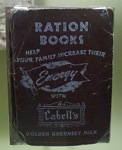
20120907-182803.jpg “I have too much to do and too little time.”

This phrase is something anyone who knows me will recognize as a regular litany coming from me. I don’t think I’m alone in feeling this way, though I am quite sure there are many more people who bear this universal challenge with more fortitude and less verbosity than I tend to manage.

The Ration Book, an artifact from the World War II era, reminds us of a time when the idea of too much to do and too little time (not to mention resources) took on depths of meaning that only those who experienced it can truly understand. For those of you who slept through your history classes, Ration Book coupons were required throughout the second world war to buy the supplies that were scarce, from sugar to gasoline. My old-time radio station even played a vintage commercial the other day where the spokesman urged housewives to save their used grease to turn in for making rubber! Households planted Victory Gardens to reduce the load on agricultural resources. The public was provided with toll-free numbers to contact in order to learn pointers about canning. There was so little to go around, it became everyone’s job to make sure nothing was wasted.

Like a country fighting a global-wide war on multiple fronts, each of us has only so many resources with which to accomplish what we feel is required of us in this life, whether that be work goals, family responsibilities, maintaining our households, or writing a blog! The choices we make every day determine how much we have available for the next thing we have to do. If we don’t prioritize well, we may wind up using all our resources on things that really don’t matter too much in the grand scheme of things.

Making the effort to map out what we do and why we do it might just give us an insight into better resource management. We should create our own Ration Book, making sure the items on our to-do list that are really important actually get done. And shouldn’t God and His goals be at the top of our resource and to-do list?

I am thankful as I reflect on the struggles and sacrifices that were required during World War II that God alone has no Ration Book. His resources are limitless. The love and support He has to offer are without end. We can dip into the truths of His word and go to Him in prayer as often and as long as we like, and we will never run out of “coupons.” The armor of God that Paul encourages us to put on will never fail us. And, many times, God’s love provides us with resources we didn’t realize we had in order to accomplish His will.

In this finite reality, only our ability to reach toward the Infinite through the intercession of Christ makes it possible for us to expand our Ration Books so that His love may be experienced by non-believers through us.

Posted in Christian Living, Faith

He’s Everywhere

20120901-100813.jpg You can learn more about God anywhere you are, even if where you are is a tiny, but fun, zoo in a place like Abilene, TX.

At the Abilene Zoo, you can purchase specially-made crackers that you can feed to some of the animals, including the giraffes. But how do you get access to a giraffe to feed it a cracker? Luckily, the zoo has a wonderful bridge that arches over the giraffe enclosure to allow you easy access to the giraffe at his own level:

20120901-101614.jpg

So, how does a chance to feel a giraffe’s tongue on your cracker-filled, outstretched hand teach you something about God? For one, without the bridge that brings you on eye-level with the giraffes, what chance would you really have to pat the silky nose of such a tall, tall animal?

Like the bridge, Christ serves as our source to reach out to the Almighty Creator. As our Intercessor, Christ offers us the bridge to reach out to God. Even though God is so mighty, so beyond our ability to fully understand, because Christ lived as a human, died for our sins, and rose again incarnate, we get to walk with Him beyond the curtain into the innermost sanctum to worship.

Those who, through prayer or through the deep breath of clean air on a perfect day, feel the presence of God, stroke His silky nuzzle (so to speak), know the value of the Bridge that gets us there.

Who knew a trip to the zoo could be so illuminating . . . besides God, that is?

Posted in Christian Living, Faith

The Eyes That See

20120821-195839.jpgAnyone who has ever lived with an animal knows the almost creepy feeling you can get that something is boring into your back–namely the fixed eyeballs of your beloved pet as he wills you to take a look in his direction. You may not have even seen him come into the room, but suddenly you are aware of him standing there, silently requesting his dinner.

If only we could remember that God is also always there, silently watching, with eyes even more piercing than any of His creations.

But the comparison goes even further than an ever-presence. Just as a dog is totally devoted to its owner, God is wholly devoted to us, even though we are far from “owning” our Maker. No matter what His piercing eyes see, He is always ready to forgive, and nothing we do can separate us from His love.

As Paul proclaims in Romans 8:38-39, “For I am convinced that neither death nor life, neither angels nor demons, neither the present nor the future, nor any powers, neither height nor depth, nor anything else in all creation, will be able to separate us from the love of God that is in Christ Jesus our Lord” (NIV).

So, the next time you think about the omnipotent power of God, remember that the eyes that see everything are tender, gazing with a compassion we lack the ability to understand upon all of us, always.

Posted in Christian Living, Living, Self-Help

Are You Too Old To Be “Schooled?”

20120813-184144.jpg Anyone who has ever been a teacher in a formal setting knows that you learn materials best by having to teach others, but you also know that you have plenty of things you can also learn from your students, as long as you are open to the idea.

But, anyone can benefit from the possibilities that occur when we are open to learning from others, no matter if we are supposed to be teaching those others or not. And those others can be young people half our age as well as our “elders,” can be people who make almost no money to those who make millions.

Case in point: I have been doing desktop publishing for our family health food store for almost 17 years, an outcropping of experience I started gaining when I was just in high school journalism classes. Lately, I have had to hand over some of my duties to a young woman who works for us. She is about to begin her junior year in college. I am almost 20 years out from my graduate degree. Sure, so far, I’ve had to edit her work as she puts together test ads for me, but they are fairly small changes that I can easily explain to her to improve upon the next time.

What I have learned so far is that it is very nice to have a second voice offering ideas about advertising slogans and perspectives. It is quite a bit quicker to edit an ad layout that is already quite strong than to have to come up with the entire ad to begin with. I also have been reminded that other people can come up with creative and intelligent ideas.

Today, I even learned that I could use a computer program I hadn’t even thought about in a while to create cropped pictures with traced transparencies that will be very useful for my advertising and marketing and website purposes. I was so happy to be able to say to my younger employee that we could learn from each other during this process! And the employee was excited too.

My point is that in order to learn from anyone, from a superior at work to a young person you might otherwise write off as naive or inexperienced, you have to be open to the possibilities and willing to see the world through an unbiased lens. Forget the attitude and especially the fear that keeps you from admitting that you still have things to learn, especially when you are dealing one-on-one with somebody. I think you will find that people will respect you more when you are honest about what you know and don’t know instead of putting on an act of bravado and never admitting that you still have something to learn.

God wants us to be always open to instruction. The Proverbs discuss the importance of discipline. The Old Testament is replete with reminders that God will humble us if we do not take care of our attitude ourselves. In the New Testament, Jesus reminds us that we must come to Him as little children, meaning with an attitude of full faith that includes admitting we don’t understand everything but are willing to believe anyway.

None of us are ever too old to be schooled. And since we never know exactly how God is working the things that happen in our lives to the good, don’t we all have every reason to be open to learning from anything and everything that happens to us? Even a two-year-old knows a few things that we have managed to forget as adults. Have you ever seen a better nap-taker?

Posted in Christian Living, Faith

Delightfully Sweet

20120720-170411.jpg When really bad things happen to other people, once you finish doing what you can do to help those people (which, most of the time is time spent on your knees in prayer for them), it’s then that you can take a moment to appreciate the good things that God gave you that day.

In his book, “Where is God When It Hurts,” Philip Yancey explains that one of the good things about pain is that, without it, we wouldn’t have a concept of what it really means to be healthy. This certainly applies on the physical level, but it also applies to our emotional state. Without loss, we wouldn’t understand gain. For those who have survived life-threatening illness, for example, every day when you don’t feel sick or that illness stays in remission is a good day.

Too often, we get so caught up in the day-to-day challenges of work, housework, cooking, errands, that we forget to appreciate the “normality” of that day. What a blessing dirty dishes can be! What an even bigger blessing the sight of butterflies and birds outside my window.

Bad things are going to happen in an evil world, even to those who believe in the One who gave His all for us. Believing that God “works to the good all things for those who believe in Him,” is sometimes hard to do when really bad things happen. But, isn’t that what faith is all about?

Posted in Christian Living, Faith

The Trouble With Masks

20120706-202356.jpgWe all need a little bit of protection now and again. For example, if my sister figures out I posted this picture of her all geared up for some winter horseback riding, I will need some full body armor. But I wonder how often the protections we put on daily, those invisible masks and personality traits that we have used to wall ourselves away from the potential hurts of this world, actually keep us from truly reaching out to others as God intended us to do? After all, He is more interested in us showing love to others than in keeping our sense of pride in tact.

Actually, God is quite against pride, a fact I seem to often forget. Pride keeps me from saying “I love you” to people who may need most to hear it. It keeps me from sharing my doubts with others when realizing that we all have similar questions about this world and our places in it might have been just what somebody else needed to hear. Pride lets me fall into the trap of thinking that I am doing a pretty good job in my Christian walk, blinding me to my own sin and making me judgmental about the sin it is so easy to see in others. I believe Jesus said something about a log and a toothpick.

I learned the value of stripping away masks when I began my yoga class several years ago. Having never been an athletic person, I pre-determined that I was going to be the worst student in the class and that THAT WAS GOING TO BE OK. Approaching my exercise in this way freed me to concentrate on what was most important for my yoga, which was paying attention to what my own body was telling me as I tried the exercises. This decision to strip away my masks also allowed me to share when it was asked of me in a way that would benefit both me and my sharing partner. I have become a more open person in all aspects of my life, just because I decided to be myself in an otherwise intimidating exercise class.

As for the protection part of masks, Paul gives us directions for a far superior form of protection, available to us through the grace of God. In Ephesians 6, he writes that we should put on the full armor of God:

14 Stand firm then, with the belt of truth buckled around your waist, with the breastplate of righteousness in place, 15 and with your feet fitted with the readiness that comes from the gospel of peace. 16 In addition to all this, take up the shield of faith, with which you can extinguish all the flaming arrows of the evil one. 17 Take the helmet of salvation and the sword of the Spirit, which is the word of God.

Our enemy isn’t really each other, after all. We are all in this same struggle together, and none of us escape the ultimate destiny of every human existence. Instead of masks that cut us off from each other, we should be banding together against our true enemy, the evil one who would keep us from the Ultimate One.

No mask is worth keeping someone else from the love of Christ. Next time your pride or insecurities tempt you to put one on, think about that. Loving others may mean looking a bit silly sometimes, but the ultimate goal of salvation far outweighs any indignities we might suffer.

Posted in Christian Living, Faith, Living

You Want To Know These Three Important Questions For Your Life

We can ALL be this relaxed. Read how.

I have been doing a much better job lately of living day-to-day.  This approach to life, realizing that what I really have is only this moment, taking to heart Jesus’ admonition to take care of this day because each day has enough trouble of its own, is really a great leap forward for a compulsive worrier such as myself.  It is a very freeing way to approach life when you don’t bog yourself down with the “what ifs” that plague the anxiety-ridden.

As God so often works, I happened to read a really great passage in C.S. Lewis’ Scewtape Letters this week that will help me live each moment in an even more Godly way.  After all, it’s easy to live-in-the-moment and fall into the trap of living for the moment, plunging yourself solely into the pleasures and challenges of this life instead of contemplating the next one.


What C.S. Lewis proposes is that each person has three questions to ask of herself before doing anything:

  1. Is it righteous?
  2. Is it prudent?
  3. Is it practical?

We need to be sure that we define these questions according to the Bible.  The first word, righteous, means “acting in accord with divine or moral law; free from guilt or sin” according to Webster’s Dictionary.  If we want the Bible’s definition, we need only turn to the Sermon on the Mount, starting in Matthew 5, to learn about this word from every angle.  Jesus simplified righteousness the most when He summed up the law with two edicts: loving God first and most and loving and treating everyone else as we ourselves want to be loved and treated.  So, when I ask myself, is this righteous, I know I have to begin my thinking in the realm of love that IS God.

Something that is prudent is “marked by wisdom or judiciousness” (Webster’s).  We know from the Proverbs that fear of God is the beginning of wisdom.  We also know that we can only gain wisdom of God through daily study of His word, daily time with Him in prayer, and concsious knowledge on our part that we really don’t know anything at all when compared with God’s wisdom.  So, is our action wise according to the dictates laid out by God, according to His goals for a Christian’s life?

Practical things are “manifested in action, not theoretical or ideal.”  They are “capable of being put to use or account/ useful” (Webster’s).  It can be so easy to get caught up in our own thoughts all the time, wondering or complaining about how things should be instead of taking care of how things are.  But, practical actions are more likely to point outward, to think of others instead of just the self.  It’s all very easy to say to ourselves that we love other people.  It is another thing altogether to serve food in a soup kitchen or volunteer for a community group or bake dinner for the older neighbor who lives next door.  Again, Jesus helped define what was practical during His ministry, often to the shock of the “more religious” Pharisees, who could not see the holiness of some of His actions because they could not see past their own rigidly-defined religion.  For example, they did not understand how unclean things like utensils used to eat on the outside do not make a person unclean on the inside.

It’s often been said to count to ten before speaking when you are angry.  I like this idea of taking time to ask myself three questions before I take an action or say something I may otherwise regret.  I especially love the way that God works for the good the things that happen in our lives.  Just as I am learning to live without worry, God gives me something positive to think about to make my “moment-living” even more productive from a Christian perspective.  Thank you, Jesus!

Posted in Christian Living, Faith, Love

Symbiot Or Parasite?

20120622-192329.jpg Standing proudly outside my back window is a visual lesson even a non-botanist such as myself can understand. Twining around one stalky plant with large leaves and seasonal flowers is a vine-like weed that can take over your backyard if you let it. (I told you I was no botanist.)

In biology, we learned that two living things so entwined have a win-lose or win-win situation. In other words, my backyard plants are either in a parasitic or symbiotic relationship. Parasites live off their hosts at the host’s peril. In a symbiotic situation, both parties benefit from the intertwined relationship.

As I spent my twenty minutes on my stepper looking out at this situation, I pondered what lessons I could learn about my own life from this picture of nature. I am, after all, entwined with God much like my two plants. But is that relationship symbiotic, or am I just a parasite, taking from God without giving anything back?

How do I increase my own value to God? How did I do it this week? Some of the quick answers that came to me were the too few times I expressed love to others through my words and actions during this week. Also, I have spent time praising God in my prayers this week.

Knowing that loving and helping others, especially strangers, is a sure way to please God is a pretty easy answer to the symbiotic question. Studying the prayers of the Bible, especially the Psalms, also lets us know that God relishes our praise. He may not need it, but He gets something from it. Why, after all, did He create us in the first place, then give us the free will to choose to worship Him?

I know that I am only saved by grace and not through any action that I take other than the action of accepting that grace, but I certainly don’t want to live my days being a parasite to God. I would much rather have a symbiotic relationship.

So, thank you, God, for creating a world so beautiful and reflective of Your wonder, that is even awesome at its most terrifying and destructive moments, and that always manages to offer us glimpses of Your peace. May we believers live in ways that somehow reflect that wonder.

Posted in Christian Living, Faith, Love

Just Listening

20120608-210710.jpgIt’s funny how things in life seem to happen in bunches. Thomas Pynchon wrote about this phenomenon in The Crying of Lot 49, the way that, once your mind is drawn to the attention of a certain idea or symbol, you suddenly seem to run into that very thing all the time. Pynchon’s point is that the idea or thing was really around you all along. You just didn’t bring it into your perception of reality until you actually acknowledged it.

When I seek to learn about and better understand God, this very same phenomenon seems to happen for me. Truths that were always right in front of me but never really seen by me suddenly become glaringly visible. Some people like to claim God is speaking with them when this type of thing happens, and who am I to disagree? However, since God is there for us all the time, I like to think it is more a factor of my finally listening.

Case in point:

Sunday service this last week focused on the uncomfortable subject of materialism. The pastor used as part of his text the parable from the twelfth chapter of Luke in which a man with abundance makes plans to build larger storehouses for his stuff, not realizing that he would die that very night. Jesus concludes in verse 21: “This is how it will be with anyone who stores up things for himself but is not rich toward God.”

Now, just a few days before that sermon, I had gotten a compulsion to gather up some like-new stuffed animals from around my house and give them to a friend of mine who volunteers with an organization that, among many other things, puts together kits for hospitals to hand out to sexual assault victims, who have to leave all their personal effects with the police as evidence. My stuffed toys were for the growing number of children the hospitals are seeing as victims of assault.

In the class following the sermon, the subject of materialism remained the topic. I was able to share the need for these kits as part of the natural discussion of the class, for which I was glad. Until my friend had told me about this program, I had never thought about that as a need before. And I was pretty sure several of the people in the room hadn’t thought of this need before I mentioned it either.

On Monday, as I sat doing my daily Bible reading, which just happens to have me in the book of Psalms at the moment, I happened upon this verse–

Psalm 49:20–a man who has riches without understanding is like the beasts that perish.

I sat up straighter in my chair. Luke 12:21 loomed in the back of my brain–“This is how it will be with anyone who stores up things for himself but is not rich toward God.” The “understanding” of the Psalms surely means the same as being “rich toward God.” My ears were being called upon to listen.

What was I going to do about it?

One of the first things I did was to keep listening and reflecting as I continued in the Psalms. These were the other truths I heard:

Psalm 51:5-6–Surely I was sinful at birth, sinful from the time my mother conceived me. / Surely you desire truth in the inner parts; you teach me wisdom in the inmost place.

Psalm 51:10-12–Create in me a pure heart, O God, and renew a steadfast spirit within me. Do not cast your presence or take your Holy Spirit from me. Restore to me the joy of your salvation and grant me a willing spirit to sustain me.

Psalm 51:17– The sacrifices of God are a broken spirit; a broken and contrite heart, O God, you will not despise.

Living in the most materialistic country in the world, in a world where just having clean water, a roof over my head, and some money in the bank makes me rich compared to the majority of the planet’s population, it is a daily struggle to make sure God comes before everything else. Too many times I fail. But, if I listen, I know that God will provide me with the steadfast spirit and contrite heart that will bring me closer to Him and make it so much easier to give, storing up my true treasures in heaven, the only home we’ll ever have forever.

Posted in Christian Living, Faith

Stuck in the Mire?

Murky Water Have you ever had just a blah kind of day, where your mind and body both felt just out of whack or irritated, and you just couldn’t put your finger on the exact cause?

Have you ever considered that the exact cause might just be your own unconfessed sin before God?  Sometimes, we get in such an easy habit of beginning or ending our prayers with a blanket “forgive us our sins,” that we forget the awesome power that can be gained from picking apart our sins before God.  He knows what they are already, of course.  But do we?

I started thinking about how not getting specific with God gets me stuck in the mire as I have been reading the Psalms.  In these wonderful poetic prayers, the various authors pour out their sentiments to God in imagery, metaphor, and splendid detail.  The more I read these prayers, the more I am struck by how helpful it is to be specific when you are talking to God.

In a world where there is often 26 hours of things to do in each 24 hour day, we often let getting specific fall between the cracks of all the materialistic things we have convinced ourselves need to be done for our existence not to fall apart.  But God has all the time in the world to listen to us, no matter how long we speak.  So should we.

In Psalm 32, David gives an apt description of what it feels like to be trapped in our sins: “When I kept silent, my bones wasted away through my groaning all day long.  For day and night your [God’s] hand was heavy upon me; my strength was sapped as in the heat of summer.  Then I acknowledged my sin to you and did not cover up my iniquity.  I said, ‘I will confess my transgressions to the Lord’–and you forgave the guilt of my sin” (3-5).

David, who lived in a time without the guarantee of Jesus as intecessor, had many reasons to hide his sin from God, even though God already knew the sin.  Essentially, by not confessing to God, David was only denying the truth to himself, and this denial effectively shut him off from God!  How much simpler it should be for those of us who have the Great Intecessor to go freely to God to admit to ourselves the sins we have committed against Him.  After all, we have all assurance through the grace of Christ that God will forgive us, whereas David did not.

Are your bones wasting away?  It shouldn’t be that way for those who believe.  “Blessed is he whose transgressions are forgiven, whose sins are covered,” David begins the psalm (32:1).  “Blessed is the man whose sin the Lord does not count against him and in whose spirit is no deceit” (32:2).  The person David is describing is every Christian.  We all have the right through grace to claim this state of being.

But we have to be honest with ourselves.  There is no lying to God, of course, though we say those lies anyway, the things we want to believe about ourselves even though the tiny voice at the back of our mind is telling us we are wrong.  Oh, to be the spirit with no deceit before the Father!

What we lose when we don’t confess our specific sins is the chance to grab what David prized most in his relationship with God, and that is the ability to feel the full joy of God, to grasp God’s righteousness, and to praise Him in full understanding of the depth and breadth of God’s goodness.  David finishes Psalms 32 with just such a declaration: “Rejoice in the Lord and be glad, you righteous; sing, all you who are upright in heart!” (11).

There is no way to get there without first stripping ourselves bare before the One who already knows.  By acknowledging to Him where we have fallen, we effectively admit it to ourselves, casting off the heavy hand upon us and freeing ourselves to truly rejoice!