Posted in Christian Living, Faith

The Bucket Theory

water into bucket

Working in the office earlier this week, I handed our office phone to one of our younger employees to have her call our store.  She dialed the main number and then called to me, handing me the phone as if the landline were not working.  I put the phone to my ear, heard a busy signal, and hung up the phone.  After getting the employee an alternate number to call, I assured her the phone was working and went back to my part of the office.

In the back of my mind, I realized what had just happened.  I rounded the corner and asked her, “Was that the first time you have ever heard a busy signal?”  She shyly admitted that it was.

With our advances in technology, I suppose this isn’t as crazy at it seems, that a young woman of 19 might never have heard a busy signal before.  Most people have cell phones or voice mail, so that if you call them and they are already on the phone, you are sent to another voice, not exposed to the braaat, braaat that we older folk recognize as the signal to call again later.

The experience of feeling how quickly the world around us is changing (this 19-year-old could literally be the age of my own child if I had one) reminded me of an analogy my father-in-law has often shared with me, especially when I am taking myself too seriously (which is way more often than I would like to admit)–an analogy I like to refer to as “the bucket theory.”

Think of a bucket with water in it. If you stick your hand in, you become part of the bucket of water. But, if you remove your hand, rather than leaving a hole where your hand had been, the water rushes in to fill your vacated space, rather like you had never been there at all.

In this fallen world we humans call reality, “life” works just like a hand being placed in and out of a bucket. If you think your workplace won’t be able to function without you there, think again. Somehow, life finds a way. People figure out how to fill in the gaps your absence creates. Even when we lose those closest to us, life must eventually move forward.

Most fortunately for us, God’s reality is completely opposite to the idea that each one of us is replaceable. For God, every drop of water matters. In God’s bucket, there are many holes between the molecules where hands once had been because every person matters to God:

“For the son of man has come to save that which was lost,” [Jesus tells his followers]. “What do you think? If any man has a hundred sheep, and one of them has gone astray, does he not leave the ninety-nine on the mountains and go and search for the one that is straying? If it turns out that he finds it, truly I say to you, he rejoices over it more than over the ninety-nine which have not gone astray. So it is not the will of your Father who is in heaven that one of these little ones perish. (Matthew 18:11-14 NASB)

Several times in the gospels, Christ compels us not to worry. God has our back. He takes care of the smallest sparrow. He clothes the grasses of the meadow in splendor. In her great song, I Am, Nicole Nordemann puts the joy God takes in each one of us this way:

When life had begun, I was woven and spun/ You let the angels dance around the throne. / And who can say when, but they’ll dance again/ when I am free and finally headed home. . . .

I love these lines because they remind me to feel the complete awe of God’s love for me.  Imagine the angels of heaven actually celebrating my beginning, the time when I came to earth to begin my journey of growth that will prepare me for the rewards of our true home, and then celebrating again when I actually am there.

Earlier last week, I was having a rather bad morning after a disappointing day before.  My Bible reading took me to Isaiah.  The verses I read about God’s power to save His people spoke to me about the power He has to help me with my own problems, as long as I wholly put my trust in Him:

What sorrow for those who are wise in their own eyes and think themselves so clever. . . . Unless your faith is firm, I cannot make you stand firm.  (Isaiah 5:21/ 7:9b)

In Isaiah, besides God’s speaking through this prophet to assure the Israelites that there would come a time when the enemies who had oppressed the Jews would be defeated, there are also many promises about the coming of Christ, our ultimate source of salvation and personal relationship with God.

I was particularly struck by God’s admonition for us to:

Make the LORD of Heaven’s Armies holy in your life.  (Isaiah 8:13)

In a time when I most needed it, I was reminded how powerful it is to really place my problems in God’s hands.  I was particularly struck by the recognition that even as God was speaking the words to Isaiah that were speaking to me as I read that morning, He knew that I would need those words on that day as well!

In other words, we are all so important to God, that He knows what we will do and what we will need, even though we have the freedom of choice.  And His power is so awesome, that He knew all the things there are to know about me even as He spoke the universe into existence.

With an omnipotent, loving God, there is no bucket theory.  He wants and needs every molecule in His unlimited bucket.  The angels dance for us!  We should put every molecule in us into praising Him and growing our relationship with Him.  As Jesus once said:

“I tell you,” he replied, “if they keep quiet, the stones will cry out.”  (Luke 19:40)

What if we truly treated each other like we want ourselves to be treated?  In a world where the water fills in the gaps left by a hand removed, wouldn’t it be wonderful if we were still made to feel important for the role we had played in the bucket in the first place?  We could and should do that for each other.

But, most importantly, God does it for us everyday, and He already knows the days we will need Him most.

Don’t let the “bucket moments” of this life get you down.  It’s time to realize that when we put our faith in God to see us through our challenges, the angels dance!




Posted in Christian Living, Faith

6 Lessons from 2014

2014

Truthfully, 2014 was a long year for me.  In fact, there’s a Mac Davis song about our shared hometown in which he laments, “I thought happiness was Lubbock, Texas in my rearview mirror . . . .”  When I think about this past year, I feel like happiness is 2014 in my rearview mirror.

But, just as Davis concludes that “happiness is Lubbock, Texas growing nearer and dearer,” I suppose there are actually quite a few lessons I have learned along the bumpy road that was this past year that I should carry forward into 2015.  For what the thoughts are worth, here they are:

Lesson 1: This isn’t a contest–life is hard for everybody.

I have been battling a lot of muscle pain that just keeps getting worse over the last several years.  I take supplements, go to alternative therapies, and have even resorted to prescription medications.  Finally, this year I ruled out everything except what it turned out to be, which is fibromyalgia.  This diagnosis goes along nicely with my hypothyroidism, polycystic ovary syndrome, generalized anxiety disorder, and clinical depression.

Despite facing physical and mental difficulties most of my life, I have always proceeded under the reality that I don’t have to look very far to find somebody who is facing something even more difficult.  Two of my relatives are currently under treatment for cancer.  A number of people in my Bible class lost loved ones after long illnesses and even unexpectedly this past year.

But this year, I had to learn to quit looking at life as a contest.  In other words, I had to go ahead and admit that I had my own problems to face, and it was OK to feel a little sorry for myself about that every once in a while.  I gave myself permission to have a bad day now and then instead of comparing myself to how other people seem to be handling their challenges and berating myself for not doing more.

I don’t mean that I took this lesson as an excuse to be lazy.  After all, God wants us to take pleasure in the work that we do.  He wants us to face life’s challenges to learn perseverance and build our character and relationship with Him. But I am learning to pay more attention to what I feel like, both physically and mentally, before I decide the next thing to do each day.

Lesson 2: Learning that cliches can be true hurts

Starting in June of 2013, my female Maine Coon began to have issues.  After an expensive visit or two to the vet, we discovered that she was suffering from an enlarged colon, apparently a pretty common problem for a 14-year-old cat of her type.

We changed her diet, added probiotics and other supplements to her daily routine, put up with smells no one wants to know about, and started having to place adult diaper pads in special places all over the house.  One evening in March, it became apparent that we were keeping our little darling alive for ourselves more than for the cat.  The next morning, the vet agreed.  I held her as the needle went in.

Now, if you know me, you know that I do a lot of complaining about the trouble it is to have my cats and how I was looking forward to not having to do all this work for such little payback (cats are not cuddlers, at least not mine).  In my defense, I always qualified my grumbling by saying I loved my cats.

But, it wasn’t until I had to say goodbye to Mitzi, the one cat who actually would sit in my lap, that I realized what it means when people warn you not to take things for granted.  I have taken the rest of this year to get over it.  I’ve bought a half dozen stuffed animal “replacements.”  I’m just a little ashamed to admit that I even take one of them with me on long drives.  Somehow, holding the stuffed animal seems to help a little bit.

I still have one male cat to care for.  He sometimes deigns to sleep between my legs at night so I can’t move.  He will even sit in the middle of the living room floor to keep an eye on me during the evening hours.  But he is my husband’s cat.

In case you want to tell me to just get it over with and go find another cat or dog, I am determined not to do so.  It took a while for me to adjust to even having animals.  Being an anxious person, I worried about the silliest things.  What my cats have taught me is another post-worth of lessons.  But, I do not intend to repeat the experience again for a long, long while.

Lesson 3: Even if it’s only a small thing that seems like nothing, still do something when it comes to your relationships with other people

As I mentioned earlier, a couple of my relatives have been in major battles against cancer this year.  Both of them live far away, and I have quite a few responsibilities of my own, as well as my health issues, so there really wasn’t much that I could physically do for them.

Of course, I pray and also have added them to my Bible class and Life Group’s prayer lists.  But another thing I knew I could do was send cards on a semi-regular basis.  Since I am a writer, it is a fun challenge for me to write something entertaining, caring, or hopeful in a card and send it off.

Because I had decided to do this, I added my 91-year-old Grandma to my card list.  (Being related to me, she isn’t much for talking on the phone.)  While I was at it, I dropped cards in the mail to people from church who were having difficult times.

Maybe I’ve only sent out a little over a dozen cards in total (I haven’t kept count), but each person has thanked me.  Being a post office kid, I know as well as anyone how much fun it can be to get a piece of mail that isn’t a bill or bad news.

My little something had another effect.  It made me feel better about myself during a year when I wasn’t feeling too swift about much of anything.

Lesson 4:  Learn when to say when

Especially now that I know I have fibromyalgia, I understand the importance of trying to pay attention to what my body is telling me.  Some days, I may need to do less than I do on other days.  If I get better at this, hopefully I will be in less pain.

Learning to say when will also help me get more control over my anxiety instead of having to rely on prescription medication.  The when here is knowing when to stop the obsessive thinking about problems that are not problems, business that isn’t my business, and negative thoughts about myself and others that are incorrect or not my place to have.

Lesson 5: Everyone has a perspective

One of the good things that occurred this past year was the improvement in my ability to understand that everyone has a different perspective on what happens in their world.  Trying to see things through the eyes of somebody else is one of my most difficult challenges.

Still, I think that I am getting better at just listening to what other people have to say without trying to think up an argument against their ideas.  Hopefully, I am making more room in my brain for these different ways of looking at the world.

When you have to slow down because your body is refusing to cooperate with where your mind wants to go, it is surprising how many real possibilities finally get to stand out in your brain.  There is room for God to get His message through to you when you give Him more silences in a day.

Lesson 6: Problems eventually work themselves out

Here’s the lesson I keep having to learn over and over and over again.  Did I mention I am a natural at worrying?  That means I am actively looking for problems that need solving all of the time.  It is exhausting work, and a job that no one has given me except myself.

Even God doesn’t want this burden for me.  Over and over in my life, He proves to me that He is in control.  Over and over I go back to acting as if that somehow makes no difference.  I will come up with a solution, even if it means I tie myself up in knots trying to think my way out of the box I have placed myself in!

This past year, I had a leak on a fairly new roof (one of my big fears).  It got fixed.  The year before that, I had a termite infestation.  Again, it did no discernible damage, and I now have treatment baits all over my house to guard against future attacks.  When I first moved into my house more than a dozen years ago, it took less than six months for the foundation to shift (another of my biggest fears).  A dozen years later, the latest checks on the foundation show that it is still doing well.

In other words, just like my Dad has been telling me since I was knee-high to a grasshopper–85% of the things I worry about never happen, and the 15% that do are never as bad as I think they will be.

2014 was one of those years that proved that bad things could happen, and I could survive anyway–not because of anything special about me, but because God is on my side.  Just as He gave His only begotten Son for me, He did the same for you.

And He is always there for ALL of us.  We just need to ask.

Here’s to a less challenging 2015.  I could do with a little fewer lessons in perseverance, but I will lean on God and accept, as always, that His will be done.

In Christ,
Ramona


Posted in Christian Living, Love

Looking Through God’s Glasses

large stone jars

Each heart knows its own bitterness,
and no one else can fully share its joy.  (Proverbs 14:10)

One of my areas of study for my first degree was in cultural anthropology, where you quickly learn that worldviews across cultures can be vastly different and challenging to understand until you learn a sort of detached, non-judgmental stance with which to look at others’ ways of experiencing reality.

Even then, it can be difficult to realize that others may still see sincere value in ancient stories like one of the Pueblo creation myths that tells how Spider Grandmother wove the world into existence in stories that spindled out of her like a giant, interconnecting web.

If seeing the world through the lense of another culture’s experiences is challenging, learning to see reality through the perspective of someone who shares your same culture and background can be downright difficult.  How do you explain the sibling whose recollections from childhood make you think you must have grown up in two different households?  How do you manage to have a civilized, non-heated discussion with someone who sits on the opposite side of your particular political fence?

Part of the wonder of Christ on earth was His ability to see, not flesh and blood, but through our material selves to the very core of the person with whom He was interacting.  Seeing through God’s eyes, Christ knows the heart.  That means He sees and understands how each of us perceive the world around us.  He knows why some of us are afraid of spiders or don’t like romantic comedies.  More importantly, He knows why we make the choices we do in this life, even when those choices go against Him.

But, since it is God’s place to judge and our place to be gentle instructors, how do we approach other’s through God’s glasses and not our own human tendencies to jump to conclusions, see things from only our own experiences, and be quick to want revenge or “justice?”

Like all skills worth learning, this too takes practice.  We can start by asking questions, first of ourselves.  Why am I so angry?  What exactly do I think is wrong with this situation?  Is it really my place to step into this situation at all?  What might be another reason for what I have concluded besides the reasons I have already assumed?  Have I taken time to talk to the person in a non-judgmental way–asking questions that are not threatening but are designed to help me understand where the other person is coming from, what the other person is thinking?

CeCe Winans has a song about this topic called, “Alabaster Box,” that sheds some light on the grave mistakes we make when we jump to conclusions about others and pass judgment on them.  The song is about the episode in Luke 7 where the woman who had lived a sinful life found out Jesus was in town and approached Him with an alabaster box full of expensive perfume that she used to bathe Him.

The townspeople chastised the woman for wasting such a valuable resource.  They felt the expensive perfume could have been sold and the monies used to help the poor.  But Jesus, who sees through to the heart, didn’t feel the same way:

Turning toward the woman, He said to Simon, “Do you see this woman? I entered your house; you gave Me no water for My feet, but she has wet My feet with her tears and wiped them with her hair. “You gave Me no kiss; but she, since the time I came in, has not ceased to kiss My feet. You did not anoint My head with oil, but she anointed My feet with perfume. “For this reason I say to you, her sins, which are many, have been forgiven, for she loved much; but he who is forgiven little, loves little.” Then He said to her, “Your sins have been forgiven.” Those who were reclining at the table with Him began to say to themselves, “Who is this man who even forgives sins?” And He said to the woman, “Your faith has saved you; go in peace.” (Luke 7:44-50)

CeCe’s chorus puts this another way:

Until the day, when Jesus came to me and healed my soul with the wonder of His touch.  You don’t know the cost, of the oil in my Alabaster box.

The first time I heard this song, it had a profound effect on me.  Despite the fact that I had had training in seeing other cultural worldviews without being judgmental, I was a long way from being able to look at people from my own culture with the same magnanimity.  This song reminded me how much more work I needed to do in order to be able to look at people around me with love instead of trying to analyze what is right and wrong about the things that they do.

But this idea of perception goes deeper than just not judging other people.  If we are really serious about it, we will take pains to try to see things as if we were the other person.  This means we have to let go of more than just a little bit of ourselves and our need to be right.  Could the perception of the other actually have merits we haven’t taken the time to consider before?

Don’t get me wrong.  Trying to see through God’s glasses means we are still bound by the laws of right and wrong by which God is God.  But because we are not God, it is not our place to write somebody off.  It is our place to be concerned with our own right and wrong, which, if we are honest, is a full-time position.

Perhaps Will Rogers, one of my favorite cowboys, concludes it best:

Never miss a good chance to shut up.

The next time I feel myself propelled toward jumping to conclusions and saying something I will later regret, I will do my best to remember this sound advice.

Posted in Christian Living, Christianity, Faith

This Road to Love

road-61904_640

By his divine power, God has given us everything we need for living a godly life. We have received all of this by coming to know him, the one who called us to himself by means of his marvelous glory and excellence. And because of his glory and excellence, he has given us great and precious promises. These are the promises that enable you to share his divine nature and escape the world’s corruption caused by human desires.

In view of all this, make every effort to respond to God’s promises. Supplement your faith with a generous provision of moral excellence, and moral excellence with knowledge, and knowledge with self-control, and self-control with patient endurance, and patient endurance with godliness, and godliness with brotherly affection, and brotherly affection with love for everyone.

The more you grow like this, the more productive and useful you will be in your knowledge of our Lord Jesus Christ. (2 Peter 1: 3-8 NLT)

I have read these words from 2 Peter on many occasions, but they never cease to strike me as a clear roadmap to the kind of life that truly reflects a belief in Christ.  Still, no matter how clear this roadmap is, it also involves steps that we can only survive if we take them knowing we need God every step of the way.

So, let’s begin by spelling out the steps on the road to “love for everyone” that should be the end goal of every Christian.  As Peter makes clear, each step on the path to love leads to the next, as skills build upon skills to reach the greatest skill of all.  Here, then,  is the list of these skills:

  • Faith
  • Moral Excellence
  • Knowledge
  • Self-Control
  • Patient Endurance
  • Godliness
  • Brotherly Affection
  • Love for everyone

I just completed a trip to Disney World that proved my secret plan to spend the last decade or so of my life as a missionary in some country where my paltry retirement might actually keep me just above poverty level went up in smoke about as quickly as you can sing the Mickey Mouse Club theme.  Besides having no physical stamina, I ran out of patient endurance after the first three hours in an overcrowded theme park.  Self-control drifted skyward as I sighted the first Mickey sandwich ice cream trolley.  The only love I had for everyone was the kind where I would have loved for no one else to be in the park!

So, how do we achieve the seemingly unachievable?  Peter tells us we are able because of God’s promises to us: These are the promises that enable you to share his divine nature and escape the world’s corruption caused by human desires (2 Peter 1:4).  Becoming a Christian is as easy as admitting to God that you are a sinner who needs redeemed.  Becoming Christ-like is a daily, conscious practice of making one’s Christianity not a mantle to be put on and off, but the very act of being.

Because of faith, I seek moral excellence.  I want to say only what is uplifting and/or holy.  I strive to do what is right always.  As I grow in my ability to be right more than I am wrong, I gain a kind of knowledge that can’t be found in a book, the knowledge of ways to act in belief and the knowledge of the superior path of righteousness over worldliness.  As we realize that doing right feels better than doing wrong, we increase our ability to control the self.  When we can control ourselves so that we do not give in to the human desires that lead us further from the ways of God, we are more likely to actively be patient with our circumstances and with others.

A Godly person reflects the daily practice of sowing seeds of righteousness in good soil.  When we join like-minded people in our enthusiasm for living a Godly life, we approach the brotherly affection to which Peter refers.  Our brothers include all those who believe in Christ like we do (including, of course, our sisters as well).

When we can love those who think as we think (which is the easiest way to love), we may just be ready to step out in faith to love even those who do not believe what we believe.  Loving everyone else means turning the other cheek, as Christ instructs.  The Golden Rule is Golden because, not only does it make this world more bearable, it stores up for us the treasures in heaven that Jesus says are our end goal instead of the treasures on this earth where moth and rust can and will destroy.

Like the Fruit of the Spirit of Galatians 5:22, the steps to love of everyone in 2 Peter is your roadmap to a healthier relationship with Jesus, our Lord.  Remembering that our relationship with God must be on the right track for our relationship with other people to have a chance of growing is especially important.

As we enter the busiest time of our holiday season, I hope to bring to mind the lessons of 2 Peter as I wrangle through the increased traffic and crowds.  I will begin by remembering why we have this holiday in the first place: because our loving Creator chose to sacrifice a piece of Himself for the sins of all of us so that we all have the opportunity to grasp with both hands the promise of eternal life.

Now, that’s a road to love that I will gladly travel.  I look forward to seeing you on the journey.

Posted in Christian Living, Faith

His Faithful Love Endures

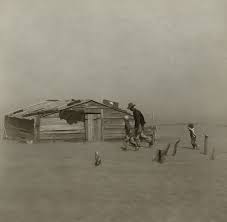
Challenges like the dust bowl of another generation are just one of many things we humans endure.

As a person with anxiety issues, I avoid the news as much as possible.  Being a fan of history, I realize the potential fallacy of this head-in-the-sand attitude.  But, since most days I have to overcome the challenge of worrying about what my logical mind knows are silly things–like the pine needles on my roof or whether the sugar ants I thought I had conquered in my kitchen will return again–I feel validated in my choice to remain mostly oblivious.

But, I do occasionally watch the news.  My first memory of seeing a newscast is standing in the kitchen of our 75-year-old house as the 13-inch black and white television flashed images of Russian soldiers with weapons moving through the woods as if they might burst through the back pantry door any moment.  The newscaster said that Russia had developed some kind of weapon that was superior to what our soldiers had in this time of relative peace known as the cold war.

In my fifth grade classroom, first my teacher told us about being a girl our age and hearing about Pearl Harbor.  She was a passionate storyteller who painted a vivid picture of her own, innocent world collapsing in around her.  Suddenly, the blue sky over the front lawn where she played on the tire swing or rode her bike was an ominous void where planes might bomb her into oblivion at any moment.

That same year, I stood in the library as a television blared reports that our President had been shot.  One of my classmates cheered.  There were rumors that the teacher standing next to me in the library had snuck out to her vehicle and cried.

I once told a friend of another generation that mine felt like one of the first generations in many to not really be challenged.  She, after all, had lost her fiancé in Vietnam.  I conveniently forgot that one of my own high school classmates had died serving our country in a war we are for all intents and purposes still fighting.

So, there is nothing new under the sun, it seems.  Each generation faces its own share of challenges, whether they be wars against brothers-turned-enemies, economic hardships, or the truly unrelenting power of nature.  Each generation must forge its own path to the perseverance that builds character.  And every day we choose to take one more step forward, we prove our own heroic spirit.

But the most heroic spirit of all is the humble one that realizes all things good come from the ONE who breathed everything into existence.

I was reminded of this truth as I read through the Psalms this week.  In these prayers to God, we learn what it is like to be created and yet in relationship with our Creator.  The various authors of the Psalms praise God, plead with God, bargain with God, and even get angry with Him!  But, they always, always, submit to God’s superior role in the petitioner’s life.

In Psalms 107 and 118, for example, we see the heights and the depths of the human experience:

Give thanks to the LORD, for he is good!  His faithful love endures forever. . . . Let them praise the LORD for his great love and for the wonderful things he has done for them. (Psalm 107:1, 8)

In both these Psalms, besides telling the story of all the good things God has done, the Psalmists also acknowledge their own failings, especially in the face of a perfect God.  They know they do not deserve help.  They know that they have been punished and may still continue to be punished.  But, they also believe in God’s faithfulness.  Even though we created things repeatedly reject Him, God never forgets us.

Believing that God is ever faithful, the Psalmist makes a declaration of belief, asking for success even though the Psalmist knows God may not immediately or ever grant it.  Still, in the end, the Psalmist knows that God will always love:

This is the day the LORD has made.  We will rejoice and be glad in it.  (Psalm 118:24)

Like Job who refused to curse God, even when it seemed like God had taken everything from him, for those who remain constant in the belief that God is faithful, the crazy things that happen in our fallen, cursed world can be placed in the always open hands of a loving Creator.  Somehow, knowing that makes facing a fallen world possible.

I commend those who endure so much, but I also acknowledge that any life is a certain act of endurance.  Since I have problems with anxiety, your mole hill is probably my mountain, but we both still endure.  In the end, the act of being human is not a contest of who had the greatest challenges.  It seems to me that the act of being human is all about enduring through our faith in a faithful God.

In a world full of headlines, I think I’ll stick with the banner that hasn’t changed in centuries:  HIS faithful love endures forever.

I hope we all walk in stronger faith in the coming days.  And if we stumble, then let us turn to the words of others who have gone before us along this same journey.  Open His Word to the Psalms and be ready to find a familiar friend who also loves God.

The LORD who shepherds David shepherds all of us.  I choose to fear no evil when I choose God.

Posted in Christian Living

This Debt I Owe

Warner_Brothers_television_westerns_stars_1959

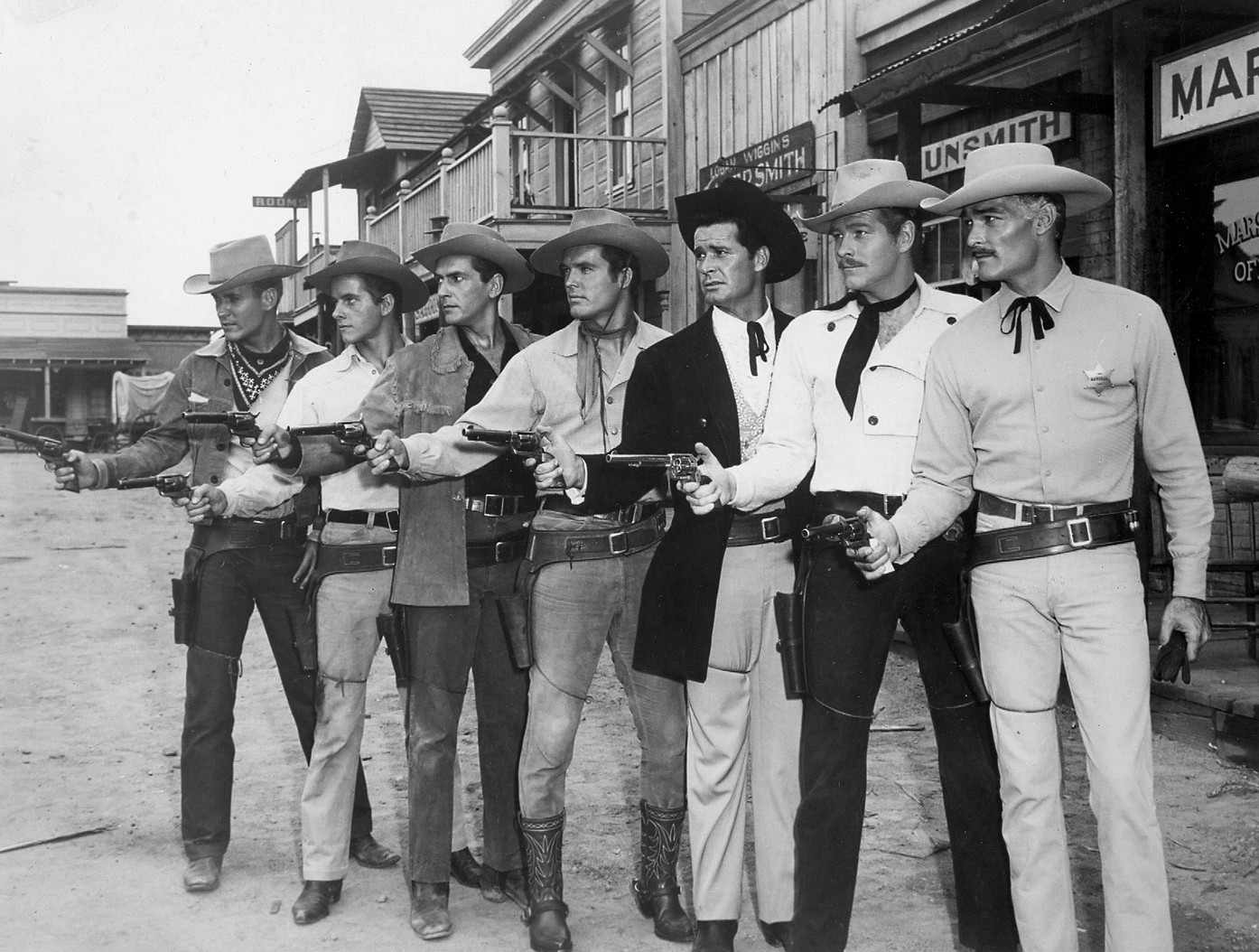
I have a confession to make.  Despite knowing that vengeance belongs to God, I love a good movie where the hero systematically eradicates all the villians.  Even in a story like Eastwood’s Unforgiven, I’m glad to see him take out his enemies because, even though Eastwood has given them every chance to back off, they just won’t give up.  Eastwood may have ultimately lost a bit more of his soul in shooting it out with the bad guys, but as a movie-goer, I am really glad the bad guys bit the dust.

How different are the realities of a world where people live according to the belief that God has the only right to vengeance.  In our modern age, I’m not sure how many of those communities actually exist, but in the pages of my Bible, I find a history of God’s people asking for guidance in dealing with their enemies and giving full credit to God for any victories that they attain.  When the Israelites are on top of their faithfulness with God, no force in the world can beat them.  Vengeance is God’s.

I’ve been reading the Psalms this week.  In David’s Psalms, he repeatedly acknowledges his own sinful state and how little he deserves God’s help.  But, David also acknowledges how he can do nothing without God, how great God is all the time, how willing David is to accept God’s will, whatever that may be.  For David, whatever happens is the will of God, and God is good all the time–even when what God decides to do makes David hurt.

When you read that attitude coming from a man who lives under the weight of sin, you understand more and more just how much David had a heart like God’s.  What I mean is this: in David’s time, there was no such thing as grace.  In order to renew one’s relationship with God, you had to perpetually offer blood sacrifices to make right what you inevitably had done wrong in the sight of God.  Even as David pours his heart out to God in the Psalms, he knows that the only man on earth that can most closely speak to the Maker is the High Priest one day each year when the Holy of Holies is entered after much sacrifice and even more sacrifices are made in the very presence of God.  During that ceremony, tradition holds that the people would tie a rope to the High Priest in which to drag him back out of the Holy of Holies in case God did not find favor with him.

Because Christ died for our sins once and for all, we Christians in this modern world are living every day, truly, in a state of grace that it can be so easy to take for granted.  David, who was persecuted by Saul, lived a life of war, lost children, and had children rebel against him, could always remember that God is good and worthy of praise. David knew he himself had no right to be proud, even though he was a great king in the eyes of men, because he only ruled by the will of God.  David knew that at any minute he could die in a state of sin that separated him from the God he loved so much.

You and I have been given the gift of starting each day and ending it in relationship with God.  The Holy Spirit dwells in us at the point that we accept Christ as our Savior.  We owe such a debt to Christ for His sacrifice, and yet He presents it to us as a gift, lovingly given.  We do nothing to earn our salvation except to accept that gift and submit to Christ’s will.

If David, living under the threat of unforgiven sin, could devote so much of himself in praising his God for the love and protection and mercy God gave him, how much more should we who have been given the gift of relationship with our God be daily loving, praising, believing, and submitting to His will?  Even though we cannot earn our salvation, do we not owe so much more of a debt to our God that He was willing to die for us, once and for all?

Make no mistake, Christianity does not equal inaction.  As James puts it, “faith without works is a dead faith.”  Reading the Psalms of David reminds us of the debt we all owe to our loving God, who gave His whole self for us.

Thank You, Jesus, for the indwelling of the Spirit that allows me to know that when I cry out to You, You always hear me.  And so often, You are my one and only source of comfort.  My job is learning to lean into this awesome debt I lovingly owe.

Our God is truly an awesome God.

Posted in Christian Living, Faith

Why Don’t I Learn?

693px-Circle_diagram1

As I’ve mentioned recently, my Bible reading currently finds me in the cycle of stories of the Old Testament, where God’s people love Him, forget Him, mock Him, and turn back to Him again in waves of joy and grief that often leave me wanting to scream at my Bible as I might yell at the television set–“What do you think you’re doing?  How can you be so stupid that you would worship a man-made idol or other people’s gods when you have a history of covenant with the one and only God?”

But, I usually remind myself how easy it is to armchair quarterback history.  A perspective from thousands of years in the future, after all, can easily see where others stumble, especially since my perspective includes knowledge of the New Covenant, which was completed when Christ came and sacrificed Himself for us.

Before Christ, the closest any individual came to God was through the High Priest, who was allowed to cleanse himself and enter the Holy of Holies, the most sacred place in the Temple, the place where God dwelled, only once each year in order to offer sacrifices that would give the people a way to forgiveness from God.  When Christ died on the Cross, that curtain that separated the rest of the people from that Holy of Holies literally split in two!  From that moment on, those who ask Jesus to be their Savior have entrance into the Holy of Holies through the indwelling of the Holy Spirit, which means that we can call on God anytime, anyplace, anywhere.

But, since human nature really never changes, how often do we also cycle through loving God, forgetting Him, and even mocking Him before we remember just how special the gift of Grace and Salvation are and return to Him again?

Modern culture likes to concentrate on a kind of non-religion where everyone can feel good about him/herself so long as we give everybody enough room to believe whatever they want, and we don’t get in anybody else’s way.

Even though Christ loves all of us so much that He died so that we all would have the chance to choose everlasting life with Him, He did not negate following God’s commands:

Woe to you, teachers of the law and Pharisees, you hypocrites! You give a tenth of your spices–mint, dill and cumin. But you have neglected the more important matters of the law–justice, mercy and faithfulness. You should have practiced the latter, without neglecting the former.   (Matthew 23:23)

There is no way to God the Father except through our belief in Christ the Son.  Christ commanded that we love God first, with everything that is in us, and to love others as we want ourselves to be loved.  Between these two commands, He covered every other rule laid out for human behavior in the Holy Word.

Yet, despite the simplicity of God’s plan for our salvation, don’t we manage to make everything so very complicated?  We judge when we should be silent.  We offer disapproval when we should be extending a helping hand.  We let ourselves off the hook when we should be listening to the voice of conscience that tells us we just messed up.  We hold onto our pride when we should submit to God’s ultimate power over us.

Despite the many downs in the history of the Jews, theirs is the ultimate victory in human history because it is through them that God chose to make Himself known to the rest of us.  I feel sorry for those who stubbornly refuse to believe that God is because, in the end, they miss out on the pinnacle-moments of knowing a loving Creator.

Through his many psalms, David, the man after God’s own heart, expresses as well as anyone the joy of knowing, truly knowing, God’s love for us:

The Lord is my rock and my fortress and my deliverer, my God, my rock, in whom I take refuge, my shield, and the horn of my salvation, my stronghold and my refuge, my savior; you save me from violence. I call upon the Lord, who is worthy to be praised, and I am saved from my enemies. (2 Samuel 22:2-4)

Like intersecting circles in a graph, we humans may have different perspectives about the world, but the one thing that should center us is coming back to our true center, which is Christ.

So, even though I want to chastise the people in the stories I read in the Old Testament, I know that I, too, am constantly on a path of winding toward and away from God, even though I have Jesus in my heart.  The main lesson I have to learn is to keep going on my knees and asking God to keep guiding me and bringing me back to center.

Posted in Christian Living, Faith

3 Lessons from David

David's_Grief_Over_Absolom_(Bible_Card)

After removing Saul, he made David their king. God testified concerning him: ‘I have found David son of Jesse, a man after my own heart; he will do everything I want him to do.’  (Acts 13:22)

When you read about one of Israel’s greatest heroes, David, you can see his passion for God, but you also see his humanity.  Despite David’s love for God, he still does things that go against God.  He takes another man’s wife.  He takes a census of his people, even though that denied God’s claim that Israel would become a nation so large, it could not be counted.   He lives a life of such violence to secure the Israelite nation that God leaves the building of His temple to David’s son, Solomon, whom God promises will be able to live in a peaceful kingdom.

There are many lessons to learn from the story of David’s life.  Here are three pointers that have stuck out for me in the previous weeks:

Lesson 1: Repent with everything you’ve got

When David returns the Ark to its home in Jerusalem, he rejoices in God’s glory with his whole self, dancing with such exuberance in front of all his people that one of his wives reprimands him for it because she finds his actions undignified.  But God, who sees the heart, knows the truth of David’s love for God and actually punishes the woman for her attitude towards David.

When David messes up, he repents with the same kind of passion with which he rejoices.  He wears burlap, he fasts, he begs for God to forgive him, he doesn’t try to blame anyone else or his circumstances for what he ultimately did.  Most importantly, his repentance means something because he really intends not to mess up in the same way again.  He wants to do what is right in God’s eyes.

David was conscience-stricken after he had counted the fighting men, and he said to the LORD, “I have sinned greatly in what I have done. Now, LORD, I beg you, take away the guilt of your servant. I have done a very foolish thing.” (2 Samuel 24:10)

Lesson 2: Acknowledge God’s Sovereignty

David had plenty of opportunities to let his worldly successes go to his head.  Even though he had to fight many, many battles during his lifetime, he won.  As a young shepherd, he even took on a giant an entire army didn’t want to fight and killed Goliath!  Women fell at his feet, men bowed to his will, and almost no one had a bad word to say about him.  Think about how we Americans idolize the famous in our country and how few of them even believe in God, and you will begin to realize the real challenges David faced to not let his successes make him think he was close to being a god himself.

But, because David did have a heart for God, he didn’t fall into the trap of claiming his worldly successes for himself.  As you read through David’s story, he always gives God the credit for any success he has.  He asks for God’s permission before making battle plans.  He begs for God’s help for every problem that he faces.  In short, David understood that every step he took was under the protection and oversight of his heavenly Father.

I will extol the LORD at all times; his praise will always be on my lips. (of David, Psalm 34:1)

Lesson 3: Believe in God’s Love for YOU

No matter what bad things happen to David in his life, whether he felt he deserved them or not, he never doubted that God loved him and would see him through according to God’s ultimate plan.  When David’s son born out of his sinful relations with Bathsheba ultimately dies, David rises from the fasting he had been doing to ask God to change His mind, cleans himself up and begins the hard task of living again.  Because David accepts that God knows best and realizes that God loves him, he can continue to live by trying to follow God’s edicts and worship God for the One and Only God that He is.

Throughout the story of David, in even his most despairing Psalms, David always expresses the belief that God is good, God loves him, and God’s will being done is what is ultimately the best thing to happen–even when what happens really hurts.  Ultimately, I think, it is David’s sincere commitment to believing in God’s love for us that makes David’s heart like God’s own.

Have mercy on me, O God, according to your unfailing love; according to your great compassion blot out my transgressions.   Wash away all my iniquity and cleanse me from my sin.  For I know my transgressions, and my sin is always before me.  Against you, you only, have I sinned and done what is evil in your sight;  so you are right in your verdict and justified when you judge.  Surely I was sinful at birth, sinful from the time my mother conceived me.   Yet you desired faithfulness even in the womb;  you taught me wisdom in that secret place.  Cleanse me with hyssop, and I will be clean;  wash me, and I will be whiter than snow.  Let me hear joy and gladness;  let the bones you have crushed rejoice.  Hide your face from my sins  and blot out all my iniquity.  Create in me a pure heart, O God, and renew a steadfast spirit within me.  Do not cast me from your presence  or take your Holy Spirit from me.  Restore to me the joy of your salvation  and grant me a willing spirit, to sustain me.  Then I will teach transgressors your ways,  so that sinners will turn back to you.  Deliver me from the guilt of bloodshed, O God,  you who are God my Savior,  and my tongue will sing of your righteousness.  Open my lips, Lord, and my mouth will declare your praise.  You do not delight in sacrifice, or I would bring it;  you do not take pleasure in burnt offerings.  My sacrifice, O God, is a broken spirit;  a broken and contrite heart  you, God, will not despise.  (Psalm 51:1-17)

The Next Step

Being like David, flawed but loving God with all your heart, is a really grand goal.  You might consider it a first step toward the ultimate goal of being like Jesus, who had nothing to repent, but loved God, acknowledged His sovereignty and followed His will as an example for all of us.

Luckily for us Christians, we have Christ’s sacrifice so that the wrath we so deserve He took upon Himself on the cross.  With the indwelling of the Holy Spirit, we have a guide to help us be more Christ-like each day.  Following David’s, and Christ’s, examples, we should find ourselves praying more, throwing our whole selves into our relationship with God, and growing our faith.

Be strong and courageous. Do not be afraid; do not be discouraged, for the LORD your God will be with you wherever you go. (Joshua 1:9)

Posted in Christian Living

Get a Life: Get Your God Perspective

Sharpened_Pencil

How many times have you ended a day thinking, boy, am I lucky God didn’t give me what I deserved to get today? 

How many more times do we go through a day thinking, when is God going to give so and so what he/she deserves?

The key to a full, happy, fulfilling life isn’t a 60-inch television and a Mercedes in your driveway.  Ask a Syrian Christian who has watched his baby slaughtered for refusing to deny Christ (if internet reports are indeed correct), or a single mom working three jobs to put not even enough food on the table, and they’ll tell you truthfully the value of material things.

The key to a full, happy, fulfilling life isn’t making sure that everyone around you is following the rules you’ve been taught or that you’ve decided were the right ones along the way.  Just like commercials can lead us to pick up a package of cereal at the grocery store, we can too easily be led to believe that purple is red and right and wrong have middle ground in this capital-driven culture where we are bombarded with information always.  Information distractions make it easy to point the finger at others’ wrong-doing, while we give ourselves a pass.

The key to a full, happy, fulfilling life IS knowing the word of God and concentrating on standing in the truth of that word, regardless of what the rest of the world is doing.  When we stand in that truth, we know that we don’t deserve anything, especially not the love that God showed by offering His Son as a sacrifice for our sin.  The knowledge of our own guilt should make us treat others more kindly, as fellow children of God.  We all have sins we would rather hide.  We all are known by God.

A God perspective not only sees through the eyes of love, it knows that God is infinitely patient and desires to have all of us in His Kingdom through our acceptance of Christ as our Savior.  A God perspective doesn’t look for the faults in others, but encourages the good in all of us.  It looks for ways to be the hands and feet of Christ.  It even sees how television and social media might just be equated with Baal worship and Asherah poles if we are not careful.

We can never be too careful.  The Jews of the Old Testament thought they were careful.  But over and over again, they failed to follow all of God’s instructions, and inevitably, they paid for their failure to maintain the singularity of God as God.  Eventually, they even lost the temple where He had dwelled among them.

But God’s patience is persistent.  If you read the history chapters of the Old Testament, you see time and time again that God gives people generations to straighten themselves out, but when He hands down a sentence, it is eventually carried out.  The wrath of God that is so vividly depicted in the Old Testament may make modern readers cringe and give those who are looking a handy excuse to forget about trying to apply God’s edicts to their lives, but they do so to their own detriment.

Fortunately for us, we have a Saviour who was willing to take the wrath we deserve upon Himself.  Because God’s perspective sees us through the loving eyes of Jesus, we don’t get what we really deserve.  We get life eternal with the One and Only God.

See the world through that perspective, and nothing will stop you.  Walk in God’s truth and know the kind of peace that surpasses understanding.  It is a life-long journey to completion, but we are not alone.  Keep listening for the Holy Spirit every day.  Keep praying to be guided by the Word of God.  And be patient.

This is good and acceptable in the sight of God our Savior, who desires all men to be saved and to come to the knowledge of the truth. (1 Timothy 2:3-4)

Posted in Christian Living

Conversations with God: A Christian Playlist

music

When you live in humid, hot places like Houston, you either get up at 4 am to work out, or you do your exercising indoors.  Most mornings, when I am in the gym walking on the treadmill, I take advantage of this time to also read on my Bible.  Some days, however, I also take advantage of this time to listen to my Christian playlist on my iPod.  Even though these are songs that I have myself liked enough to purchase, I still find myself amazed at just how much these songs can speak to me about the wonders of God’s mercy, grace and love.

In other words, in the span of just a 35-minute workout, I find that I have experienced a really great sermon.  Maybe I am just listening for the messages I really need in that moment, but it always seems like the songs that play as the iPod shuffles through my songs are just the ones I need to hear that morning.  I credit God for those “coincidences” because, as one of my songs reminds me, He is Big Enough.

So, in case you are a song lover like me (my collection is close to 600 songs strong), I thought you might enjoy a taste of the songs that make up my Christian playlist.  Maybe you even have some suggestions of essential songs that are missing.  So, in no particular order, here’s my list:

  • Big Enough– Ayeisha Woods
  • The End — Matthew West
  • Take You Back– Jeremy Camp
  • Brave — Nicole Nordemann
  • What If You’re Wrong — Nicole Nordemann
  • Someday — Nicole Nordemann
  • Lay It Down — Nicole Nordemann
  • You Make Me Want To Live — Nicole Nordemann
  • Jacob’s Well — Nicol Sponberg
  • Resurrection — Nicol Sponberg
  • Loss for Words — Charles Billingsley
  • My Best Friend —Jaci Velasquez
  • Always Have, Always Will –Avalon
  • Alabaster — CeCe Williams
  • When I Praise — FFH
  • Free — Ginny Owens
  • I Am the Way — Mark Schultz
  • Redeemer — Nicole C. Mullen
  • Live for You — Rachel Lampa
  • Dive — Steven Curtis Chapman
  • More Than You’ll Ever Know — Watermark
  • God of Wonders — City on a Hill
  • Shackles (Praise You) — Mary Mary
  • King of Glory — Third Day
  • You Raise Me Up — Selah
  • Before the Throne of God Above — Selah
  • By the Mark — Gillian Welch
  • This is What it Means —
  • Live Out Loud — Steven Curtis Chapman
  • This Day — Steven Curtis Chapman
  • God is God — Steven Curtis Chapman
  • When Love Takes You In — Steven Curtis Chapman
  • Just to Know You — Mark Schultz
  • Joy, Joy — David Phelps
  • O, Holy Night — David Phelps
  • Mary, Did You Know — David Phelps
  • Shallow Water — Randy Travis
  • Baptism — Randy Travis
  • The Devil is Bad — W’s
  • Testify to Love — Avalon
  • The Power of a Moment — Chris Rice
  • Lord I Believe in You — Crystal Lewis
  • Healing Waters — Michelle Tumes
  • Can’t Get Past the Evidence — 4Him
  • Deep Love — Michelle Tumes
  • Do Ya — Michelle Tumes
  • With the Angels — Michelle Tumes
  • Speechless — Steven Curtis Chapman
  • The Change — Steven Curtis Chapman
  • Great Expectations — Steven Curtis Chapman
  • Fingerprints of God — Steven Curtis Chapman
  • Thankful — Caedmon’s Call
  • I’ve Always Loved You — Third Day
  • The Rumor Weed Song — W’s
  • Can’t Live a Day — Avalon
  • Cartoons — Chris Rice
  • One of these Days — FFH
  • Saving Grace — Point of Grace
  • Breathe — Sixpence None the Richer
  • With Me — Ginny Owens
  • I Am — Ginny Owens
  • Something More — Ginny Owens
  • I Know Someone — Ginny Owens
  • Simply Love You– Ginny Owens
  • The Hand — Ginny Owens
  • True Story — Ginny Owens
  • The Word — Sara Groves
  • How Is It Between Us? — Sara Groves
  • What Other Man — Natalie Grant

Don’t ever underestimate the power of music to move you.  Thanks to all of you who allow God to speak through your music to the rest of us.

In Christ,
Ramona