Posted in Christian Living

Mostly, the Mighty Fall

Hannah_Eli

Stop acting so proud and haughty! Hannah prays when she brings the son, Samuel,  she had asked God for to dedicate to the temple. Don’t speak with such arrogance!  For the LORD is a God who knows what you have done; he will judge your actions. (1 Samuel 2: 3 NLT)

Hannah might have been speaking to her husband’s more prolific wife, Peninnah, who had taunted Hannah for many years because Hannah was barren and Peninnah had several children.  But as the rest of 1 Samuel shows, Hannah could as easily be speaking a warning to the very priest she turns her son Samuel over to, Eli.

Now, Eli was a highly respected priest, but his sons were wicked.  They mocked God by eating offerings meant to be sacrificed to Him.  They seduced the young women who helped at the entrance to the Tabernacle.  The people were so horrified, they complained to Eli, who reminded his sons that their sins were against God and should cease, but to no avail.

As Samuel grew to love God and find favor with Him, Eli and his sons grew fat on the takings from a priestly duty they had turned into a mockery. Finally, God confronts Eli with the pronouncement that his family’s actions have actually cost them the heritage of being the branch of the Levi tribe that will serve as High Priest to God.

But I will honor those who honor me, and I will despise those who think lightly of me, the LORD tells Eli.  The time is coming when I will put an end to your family, so it will no longer serve as my priests.  All the members of your family will die before their time.  None will reach old age.  You will watch with envy as I pour out prosperity on the people of Israel.  But no members of your family will ever live out their days. Those who survive will live in sadness and grief, and their children will die a violent death. And to prove that what I have said will come true, I will cause your two sons, Hophni and Phinehas, to die on the same day! (1 Samuel 2: 30-34 NLT)

To underscore how far from God the people were at this time, in fulfilling His promise to Eli, God also allowed the Ark of the Covenant to be taken from the Israelites by the Philistines!  Imagine the Israelites being so far removed from God that they would actually go into battle with the Ark without first consulting God about it.

The story of God’s wrath on Eli and Israel’s loss of the Ark of the Covenant is one of those tales from the Bible that a modern world would sooner ignore than remember.  For, how often do we fail to honor God in a given day?  Do we give more to ourselves than we do to others?  Do we use His name in vain or stand mute as others speak untruths about Him?  In our consumer-driven society, do we spend more time caring about our smartphones and flat-screen televisions than we spend about doing what is right according to God?

Luckily for all of us, God came to earth in the form of Christ and sacrificed Himself, drinking the cup of wrath we deserve in order to save us.  All we have to do is accept that fact, and the grace of God allows us to be filled with His Holy Spirit.  We then begin, a new creation, on a journey that can bring light into a dark world.

But as Eli’s story reminds us, the only ONE who is mighty is GOD.  The moment we forget to face life’s challenges and daily schedules without first submitting to the will and power of the LORD is the moment we risk learning humility the hard way, by falling.

Posted in Christian Living, Faith

Don’t Judge THIS Book By Its Cover

 20121125-152849.jpg

Have you ever read some of the stories in the Bible and thought, why did God put THAT in HERE?

Reading through the first part of Judges in this last week, I found myself asking just such a question more than once. Let’s face it, if you are looking for action, adventure, drama, and pictures of humanity both poignant and repulsive, Judges is a roller-coaster ride of reading that will take your breath away.

In the course of just a few pages, we are introduced to strong lead characters (like Deborah or Samson), confused anti-heroes like Micah who hires his own Levitical priest, creates his own idols to worship and thinks he is setting things right with the Almighty God.

Samson kills a thousand (a round number often used in Hebrew writing to indicate a very large amount) of the Israelites’ oppressors with the jawbone of an ass but succumbs to the wiles of a pretty face, easily giving away the special gift of power that was his alone through the grace of God.

Another story tells about a man, Jephthah, who has been told to go away by his brothers because his mother was a prostitute. Not one to be put down, Jephthah found a new life in the mountains, becoming the leader of a group of desperadoes who gain such a reputation for their ability to defeat enemies and hold on to the land they claim as their own that the brothers who had once rejected Jephtha decide he is just the man they need to help save them.

The exchange that follows would make a great scene in a Western. “Let me get this straight,” says Jephthah. “I wasn’t good enough for you before, but now that you are in trouble, I’m suddenly worth talking to?”

After striking a deal that satisfies his need to feel vindicated, Jephthah uses his band to defeat his people’s enemies, all the while acknowledging that his success is dependent on God.

But, the roller coaster soon dips to an all-time low. A certain Levite takes a concubine who runs away and back home to Jerusalem to her father. The Levite goes after her. For five days, the girl’s father manages to delay the Levite from heading back home, but on the fifth day, the Levite says it is past time to go.

All of this lolly-gagging creates a situation where the Levite with his concubine and servant have to travel a little farther in one day than they might have liked in order to reach the Jewish village of Gibeah. (The servant wants to stop sooner at a non-Jewish village, but the Levite assures the servant that they will be safer among their own kind).

Hours later, as the Levite, his concubine and his servant languish in the town square of Gibeah, an Ephraimite (non-Jew) who lived in the village and had been out tending his flock comes across the traveling band and asks them what they are doing out in the open.

“We have enough food for ourselves and our animals,” the Levite explained, “but no one will give us a roof for the night. We will be OK out here in the square.”

The Ephraimite responds, “You will not be out in this square overnight. Come stay with me. You will eat my food and save your own.”

Not long after the travelers and their host settle into the latter’s home, a pounding starts at the door. The men of the town want the Levite given to them so they can abuse him. Instead, the Levite throws the concubine out the door.

After being used by the men in the town, the concubine manages to crawl to the doorstop of their host, lay her hand on it, and die. The Levite opens the door the next morning, finds his dead concubine and throws her onto his horse to complete the journey home.

Once he gets there, the Levite chops his concubine into twelve pieces that he sends to the rest of the tribes of Israel. Upon getting the message, the tribes gather and decide to go to war against the tribe of Benjamin, which is the people who were in the village where the murder took place.

In this civil war, the people go to God, who sends them into battle. In wave after wave, thousands of the Jews are killed by the Benjamites before the conflict is finally settled.

But then, the Israelites have another problem.  They figure out they have wiped out one of their own tribes!  Solution?  Since they have vowed that none of their daughters will marry a man from the Benjamin tribe, they scramble to find ways to get brides for the remaining men of Benjamin so that the tribe is not completely lost.  First, they figure out which clan had not been to the initial meetings about the Benjamites and go to their village to slaughter everyone except the 400 virgins who had never laid with a man.

When that solution still does not provide a way to give the remaining Benjamites enough brides, they scheme to find a way for the men of Benjamin to kidnap enough women from one of the tribes that had vowed not to marry their daughters to the Benjamites.  Since the women will have been kidnapped, the Israelites will not be seen to have broken their vow not to allow marriage with the tribe of Benjamin!

In the fantasy classic, The Princess Bride, the outer story, where the grandpa is reading the fable to his sick grandson, there is a point where the grandson questions his grandpa in complete exasperation, “Grandpa, why are you reading me this?”

When I found myself asking God, why are these stories in Your Bible, I was happy to find that He showed me a very plausible answer.

Last week, I wrote about Jotham’s parable of the trees. But also, throughout the book of Judges, the author tells us that

In those days Israel had no king; all the people did whatever seemed right in their own eyes. (Judges 17:6 NLT)

It struck me as I read Judges that the king that verse is referring to is not a human one. Especially when you keep in mind the truth of Jotham’s parable, you realize that the one and only King God intended man to have was Himself.

As if to underscore this point, the book of Judges ends with the ominous truth it has repeated throughout the book:

In those days Israel had no king; all the people did whatever seemed right in their own eyes. (Judges 21:25 NLT)

Taking stories in the Bible out of their full context is easy to do, especially when we are looking for ways to validate our own ill behavior.  But, as the book of Judges teaches us, this is a dangerous practice that violates the will of God.  For, if you find yourself excusing your own bad behavior by comparing it to some of the valleys of the Israelite story and bypass the point that God was not approving of these actions, you miss the vital key to walking in Christ’s shoes as you live this life.

God shows us the good, bad and ugly in humanity through the stories in Judges to prove the very important lesson that at any time we make a King out of anyone or thing instead of making God our King, we are doomed to misery and failure.  Worst of all, we will have disappointed God.

It seems much wiser to begin and end each day by reminding ourselves that God is our King.  The Israelites would have done a far sight better had they remembered to do so.  And that is the lesson we should be taking away from any reading of the book of Judges.  God is not only good.  God is our only King.

In the roller coaster ride of Judges, what we see is a people who have NOT made God their King.

Posted in Christian Living

The Knowledge of Trees

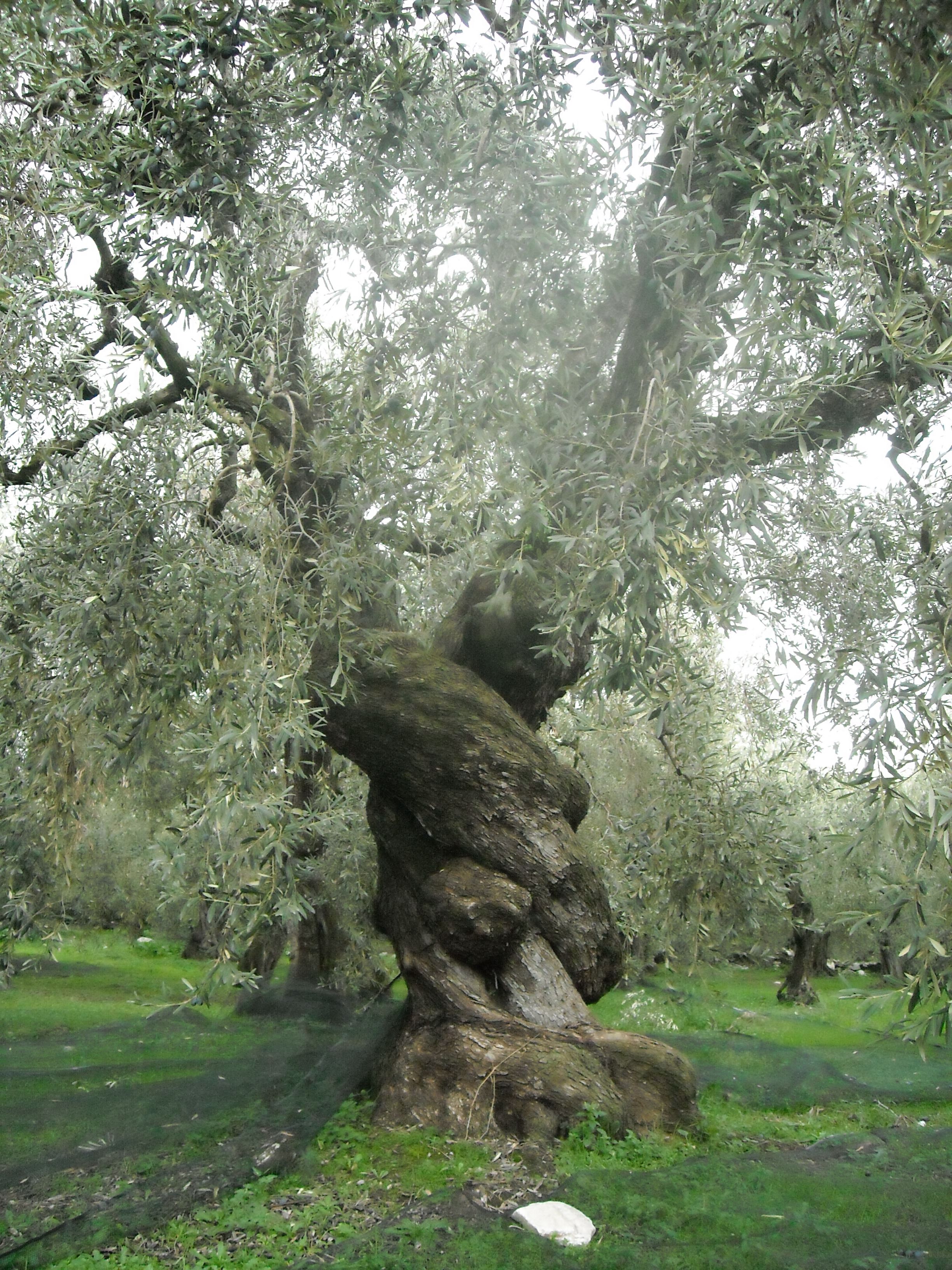
Ancient_Olive_Tree_in_Pelion,_Greece

Our Bible is rife with stories of heroes who become great because they understand that anything they have or do, they owe to the power of God–and these heroes are very vocal in their praise of God as the author of all good things in their lives.

Gideon is a fine example.  A farmer at a time when the Israelites were under the harsh rule of a stronger people, the Midianites, Gideon came from the weakest family of the weakest clan of his entire people.  But when the angel of the LORD comes to Gideon and tells him that God Himself will lead the Israelites to victory, Gideon eventually believes.  In fact, he believes with such conviction, he trusts God to take only 300 men against thousands of his enemy.

Reading stories of these heroes makes me ask myself, do I honor God for His supremacy in my life, or am I always fighting God to be my own “king?”

When Gideon is gone, his concubine’s son, Abimelech, convinces the people at Shechem to make him King, travels to where his 70 “brothers” are located and slaughters all his competition for the position on one stone.  However, his youngest brother, Jotham, escapes and tells a parable of trees to show the Israelites the fallacy of wishing for an earthly king when they already have a heavenly one.

Once upon a time, Jotham explains, the trees decided to choose a king.  First they said to the olive tree, ‘Be our king!’  But the olive tree refused, saying, ‘Should I quit producing the olive oil that blesses both God and people, just to wave back and forth over the trees?’ (Judges 9: 8-9 NLV)

The fig tree and grapevine likewise refuse.  The thornbush advises to take shelter in his shade if he is to become king.  Otherwise, the thornbush will shoot a fire to “devour the cedars of Lebanon.”  In other words, nature understands that the greatest glory to be had is to thrive in the function for which God created us.  And, though He gives us the free will to choose to follow Him, He does not mean for our function to be seeing ourselves as the masters of our own destinies.  Even Jesus said, “Father, Thy will be done.”

So, am I smart enough to be an olive tree?  Can I listen to my own self-talk when I am trying to decide things without first acknowledging God’s right to make those decisions for me?  How do I let Him make those decisions?  I have to continue in my study of His word to know what is truth, to test what is told me, as Paul instructs us to do, and I have to spend time talking to God and being still to hear Him.  The latter is perhaps the most difficult skill of all.  We barely listen to our family members or friends half the time.  How much more practiced must we be to become better listeners of the Maker of the Universe!

Jotham’s parable is not the first time in the Bible we are encouraged to look to nature to learn how to have an even stronger relationship with God, and it certainly isn’t the last.  Remember Christ’s declaration:

Some of the Pharisees in the crowd said to Him, “Teacher, rebuke Your disciples.”  But Jesus answered, “I tell you, if these become silent, the stones will cry out!” (Luke 19:39-40 NIV)

So, whether I am a tree or a stone, may I always be ready to put God first in all things, which means I will become a more loving servant who knows better than to reach for the auspices of King.

Posted in Christian Living

Who Knows You Better?

0615071254a

You see my imperfections
Still You say I’m a masterpiece
A marvelous reflection
The image of Yourself in me

You paint with strokes of grace
Undoing my disguise
You say beauty lies in the true story

Read more: Ginny Owens – True Story Lyrics | MetroLyrics

I read an interesting “take” on the concept of predestination in my Ryrie Study Bible notes this week.  The gist of the idea is that God has chosen those who will be saved in that He already knows who will and who will not choose to follow Him.  Sorry, John Calvin, but the first rule of our great and glorious God is that He does give us the free will to choose.  He knows what we are going to choose even before we are born, but He lets us go forward anyway.

This isn’t to say that God doesn’t help us.  Quite the contrary.  Being perfect and all-knowing, He also knows what we will be asking for and which prayers He will answer yes or no before we even begin to pray.  Jesus tells us to ask for our daily bread.  He also tells us that asking for even the greatest of things with a true sense of belief will allow us to accomplish those things, as long as what we are asking for is the will of God.

As Ginny Owens reminds us in one of her great songs, we imperfect humans are a masterpiece to our Holy LORD, made perfect through the sacrifice of Christ for our sins.  The grace of Christ’s love for us, the working of the Holy Spirit in us, strips away the facades required by an imperfect, sinful world.  Without a body subjected to the desires of the flesh, we can more easily see our true story, shining the light of Christ in a world of darkness without fear.

How can we best be our true story to a world that likes to glitz things up and mask imperfections?  We can begin each day by thanking God for His mercy and ask Him to make His presence known to us as we work our way through the facades of the day.  Asking, believing, we can be strong and courageous because God makes us so.

And that is the truest story of all.

Posted in Christian Living, Christianity

Why We Remember

remember photofunia

Memory is a tricky thing.  We all have a tendency to remember events in such a way that makes us look the best.  Sometimes, or in some areas, we remember events so that we can see ourselves in our worst possible light, feeding our own insecurities or personal issues.  The inability of we humans to remember accurately is part of what makes eye witnesses so unreliable.

Having created us, God knows our faults.  He knows that we will have to consciously make the effort to remember our own fallacies in order to maintain our healthy fear of Him, the fear that is the knowledge of His awesomeness and makes us want to worship Him and do what is right.  On their trek through the desert once they escaped Egypt, even though God perpetually saved the Israelites from their own follies, they seem to fail to remember.  They complain, they want to return to Egypt, they doubt God will keep His promises, they worship other gods.

Because God’s memory never fails, He remembers His promises.  As He has Moses prepare the Israelites to finally enter the promised land, He has Moses implore them:

“Listen, O Israel! The LORD is our God, the LORD alone.  And you must love the LORD your God with all your heart, all your soul, and all your strength.  And you must commit yourselves wholeheartedly to these commands that I am giving you today.  Repeat them again and again to your children.  Talk about them when you are at home and when you are on the road, when you are going to bed and when you are getting up.  Tie them to your hands and wear them on your forehead as reminders.  Write them on the doorposts of your house and on your gates.”  (Deut. 6:4-9 NLT)

God intends to keep His promises to make Israel a great nation, but He expects them to remember His instructions.  (At one point late in the 40-year journey through the desert, God is ready to wipe out the entire bunch and begin again until Moses talks Him out of that plan because God is so disgusted by the Israelites perpetual forgetfulness and thanklessness.)  And why was the remembering of God and His promises so vital for the Israelites?  They were about to embark on the final length of their journey, into a promised land that was filled with pagan peoples who might easily tempt the Israelites into forgetting that God was the one and only, thus allowing them to slip into actions detestable to God, like making idols or touching unclean things.

But the most important reason for remembering is this:  For we will be counted as righteous when we obey all the commands the LORD our God has given us (Deut. 5:25 NLT)  In the New Testament, Grace makes a difference about our source of righteousness:  I no longer count on my own righteousness through obeying the law; Paul writes, rather, I become righteous through faith in Christ.  For God’s way of making us right with himself depends on faith. (Philippians 3:9 NLT)

Faith versus works does not lower the bar of our commitment to remembering God.  In fact, it raises it.  Paul explains:

But I press on to possess that perfection for which Christ Jesus first possessed me. . . .I have not achieved it, but I focus on this one thing: Forgetting the past and looking forward to what lies ahead, I press on to reach the end of the race and receive the heavenly prize for which God, through Christ Jesus, is calling us. (Philippians 3: 12-14  NLT)

Remembering God means forgetting the wrongs or perceived wrongs done to us by others, putting God’s wants before our own, and even forgetting what good we may have done so as not to rest on our laurels and fail to achieve all that we might through the Holy Spirit working in us.  When we remember how much God has done for us, it makes us love God even more, and it should make us love others, no matter what perceived hurts they cause us.

Remembering God also means pouring out our thankfulness to Him.  God wants to hear our gratitude and our acknowledgement that all we have and all we are, we owe to Him.  Paul implores us, “Don’t worry about anything; instead, pray about everything. Tell God what you need, and thank him for all he has done.  Then you will experience God’s peace, which exceeds anything we can understand. His peace will guard your hearts and minds as you live in Christ Jesus” (Philippians 4:6-7 NLT).

Christ instructs us to pray with this attitude of gratefulness:  Our Father, who art in heaven, Christ tells us to begin, hallowed be thy name.  In acknowledging our relationship to God as Father, we are reminded that He who made everything wants to have a relationship with us.  In acknowledging His holiness, we realize how grateful we should be to have a relationship with God, to know His love for us because of grace.

When you are faced with the challenges of life, whether you are having physical problems, mental problems, work problems, family problems, or financial problems, it can be so easy to just whine to God or be mad at Him and ignore Him (as if that somehow hurts God instead of us!).  But when we are in times of peril it is even more important to remember first to be thankful, to acknowledge what God has done for us through the grace of Christ.

Finally, when we remember to be thankful, I think it makes it easier for us to be the love of Christ to those who do not yet believe, to shine His light as Christians are supposed to do.  In his book,  Finding Sanctuary: Monastic Steps for Everyday Life, Abbot Christopher Jamison describes Christian patience this way:

“Patience is more subtle: it is the attempt to live out in a positive frame of mind the difficulties that come from trying to obey and love other people”

It is so easy to forget.  But a successfully run race with Christ can only be accomplished when first we remember.


Posted in Christian Living, Christianity, Faith

3 Lessons from Numbers for Christians

??????????????????????????????

My Bible readings have me in the beginning of this only Book that truly matters, and so I am asking God to help me see the lessons I should be learning from what can sometimes seem tedious study, since so much of the story of the Jews’ time in the desert is filled with specifics about measurements for building the tabernacle, the specific punishments for different crimes, etc.  Still, I believe God is showing me some pretty interesting things because I have asked for Him to, in faith.

Reading in the book of Numbers, I tried to see myself in the shoes of the Jews.  They might have had the privilege of witnessing God’s miracles and seeing His presence up close–like having manna and water delivered to them out of nothing and seeing God appear in a great cloud and column of fire to guide them, but I have the knowledge of God’s greatest miracle: that He gave His only Son to die for our sins.

Knowing this, can I see my own worries and misplaced concerns about everyday life as the same kind of backsliding that I scoff at when I read about the Jews and their golden calves or whining about being tired of the same kind of food every day?  Reading the early parts of Numbers in this way, I have come up with three conclusions I can try to apply to my walk with Christ.

  1. God keeps His promises
    • God said He would rescue the Jews from Egypt and take care of them.  But, every time you turn around, the Jews keep wanting to go back to Egypt, back to slavery and harsh taskmasters.  However, the Jews don’t remember these negative sides to life in Egypt when they are whining to Moses.  All they remember is having a variety of food there and not just manna.
    • Don’t we Christians do similar things?  Christ promises that He will be with us always.  Christ admonishes us to look toward treasures in heaven and not on earth.  He wants us to understand that our relationship with Him is what matters most, not the car repair we have to find a way to pay for.  And yet, how many times do we fret instead of trusting that Christ also keeps His promises?  He brings us through the storms in this life, often not in ways we expected, but usually we can look back and see the good Christ works in the things that happen to us, especially when we approach those things by putting our belief in Him first.
  2. God doesn’t want us to fail.
    • I think it is a mistake to place on an omnipotent God an understanding of emotions that is limited by our human perceptions.  In other words, when God gets angry, it is in no way the same as when we humans get angry.  There just isn’t a way for us to understand God’s “emotions” unless He chooses to reveal them to us.
    • I say all that to propose that the punishments that God metes out when the Jews fall short should not necessarily be seen so much as an anger response as a disappointment that borders on mourning.  And what, exactly, is God mourning except the loss of those who fail to have faith in Him despite everything He is doing to show the Jews that He alone is God?
    • If God mourned the failure of the people He had chosen to establish Himself as the one and only God of the universe, how much more must he mourn when people reject Christ, or when we Christians reject the lessons Christ worked so hard to teach us?
    • The bottom line of the cycle of lack of faith and punishment as the Jews wandered in the desert is the lesson that God does not want us to fail.  Think about how many times God allowed the Jews to begin again with their relationship with Him.  Then, think about how Christ allows us to awake each morning as a new creature.  As long as we acknowledge our sins to Him and repent of them, we get to walk with Christ in the presence of God once again!
    • No greater love….
  3. God wants our BEST.
    • Every sin or uncleanness in the book of Numbers requires sacrifices that begin with the offering of the best that the person has to offer.  Lambs with no defect, the best grain, the finest incense.  Only by giving the very best that a person owned could the person really feel the sacrifice required to make things right with God again.
    • The Jews’ relationship with God in the desert always involved barriers.  God spoke to Moses directly, who then conveyed God’s messages to the people.  Thick, wonderfully made curtains separated the unconsecrated masses from the inner sanctuary, where only the anointed, clean priests could enter to present the best of the best to God to redeem those who had sinned.
    • With Christ, the inner curtain has been rent in two!  With the Holy Spirit dwelling in us and with Christ as our High Priest, we can speak to God directly and know that He is listening and hears us.
    • If God wanted the best of what the Jews in the desert had to offer, what do you think He wants from those of us who have chosen to accept the Grace and gift of the Cross?  Do you give Christ your BEST every day?  Do you at least think about giving Him your BEST?
    • If you are wondering what the BEST is for a Christian, begin with a study of the Sermon on the Mount, where Christ expounds what it looks like to be a true citizen of the kingdom of heaven.  He doesn’t promise that it will be easy, but He does promise to be with us every step of the way.

There are lessons in the Bible for all of us, not just in the New Testament.  Even though the Old Testament books include some cultural references and ways of life that are thousands of years removed from modern life, people still retain the same basics of human nature that can bring us closer to God or push us farther apart from Him.

The choice, as always in a fallen world where free will exists, is ours to make.  As you study the Bible, remember to ask God to show you ways you can apply what you read in your every day life, no matter how far removed the events you are reading about seem to be from your usual experiences.  God keeps His promises.  And one of those promises is that those who ask, believing, will receive.

Posted in Christian Living, Faith

The Headlight Principle

headlight in rain

It’s one of those rainy days in Houston.  As I pulled out of the parking lot at the gym this morning, the automatic lights on my car decided there was quite enough light to keep my headlights turned off.  But, what the optics on my little Ford Focus determined didn’t seem particularly intelligent in the semi-light of a rain-spattered world.  So, I flipped on my headlights and drove safely home.

By the time I pulled into my garage and switched off the car, my mind had already wandered to a thousand different things, like what I need to do today and the groceries I need to buy for rest of the week.  So, when I popped open the car door, I was startled by the warning ding that greeted me.  I had my keys in my hand, so it wasn’t a keys in the ignition ding.  It only took a half second to remember that I had turned my lights on, overriding the automatic setting.  So, I switched the knob back to its correct position and went on with the business of getting into my house.

As I was thinking what a small but important thing that little dinging alarm is, I was wondering how long it took the car manufacturers to add it to our vehicles.  Maybe those dings annoy some people, but for many of us they are important reminders to keep us from a much bigger problem, like accidentally leaving your headlights on and draining your battery.

How do we apply the lesson of the simple headlight warning ding to our spiritual life?  After all, if we can be distracted enough by the small things in life to forget we turned our headlights on when we started our car ride fifteen minutes ago, how much more can we be distracted by the challenges of day-to-day living that keep us too much in the world and not enough in God’s world?

The only way to be open to the Spirit, who can be our warning system, is to spend time with God.  We do this through prayer, reading and studying His Word, and by having fellowship with people who also want to worship and know God.

My warning system this morning included reading about the first Passover in the book of Exodus.  It reminded me that Christ as the lamb offered His blood on the Cross so that the wrath of God will pass over those who believe in Him just as it passed over the Israelites who followed God’s instructions when the Egyptians’ first born were taken during the final plague that convinced Pharaoh to release the Israelites from Egypt.

The Passover reading also reminded me that God keeps His promises.  He had told Joseph He would return the people to the land of Abraham.  430 years later to the day, God followed through on that promise.

God never changes.  The more you read the Bible, the more you will see that the patterns of His relationships with humans are consistent and all lead up to the ultimate fulfillment of His promise in the sacrifice of Christ.

In a world where I can forget I flipped on headlights in the time it takes to drive from point A to point B, it’s a wonderful feeling to know that God is always there and always the same.

Posted in Christian Living, Faith

To Think Like Hagar

Hagar by Edmonia Lewis

I have read the story of Hagar and Sarai many times, and I always come away with a new lesson.  This week, I was struck by Hagar’s response to her encounter with God:

Thereafter, Hagar used another name to refer to the LORD, who had spoken to her.  She said, “You are the God who sees me” (Genesis 16:13).

You know the story:  Abram has been promised by God that he will be the father to descendants that outnumber the stars in the sky, but even though Abram believes God, his wife Sarai gets impatient.  She talks Abram into lying with his servant Hagar, who gives Abram a son.  Jealousy ensues.  Hagar, a lowly servant who has now managed to out-do her mistress can’t help but get a little cocky about it.  Even though Sarai talked her husband into sleeping with Hagar in the first place, when the pregnancy comes, Sarai makes Abram send Hagar away.

Even though she gets to come back, Hagar and her son, Ishmael, are eventually banished again.  God promises Abram that Ishmael will also be the father of a nation, but He tells Hagar that Ishmael will always be set apart and in contention with his brothers.  Still, Hagar finds a reason to praise.

You are the God who sees me, she says.

It’s hard to know the mind of a servant woman more than three centuries ago in a culture and world far removed from our capitalistic, electronic reality.  But we can at least know that she would have had no thoughts of ever being any more than a mere servant.  In other words, to be seen by God was to be validated as a person and not as a mere thing owned by others.

Having read these words this morning, I was struck by the beauty of the Cross.  For, when Christ died for us, did He not see us?  What a wonderful gift it is to realize that we can go forward each day knowing that God sees us because of Christ’s love for us.

Thinking like Hagar means knowing the enormous gift it is to be seen by God.  Never take it for granted.  If you hold this truth to your heart each day, how much easier it will be to walk in the steps of Christ, loving others as we ourselves want to be loved.  We, too, have the ability to see. 

Posted in Christian Living, Faith

Do You Have The Guts To Pray This Prayer?

Find Your Daily Sacred Space

One of the phrases that Benedictine monks regularly use to help them stay in a meditative state begins, “Lord, have mercy on me a sinner….”  The first few times I used it for myself, I finished it with phrases like, and help me shine Your Light or and help me be like Christ.  

When you first start to say those first words over and over, you are reminding yourself of your own human-ness.  We are all sinners.  We have no rights to judge other people for their actions because we have taken actions that are equally horrible in the eyes of a perfect God.  Luckily, that same God forgives us, so that the phrase, have mercy on me, a sinner, also means we can grasp that mercy and find peace.

In my perpetual quest to learn to give up the control of my life to Jesus so that I experience His peace, I am discovering some not so pleasant truths about myself.  I am always helping people out, it seems like to me.  So, I could pat myself on the back and say I’m doing pretty well.  I have a servant’s heart.

Here’s the problem.  Whenever I get stressed, I can get really angry about all this “helping out” that I am doing.  That reaction seems more like a martyr’s heart to me than a servant’s heart.  In other words, many times when I am doing things for others, am I doing it deep down because it feeds my feelings of self-worth instead of because of my unselfish love for others?

So, as I processed these thoughts lately, it came to me that I would probably be a lot happier, calmer, more peaceful in life if I could tame the beast that is my pride.

But, do I really have the guts to say the prayer that gets me help with that one?

I’ve prayed for humility before, usually by hedging.  Give me more humility, please God, but please don’t make the lesson painful.  That was usually the gist of my prayers.

This morning, as I began my phrase, God, have mercy on me a sinner, I knew what the ending needed to be.  But, I had to take several deep breaths before I could finish the statement.

Lord, have mercy on me, a sinner, and make me humble.

Praying for humility with no qualifiers and really wanting it means I have to be willing to experience pain.  The Bible teaches that through perseverance we learn patience and through patience we build character.

I am not looking forward to the lessons I am going to be facing as I continue to pray to God to remove my pride.  But I believe in His blessings for the humble enough to know that this is one prayer I must have the guts to pray if I expect to allow God to work to the good what He has planned for my life.

His will, not mine.  His omnipotence, my humility.

What prayer have you not had the guts to pray?  Get on your knees now and pray it.  God will bless you for it, even if the initial answer seems truly painful.

In Christ,
Ramona

Posted in Christian Living, Christianity, Faith

THIS Is Your Purpose

th

My Ryrie NASB study Bible has this note for the third chapter of Paul’s letter to the Colossians:

Here begins the ethical section of the letter.  Paul’s appeal is simple: Become in experience what you already are by God’s grace. The Christian is risen with Christ; let him exhibit that new life. [emphasis added]

Whenever you are in your darkest hours, or even just the shadowy ones, I think it a great comfort to remember this truth, that we are here because God wants us to become through our experience what He freely gave us with His death on the cross.

Throughout Colossians 3, Paul lists qualities to have and not to have if you are truly going to become through experience what you already are as a Christian.

On the do NOT list: sexual immorality, impurity, lust, evil desires and greed (idolatry), anger, rage, malice, slander, filthy language, lies, bigotry. On the DO list: compassion, kindness, gentleness, humility, patience, forgiveness, love, peace, thankfulness, wisdom, praise.

Luckily for us, when Christ made His sacrifice, He also promised us a Helper to be sent so that we are not on this journey of experience alone. With a quick search on the web, I found this site about the Holy Spirit in the Bible: http://www.mycrandall.ca/courses/ntintro/spirit7.htm. The page is titled “The Holy Spirit in Pauline Theology.” Here is a succinct excerpt:

The Holy Spirit is central to Paul’s theology. Expressing himself in various ways, he asserts that the promise of the giving of the Spirit has been fulfilled. Different from the prophecy in the Hebrew prophets, however, he holds that the promise is fulfilled for the church, the new community of God, consisting of Jews and gentiles, and not for the nation of Israel. In Paul’s view, to be a Christian is not simply to accept certain propositions as true, such as Jesus is Israel’s Messiah, but rather to be indwellt by the Holy Spirit.

Paul’s words make the most eloquent case for approaching life in its challenges and wonder as the experience of becoming what we already are:

Since, then, you have been raised with Christ, set your hearts on things above, where Christ is, seated at the right hand of God. Set your minds on things above, not on earthly things. For you died, and your life is now hidden with Christ in God. When Christ, who is your life, appears, then you also will appear with him in glory. (Colossians 3:1-4)

The action of becoming is complicated, messy, bitter, joyous, happy tears overflowing. God’s time is not the same way we think about time, but His is the timepiece that rules the rhythms of our experiences, of these lives to which we have died and risen again in Christ.

The next time you are feeling existential, dig your hands into the fertile dirt of God’s word and remember that your purpose in this life is to become the kind of person Christ’s sacrifice already made you in the eyes of God–a loving, patient, gentle, kind, growing child of Christ.