Posted in Christian Living, Faith

Can’t Think Yourself Out Of This Box

tc in box
In my life group, we’ve been looking at how the discoveries in science, including the Big Bang Theory, actually support the Biblical account of how the world came to be.  Still, scientists want to deny that the Bible could be in any way factual.  In fact, some of them stretch their theories beyond the realm of good science just to disprove the possibility that the Bible is right.

But, any arguments about the validity of the Bible in connection with the understandings of the scientific mind miss the point entirely.  Believing to the point of knowing is not a matter of mathematical equations or refined physics, but completely in the realm of faith.  Faith is not something subject to the scientific method.  It truly is beyond all understanding, and it is everything.

Paul explains this truth in his first letter to the Corinthians:  “For the word of the cross,” he writes, “is foolishness to those who are perishing, but to us who are being saved it is the power of God” (1:18).  We are not going to know about the truth of Christ on the cross because we have scientific or archealogical proof.  We have to take on faith the truth of our salvation through Christ’s sacrifice.

“For since in the wisdom of God the world through its wisdom did not come to know God,” Paul continues, “God was well-pleased through the foolishness of the message preached to save those who believe” (1 Corinthians 1:21–bold added).  We will not know God through our own knowledge or wisdom, but through our belief in a message that will seem foolish to those who want to rely solely on wisdom, on the things they can see, hear or touch.

Faith doesn’t put us in a box, actually, but frees us to live life to the full, just as Christ wanted for us: “Now faith is the assurance of things hoped for, the conviction of things not seen” (Hebrews 11:1).  Faith allows us to reach out to others without fear of being ridiculed.  If we are ridiculed in the name of Christ, what is that to those who believe?  Faith allows us to love unconditionally as we are loved by God.  Faith gives us the patience to seek the daily practice that brings us ever closer to God and the fruit of the Spirit, that is love, joy, peace, patience, kindness, goodness, faithfulness, gentleness, and self-control (Galatians 5:22-23).

While faith frees us, it also puts us in a box from which we cannot be shaken: “having also believed, you were sealed in Him with the Holy Spirit of promise” (Ephesians 1:13).  Like the Nicole Nordemann song that asks, “What if you’re wrong, what if there’s more,” through faith we “jump, just close [our] eyes,” knowing that the “arms that catch [us], catch [us] by surprise” (What If?).

No matter how you process information best (through hearing, seeing, or doing), faith, the great equalizer, brings us all to the same conclusion:  there is a God who loved us enough to die for us.  What a wonderful gift to open each morning, knowing that our stumbles are forgiven and that we can begin again.

Posted in Christian Living, Christianity, Faith

Jesus’ Birth

20121223-213918.jpg
A birth is always a miracle of love and pain and blood. At least, I have to assume this to be the case having never had children. But, this month we celebrate a birth that was a miracle on more than just the human level. For the real miracle about a virgin giving birth was not so much how a virgin became pregnant and delivered a child, with all the usual love and pain and blood, but that the child thus born of Mary was actually God made flesh.

How can this be? Or, what difference does this make? I believe it is vital to accept Christ’s coexistent humanness and divinity to truly appreciate the magnitude and validity of His sacrifice.

If Christ were not human, how would His death on the cross be a sacrifice that covers the sins of the rest of us? If Christ were not divine, how could He claim the authority of His Heavenly Father?

For the Western mind, which likes to see all things in clear delineations, it can often prove difficult to see things in duality. Yet, cultures from the beginning of time have done just that, seeing no disconnect in a reality where a thing is sometimes or always two things at once.

The meaning of Jesus’ birthday, the birth of God coming to earth, is even more powerful when you realize He came to earth as a man knowing the full extent of what He would suffer and sacrifice as a result.

What a wonderful gift is the love of a God who once became man! If you have not already, this holiday is the best time of any to accept the grace of Christ that saves us all.

Merry Christmas and happy birthday Jesus!

Posted in Christian Living, Faith

Perspective Lessons

20121215-120221.jpg
If you haven’t had the blessing of reading Philip Yancey’s “Where is God When It Hurts?,” recent events have made it as good a time as any to grasp the opportunity to discover the open, honest and Bible-based insights Yancey offers about the reality of living in a world where evil exists even as it is being watched over by a loving God.

I am a Christian first, but I am also an academic, which has led me to study at least a little bit about a variety of religions. One of the first things you find in such study is that religions share a pretty solid core of similar beliefs. Sometimes, the ways those religions enact or express those core beliefs are so different from what we know, that we are quick to dismiss them as not only “other,” but often as evil.

But when we dismiss, we take the chance of losing out on what another perspective on life can actually teach us. Here’s my case in point.

My very limited understanding of Buddhism is that through spiritual practices, including meditation, the Buddhist is trying to re-connect with Nirvana, which is the state of Supreme Being from which all souls have sprung. Now, because Buddhist practice does not hold Christ as divine, I obviously am not going to be going to a Buddhist temple any time soon. However, there is a lesson about dedication to spiritual practice that I can learn and apply here.

In yoga workshops, when the instructors want to talk about enlightenment and deciding on your soul’s purpose, I have usually quickly dismissed this by knowing that my soul’s purpose has been reached because I have accepted Christ as my Savior. But in coming to this conclusion, I have actually missed part of the point. Even Christians, especially Christians, have a spiritual journey to take that can offer for us an enlightenment of being more and more Christ-like.

I just finished a book by Iyanla Vanzant in which she explains the process this way: Each of us is born with a soul syllabus, a series of assignments throughout our lifetime that is meant to help us learn the lessons we were born to learn. As we learn these lessons, we are drawn even closer to the peace of truly knowing God.

I believe there is a difference between having direct access to God through Christ’s grace, which we all have the opportunity to grasp, and doing the work that helps us to actually know God and become Christ-like. Anyone can strum the strings on a guitar and make a sound, but it takes practice and dedication to make music.

Spiritual practice includes daily prayer, daily Bible study, a spiritual mentor, a church accountability group and the ability to look inside, be still for long enough to hear God, and be willing to see truths about yourself that aren’t always comfortable. It is a life-long matter of becoming that none of us should do alone. It involves more than I can cover in a blog post or than, frankly, I understand at this point in my journey.

The good news is, I am excited about grasping this perspective on the metaphysical. Why did God put me here? For the same reason He put you here–to be as much like Him as we can be. This process involves growth, and growing involves high and low points, pleasure and pain. Mainly, I am glad to be beginning to understand that my soul syllabus is a day-to-day process, the same process that Christians have been following since Peter denied Christ three times and went on to establish His church, the process that all of us are facing again today in light of another unexplainable tragedy at the hands of man.

Begin your process of becoming today, or continue it, as the case may be. Pray not just with words, but with your whole being. Pray so that you know what your body is feeling at the same time that you are crying out to God. Remember, He understands our hearts even if what you are uttering aren’t exactly words.

Be still and know. May the “peace that transcends understanding” be with all of us in the coming days.

Posted in Christian Living, Faith, Living

Coming Home

20121130-163529.jpg
In Will Davis Jr.’s, “Ten Things Jesus Never Said: And Why You Should Stop Believing Them,” Davis explains that it is impossible to disappoint God because He already knows what choices we are going to make in this life. What does not worrying about disappointing God free us to do? It frees us to focus on living in full knowledge of God’s grace and extending that grace to others.

There’s another side to the realization that God already knows everything that will happen in our lives that can really be helpful for those of us who combat anxiety. If God already knows the good and the bad that will happen to us, shouldn’t we also embrace the idea that He has equipped us with the ability to handle whatever challenges we have to face?

God knowing what will happen to us does not negate the free will He has extended to every one of us, our right to choose, or the fact that evil exists in this fallen world. But God does have the power to help us make it through “the valley of the shadow.”

During the holiday season, we concentrate even more than usual on the idea of home. We decorate our houses for the season, travel long distances to be with family, and enjoy evenings cuddled around warm fires as our tree lights blink off and on.

“Home is where the heart is,” we say. If our hearts are God-centered, then we take Him wherever we go. If we accept that His infinite knowledge buffers us against the good and the bad of this life, then we should truly be able to face each day without worry. Like the trusting game, where you stand with your back to someone, cross your arms, and fall, if we take each challenge we face and fall into the waiting arms of God, what a wonderful way to prove not only to ourselves but also to those who don’t know God that He will never disappoint us, nor we Him.

Posted in Christian Living, Faith

Verses I’m Thankful I’ve Read

20121125-152849.jpg
In Second Chronicles, Chapter 34, we are reminded in a not so subtle way how grateful we should be to have the Word of God so readily available to us. It is 622 B.C. During repairs to the temple, the priest Hilkiah finds the Book of the Law. Scholars apparently debate whether this book, likely Deuteronomy, had actually been lost or was created at this time. But one thing that cannot be debated is the king’s reaction to the discovery.

“Go and inquire of the LORD for me and for the remnant in Israel and Judah,” he orders after tearing his robes in dismay, “about what is written in this book that has been found. Great is the LORD’s anger that is poured out on us because our fathers have not kept the word of the LORD; they have not acted in accordance with all that is written in this book” (2 Chron 34:21).

After hearing from the prophetess Huldah, the king calls together all the people, “from the least to the greatest,” to read out loud the words of the lost book and renew the covenant his people should have with God. He removes the idols from the places of worship, and the chapter concludes by telling us that as long as he lived “they did not fail to follow the LORD, the God of their fathers” (2 Chron 34:33).

Isn’t it unimaginable that a people who had witnessed the power of God first hand, who had been fed by Him in the desert and led by Him as a pillar of fire, who had seen the Red Sea parted and the Egyptian first-born slaughtered about them, would ever come to a time where they had so loosed their attachment to that God they actually forgot some of His written edicts? They had lost His word so completely, that they were worshipping idols against His express instructions.

Yet, how often do we, who have an abundance of access to the Word of God, tend to lose it in our own way? How many of us can point to the exact portions of the Bible that back up why we believe what we believe? Do you know, for example, that many people’s concept of hell is more influenced by Dante, their picture of the Garden of Eden and the Fall drawn more by Milton than by the word of God? The influence is so woven into the fabric of our culture, that most of us don’t even realize it.

But those who study the Word and know it will be least likely to fall into the trap of believing something that is false or losing the Bible altogether.

I have a sort of unwritten promise to myself that I will one day compose an organized list of the verses in the Bible that I am glad I have read. These are words that let me know the meanings of grace and faith, define for me the qualities of a Christian, remind me that even a person with a heart like God’s can be fallible. They are the core defenses against those who would argue hatred in the name of God instead of the love He makes apparent. They are the keys to true belief that will keep me from straying as the “fathers who did not keep the word of the LORD.”

To have verses to be thankful for, we must first have read the verses of the Bible, and not just the verses we find pleasing or in accordance with our own preconceptions. To pick and choose without looking at the whole is a dangerous game indeed. More than one despot has validated himself by the word of God cut up in such a fashion.

I am thankful this Thanksgiving weekend to have the word of God to study on a daily basis and in a variety of contexts. I am prayerful that I will not lose those words, nor lead others to forget. What verses are you glad you have read? What verses will you add to your list tomorrow?

Posted in Christian Living, Christianity, Faith, Self-Help

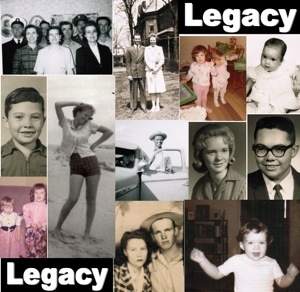
Legacy: Let’s Get Practical

20121111-160455.jpg
If you are going to sow seeds for the kingdom, you have to embrace not just the ideals of a life in Christ but also the practical, day-to-day actions you should and should not take if you are truly walking the narrow path to the kingdom of Heaven.

The best place to go to find practical ways to apply God’s truth in your life is the Sermon on the Mount, where Jesus explains the Kingdom’s precepts and practices.

The practical matters of legacy are not exactly easy, which is why it is so important that we have the support of the Spirit in us to help us live in the light. For, Christ not only upholds the basic truths of the Old Testament law, He ups the ante on each of those truths.

Do not murder, He tells us, but also to hate is to do as much damage to one’s soul as to murder. Do not commit adultery, but to even lust after another is to commit adultery. Do not quarrel, but even seek forgiveness up to the point of turning your left cheek when your right cheek has been struck.

As I heard a preacher put it once, God sent His son to sacrifice Himself for us. Do we actually think He would expect less of us after that kind of giving?

Make no mistake. We don’t earn our salvation through our actions. Only by grace can we accept the belief in Christ’s resurrection that saves us. But once we accept that grace, our faith should compel us to want to grow in Christ.

Anyone who plays a musical instrument or a sport knows that there is no way to improve without consistent, disciplined practice over time. Even the most proficient musician still warms up with scales, the basic building blocks of music. And that proficient musician practices his/her art each and every day for several hours at a time.

Christianity has its basic building blocks as well, disciplines that those of us who limit our Christianity to church on Sunday quite frankly miss out on. Even people who approach their religion as a way of life need the daily, routine practice of the Christian “scales” in order to continue to grow in Christ.

What does this routine practice include? Again, look to the Sermon on the Mount. Do you pray every day, and not just the same prayer mumbled quickly before you go to sleep, but with your whole self, throwing your whole body into it? Have you ever fasted? Do you regularly reach out to those who do not believe? Do you have spiritual elders to whom you regularly report about your growth in Christ?

I am an academic. If I had chosen to stay in the college setting as an instructor, I could have easily fallen into the “ivory tower” trap of staying inside my head all the time, living in the world of ideas instead of the world of practical application. That’s a fancy way of saying that it is very easy for me to get caught up in my head instead of listening to what my body is telling me. Some days, it’s as if the two entities have never met.

In the past several years, I have been doing an exercise program that involves yoga, but not the kind of yoga that you are possibly thinking about. It isn’t a classroom filled with hot babes in skimpy clothes. It isn’t a torture chamber of hot temperatures. It certainly isn’t a metaphysical den of crystals and gongs.

Luckily for me, my yoga center is focused on the principles that help us understand how our minds and bodies work together to feel the energy that is all around us, the energy that makes up the planet, the energy we Christians know as the Holy Spirit.

Before yoga, I had prayed with my mind and my heart, but I had never prayed all the way to my fingertips. What I have also learned from yoga is that real change of any kind in our lives requires a commitment of our whole selves. With the guidance of a spiritual leader, such as the pastor at your church, you can learn the daily practices, actual things you need to do every day, that will help you meet your spiritual goals.

How many of us even have real, spiritual goals that we have committed to paper, much less to our hearts, when it comes to our service to God and our growth in the Spirit? Practical faith means practice.

As we have discovered over the past several weeks, legacy is not just a dreamy concept about what is left of us when we are no longer part of this planet. Legacy is about our partnership with God and making good on our faith in ways in which only He understands the potential impact.

Start putting the practice into practical this week. Maybe make part of your daily Bible study a re-read of the Sermon on the Mount (Matthew 5-7). And set down a list of daily actions you plan to begin for the next 21 days to reach a goal you have in Christ. Pray about it, share with fellow believers, and have faith that the Spirit will guide you where Christ would have you go. But go somewhere. No one leaves a legacy by merely standing still.

Posted in Christian Living, Christianity, Faith

Legacy: What will you SOW?

20121104-181234.jpg As I have tried to explore over the past several weeks, a Christian’s definition of legacy should be very different from the world’s view of legacy. As always, the challenge is being in the world but not of the world. Being in the world, we look around and see people lauded for accomplishments like hit movies, amazing touchdowns, or making loads of money. It is so tempting to fall into the trap of defining our own success by these definitions, putting our emphasis on having a house that looks like the ones on HGTV or driving a car that is just as nice as the one in the driveway next door. Sometimes, these things in the world are so ingrained in the subconscious that we don’t even realize that what is driving us is world-like and not God-like.

But being in the world yet not of the world is something very different, the core challenge, really, of what it means to be Christian. Christians, in being Christ-like, are encouraged to be fruitful, to sow the seeds of Christ’s love in their everyday lives, in the world, in such a way that the Light that is Christ shines to show the way to a better kind of life.

In Galatians, Paul defines the fruit of the Spirit, which is actually a series of characteristics that together complete the picture of a Christ-like life, the qualities you should be able to see in a person who is really living according to the guidance of the Spirit within him/her, the Spirit Christ promised would come to us when we are baptized in Him. This person sows “love, joy, peace, patience, kindness, goodness, faithfulness, gentleness, self-control” (5:22-23).

I don’t think it is an accident in duplication that Jesus’ many parables ask us to consider the fruit of the vine, encourage us to bear fruit, and even admonishes those who are unfruitful, and Paul’s description of the final result of the indwelling Spirit in a believer likewise using the concept of fruit. Even though we do not gain salvation by our actions but through grace, once we are Christians, we should want to leave a God-like legacy, at the core of which is living by letting the Spirit guide us.

Paul makes it clear where the Spirit will guide us, if we will only listen, as he tells the Galatians, “For you were called to freedom, brethren; only do not turn your freedom into an opportunity for the flesh, but through love serve one another” (5:13).

A legacy that reflects Christ is a “hard row to hoe” as they say in my neck of the woods, but, fortunately, we are not meant to hoe that row alone. The Spirit of God in me gives me the strength and insight to fulfill the opportunities God gives me, if I will only let that Spirit work.

I have the list of the fruit of the Spirit posted in several places in my house, trying to remind myself of what I should be concentrating on. But, the evil one is always there to push me in other directions, make me concentrate on my inner issues instead of looking out toward other people, keeping me from letting the Spirit help me with my problems as I try to control my world all by myself. I needed Jesus to be saved, right? So, why do I think I won’t need Jesus to live out my salvation, including improving on things like being more patient, having self-control, and, of course, loving others.

Will your legacy be the fruit of the Spirit, not just for your own loved ones, but for every person you come in contact with? We will reap the Spirit only if we sow it, and we can only sow the Spirit with the Spirit’s help.

Posted in Christian Living, Faith

Legacy: what do WE want?

20121013-123949.jpg

I’m trying something different here, going out on a proverbial limb, to approach a particular topic from many potential angles. I want to break it down and stare at it under the microscope. Then, I want to put it back together again along with the new insights I’ve hoped to have gained to see what it looks like with my broadened understanding.

This process should take more than one blog post. I am not even completely sure at this point exactly where we might end up. But, if you choose to take this journey with me, I hope we both get some surprising insights into an idea that probably dominates writers as much if not more than anyone else on this planet, and that’s the concept of legacy.

Say the word legacy, and the first thing that pops into many people’s minds is family, more specifically the children they have and what those children will go on to do in this world. Others see legacy as the accomplishments that will outlive them, such as a public building they helped to erect or the miracle cure they discover.

Living in America, where life’s dreams are often equated with visions of success from a capitalistic perspective (let’s face it, you mention the word legacy and rock stars or Rockefellers come to mind long before Mother Theresa), it may shamefully take us a moment to reach the point where we begin to define legacy from a Godly perspective. But when Christians do make it to that perspective, they can take actions with God’s help that have ripple-effects that will truly pass on to generations.

God Himself explains the workings of legacy at the family level, as to the seventh generation will those who deny Him be affected. It seems likely that those who serve Him will likewise affect how future generations of their families interact with God. For those of us who do not have children, the definition of family in connection to legacy has to be re-thought, in an outside-of-the-box kind of way. And that expanded definition of whom we potentially affect as we take our walk with God on this earth can actually apply to every one of us.

At its most fundamental starting point, legacy makes us ask a simple question that can be hard to answer: What do I want to be remembered for?

The more haunting question, of course, is will I be remembered at all, but we can’t touch on that dilemma until we have at least broached the first question. What do we want when it comes to our legacy?

Nicole Nordemann, a fantastic lyricist and singer, has a song titled “Legacy” that clearly compares the world’s definition of legacy to a Christian definition. Her chorus explains the Christian perspective wonderfully:

  • I want to leave a legacy
  • How will they remember me?
  • Did I choose to love? Did I point to You enough
  • To make a mark on things?
  • I want to leave an offering
  • A child of mercy and grace who
  • blessed your name unapologetically
  • And leave that kind of legacy
  • As a writer, I think we all secretly want to write the great American novel, but most of us realize that we are lucky if just one person besides our grandmother reads what we’ve written and is affected by it. I’ve struggled with my purpose in life for many years, always assuming God wanted me to do something bigger, something better, something more.

    But my definitions for those words were always being driven by the capitalistic reality in which I lived. If I didn’t achieve according to the world’s standards, I assumed I was failing God in some way.

    It wasn’t until I started to see the way God might use my talents in smaller circles that I began to find some peace with my purpose, my potential legacy. I have words to write only because God gives them to me (at least He gives me the writing that is any good; the blame for the bad stuff lays right at my feet!). All I can do is put the words down and have faith they will reach their intended target, even if the one person needing the words is only me.

    Before we start breaking down what a Christian legacy looks like, think on your own feelings about legacy. What do you want the world to remember about you? What footprints do you hope to have laid down so that others might follow?

    Posted in Christian Living, Faith

    What Drives You?

    Breathing in faith and breathing out fear.

    20120930-182815.jpg

    I heard this phrase on a reality show many years ago, as one of the people on the show was repeating this mantra to himself to help him face a difficult situation, and it really struck a chord, in part because at the time I had just begun doing yoga practice, where the ability to concentrate on one’s breathing is considered fundamental for improving the flow of “energy” in one’s body. Better energy flow equals better health.

    I practice yoga in a center that comes from Asian roots, so I have to re-write some of the philosophies to match my Christian foundation. Hence, when my instructors talk about feeling the energy from around me flow through me, I know that energy is actually the Holy Spirit, whom Christ promised to us as our support system until He comes again.

    I haven’t been doing as well lately with my mind/body connection or my ability to overcome my own anxieties, so it was particularly helpful this Sunday morning to be reminded that acting on faith versus acting on fear can make a powerful difference in a person’s life. It’s even more powerful than breathing in and breathing out.

    What difference does it make when you let fear drive you versus letting faith guide your life? First, let me define what I mean by fear. Fear is facing the world as if you are all alone in it, as if you are in control of everything that happens to you, as if you can somehow make bad things stay away or good things happen if you just do something enough.

    There is a good kind of fear, and that is the fear of God, which I’ve always thought to be best understood as a deep kind of respect that comprehends as much as it is humanly possible to comprehend the awesome power and reach of our Maker.

    This latter kind of fear can actually lead us to greater faith, the kind of faith that can guide us through life’s tough times and even “easy” moments. Fearing God enough to be guided by faith is what happened to Rahab of Jericho. You can read about her story in the book of Joshua.

    Rahab was raised in a community that didn’t worship the God of the Jews, but they knew enough about what the Jews had done in the name of that God to fear Him. When Rahab encountered two Jewish spies in her town, she chose to act on the faith she had in their God’s power by protecting the men in exchange for the protection of herself and her family when the Jews ultimately defeated Jericho.

    Rahab was rewarded for acting on faith instead of fear by becoming not only a part of the Israelite community from that moment on, but also becoming a part of that history for all time. Rahab shows up again in the genealogy of our Savior, which means she also was an ancestor to such greats as Ruth and David and Solomon. In the book of Hebrews, Rahab is mentioned again for her action of faith.

    “Now faith is the substance of things hoped for, the evidence of things not seen,” Hebrews 11:1 tells us. It takes practice to grow faith. It takes prayer and fellowship and doing things that make us afraid. But the more we take the scary steps, like Rahab did in hiding the Jewish spies, the more we will grow in faith, the more we will find ourselves being guided by our faith in our daily lives.

    Want to know one of my steps of faith this week? I tried to write a post yesterday evening, but then I felt that God would give me something better to write if I would just wait until today. If you’d like to hear the sermon that helped me come up with this post, visit the Grace Crossing website.

    Posted in Christian Living, Faith

    God Is Our Hiding Place

    20120914-214405.jpgActions speak louder than words.

    And sometimes, when actions speak so loudly, it’s hard to find words to say anyway.

    But there is one place where all the words we will ever need have already been recorded for us, and in times such as these, turning to those words is the most powerful thing we can do.

    Do you have your go-to verses? The words that have spoken to you so strongly through your years of faith that they pop into your head whenever you face troubling times?

    We all should have them. The fact that we don’t always reflect on them before we act is the reason why grace is our only means of salvation. The fact that I have them but still let anxiety get the best of me is something I’m still working on.

    I think we all should write a book with the title “Verses I Am Glad I Have Read.” Better still, I think we all should memorize the verses that would go in our book by that title. My time would be better spent on such a task than many of the mindless things I do during a day. And when actions speak louder than words, then those verses could be louder still.

    “Peace I leave with you, my peace I give unto you: not as the world giveth, give I unto you. Let not your heart be troubled, neither let it be afraid” (John 14:27 KJV).