Posted in Christian Living, Faith

Avoid Once-In-A-While Theology

holy-word

The temperature outside dropped dramatically a few weeks ago, giving Houstonians a chance to dig in the back of our closets for those few items of winter wear that we only get to use for a few days each year.

Too bad too many of us treat our Bibles like out winter wear in a hot, humid climate. We place them on a shelf and let them gather dust for much of the time, only pulling them from their nests when we trek to church on Christmas Eve or Easter.

The problem with approaching our Bible like our winter clothing is that when we reach a day when we really need the Words that are our most direct connection to the living God, we have no idea how to find the answers that would serve us best.

What a comfort it is to know, for example, that even a man like David, who loved God with everything that was in him, who was referred to in the Holy Word as a man “after God’s own heart,” could stumble spectacularly. When we stumble and think that God won’t want to hear from us, we can turn to the example David set for us. Even knowing that he deserved to be punished for his sin of adultery, David continued to plead with the God he served, whom he knew to be loving and good, to spare the life of the son who was the result of David’s sinful union with Bathsheba.

David’s life gives us even more insight into God’s love for us. With his heart, so much like God’s, David not only doesn’t hate his son Absalom when that rebel kills his own brothers and tries to usurp the throne from David, but also mourns Absalom’s death as if Absalom were the most perfect child on earth. Only a truly, deeply-loving heart could mourn the death of this rebellious son as David does. In fact, David is so overwrought when he is told of his son’s death, that he has to be told to buck up before he makes his own triumphant soldiers, who have backed him and protected him, feel like utter failures instead of the victors they really are.

If you rarely crack open this Book that is your most visible, accessible link to an Almighty, All-Knowing God, you are vulnerable to the lies this world and the devil, who has full reign in this fallen world, love to tell you. You believe that the only thing a person has to do to get into heaven is be basically good. As long as the good things you do outweigh the bad things you sometimes participate in, then you’ll turn out all right in the end. You start measuring yourself against the wrong yardstick, which is the people around you who also claim to be mostly good as opposed to measuring yourself in view of the lessons and dictates of the Holy Word in its totality.

A person who rarely cracks the thin pages of the Word may fall victim to blasphemies that sound comforting and reasonable from a secular perspective but have no foundation in the truth of the Word. You might believe, as a friend explained to me once, that as long as someone who really loves you asks for your soul to be with Jesus, then you are saved, whether or not you actually accept Christ as Savior yourself. You might find that the concept you have of heaven and hell are more in line with Milton’s Paradise Lost or Dante’s Inferno than the heavenly throne in Revelation where the angels dance.

It is a universal truth that failing to believe in anything makes you vulnerable to the fault of falling for everything. Never has it been more important to have a knowledge base of truth that allows you to weigh that truth against the vagaries of an internet-driven world. You cannot recognize the truth according to God if you only ever study His truth every once in a great while. And the only place to find that truth is in His Holy Word.

Cold-weather theology is like assuming you could learn three chords on a guitar, play them once every four to five months and then give a concert of guitar playing that would make the audience weep. You’d be much better served treating your Bible, not like cold-snap sweaters and scarves, but like the crisp, clean underwear you never leave home without. Even a little daily attention to your Holy Bible can go a long way toward growing your relationship with the Holy Creator.

Posted in Faith

Silence Broken: The Real Miracle Of Christmas

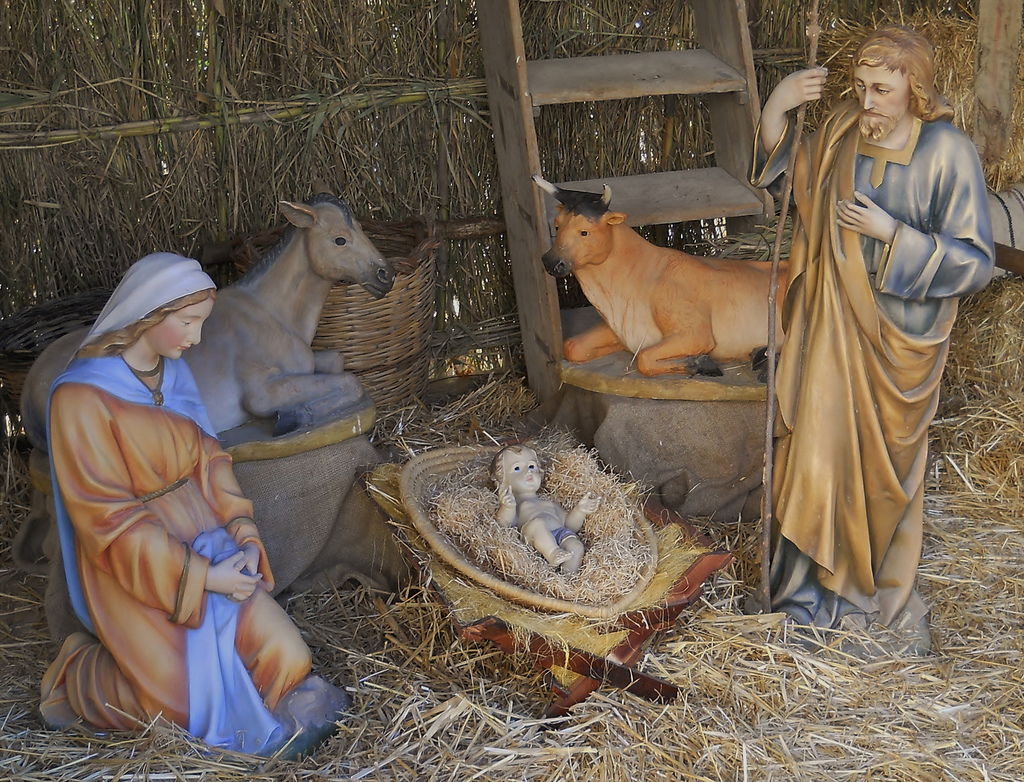
Church manger

Silence. For some four-hundred years, a people accustomed to a God who willingly communicated with them had been yearning for His triumphant return. Studying the words of the prophets, relishing the victories of their heroes David and Samson, living under the oppression of yet another imperial rule, how eagerly they must have anticipated the promised Messiah, the One they knew would free them once and for all of their current oppressors.

Yet, in 400 years, no one had heard from the God of their fathers. The Jews lived and worked under the heavy-handed thumb of the Roman Empire, who tolerated Judaism as they tolerated other religions. As long as the Emperor was given his due, the people could indulge in whatever fancied them. And still, the God who had delivered them from Egypt was silent.

For a people expecting a victorious entrance, complete with flaming sword and destruction of the enemy, the actual entrance of the true Messiah must have baffled. They knew from the meticulous records kept by their ancestors that God was able. He could part oceans and bring down walls that were six-feet deep and surrounded a city. This God, whose promise of a Messiah went hand-in-hand with His promise to make of Abraham’s sons a great nation, had even stopped time for the sake of one of Israel’s many battle victories.

Except for Mary and Joseph, a couple of peasant kids whom anybody would have scoffed as foolish if they’d even dared to tell about their experiences with the angels, nobody knew to look for the coming of the Savior in a barn, tucked in some makeshift hay bed among the livestock, the human status of God-made-flesh no better than the lowliest of outcasts.

Imagine the anguish of the peasant parents. God hasn’t spoken to anyone in 400 years, and suddenly, He has a message for these two, young kids. He tells the girl she’s going to have a baby, even though Mary is a good kid and hasn’t had sex with her betrothed Joseph, or with anyone else for that matter. Mary’s initial reaction once she got past her disbelief had to be panic. What would Joseph think of her when she showed up bearing a child Joseph did not father? At worst, he would think she was a slut worthy of being stoned to death in the city square. If he could even stay calm long enough to listen to her story of the visit from the angel, he would probably think her off her rocker. God, after all, wasn’t talking to anybody.

Fortunately for Mary, Joseph gets his own visit from one of God’s messengers, instructing the young man about his responsibilities for the child Mary is carrying. What love Joseph must have felt, not only for his betrothed, but also for his God. He determines to follow the advice of his angelic visitor and go through with his marriage to Mary, prepared to take on this child of God as his own son.

As the young, travel-weary couple approached Bethlehem that fateful night, their reception must have underscored their nagging doubts about this whole bizarre turn in their lives. If this is God’s kid in Mary’s belly, then why can’t we find a decent room in an inn to bunk at for the night, Joseph must have wondered. If God could part the Red Sea to get his people out of Egypt, couldn’t He conjure up a room for His unborn kid? Maybe Mary had been violated by some other means, and the young couple had just been deluding themselves to believe otherwise. After all, for a couple of people who were supposed to be the expecting parents of a God, life was proving to be just another day as a poor traveller on this long, long night.

Settled into the final place of shelter, where at least things are warm from the body heat of the hard-worked livestock, Mary and Joseph can do what poor people across the ages learn to be good at if they expect to survive. Using the resources available to them, they set about making everything as comfortable as possible, ignoring the foul stench of overworked animal hide and the ever-present scent of well-used hay and dung. These are familiar settings to country folk like them.

As the first pangs of Mary’s labor begin, knowing they are doing the best they can do may be little comfort when they consider that this is the reception they have planned for the baby God. Except for the ewes in the stable, neither of these young people have had experience giving birth to a human child, much less a God in the form of man.  It must have been some comfort to them that they have followed the instructions offered to them by the angels who have visited them so far. Did they wonder if their newborn baby would shoot fire from his eyes or come out of the womb speaking entire sentences? As the pains of childbirth rippled through her body, did Mary have the fleeting thought that no human woman should be able to survive giving birth to God?

Perhaps Jonathan’s famous story flashed through their minds as the long day turned into a long night, Mary’s labor crescendoing in the still darkness. “Nothing can hinder the LORD from saving, whether by many or by few,” they may have reminded themselves (1 Samuel 14:6), as the sheep bleated in sympathy. The North Star, shining extra bright, illuminating the manger in an eerie comfort, must have been their first visible reassurance that this birth would indeed mean something more. God was ready to break the silence.

That first cry, splitting the still air, announced more than a new addition to the young family who had no room for the night. God’s silence had ended with a baby’s cry. True to His character, God chose the most unlikely circumstances and deliverer to make the most important step in saving all mankind. For a people expecting a Messiah who would help them overthrow Rome and develop a nation that would be undefeated forevermore, a baby born in a manger was as far from their vision as the east is from the west.

What a comfort for Mary and Joseph when their baby’s arrival was heralded by angels singing to shepherds in the fields, when soon after the birth, three magi arrived with expensive presents to anoint this special king. Memories of these gifts from above must have comforted as they fled from the threats of King Herod, as the challenging future of raising a child from God kept them up at night, as they dreamed about the life He would lead, perhaps assuming along with the rest of Israel that Jesus would lead with a sword instead of love.

This world is full of trouble. For reasons the human mind has neither the facility nor the objectivism to comprehend, bad things can and will happen, even to very good people. God knows, and He knows from the perspective of humanity. In the small corner of the world, in the even smaller corner of a manger, He came to earth in the form of a helpless child who would experience what it means to be human.

Jesus had to learn to walk, to get along with his siblings, to help his earthly dad on carpentry jobs. He had to put up with the mockery of others when He didn’t step up to conquer enemies by shedding blood. He had to face being yelled at for driving out demons because no good deed goes unpunished, even for God walking around the planet as man.

Finally, He had to take on being spit at, insulted, taunted and mocked. He was beaten and tried for crimes He did not commit. He was sentenced to death on the word of people He had come to save. He died a painful death on the ignominious cross while His oppressors gambled for the very clothes off His back.

Mary, looking on at this child who has never fit in to the expectations she must have had for Him that long ago day in a humble manger, must have wondered even then just how He would follow through on His promise to save the world. He certainly looked defeated. But, she alone knew without doubt His holy origins. She more than anyone had reason to believe that with God all things were possible.

As we contemplate the true champion Jesus proved to be in freeing all those who believe from the burdens of sin, we know that no physical oppression can keep us from the victory of being saved by Jesus. But, this celebration of the birth of our Savior is something every bit as wonderful as His ultimate sacrifice.

After 400 years of silence, God, who never lies, came through on all His promises. He loved His creation so much that He came to the planet in the form of His creation in order to become the ultimate sacrifice.

There are lessons here beyond the faith that leads to salvation. God coming to earth in the form of man teaches us humility, shows us the depth of His love, underscores His ability to make useful that which the rest of us might label useless.

Pray knowing Jesus understands exactly what you are going through. He has literally walked in our shoes. And even though He never sinned, He loved us enough to be willing to forgive us our stumbles. He died for them.

But before that, He was willing to be born for them, in a lowly manger, to the music of animal noises and the sound of the wind whistling through the cracks in the loosely-constructed walls, to lonely parents far from home and struggling to believe.

Posted in Faith

For Such A Time As This: Lessons From The Queen

esther

Hadassah, an orphan, loves her cousin Mordecai, who has raised her. He has never steered her wrong, so when Cousin Mordecai tells Hadassah to present herself as a candidate for the next queen to King Xerxes, Hadassah goes along with it. She even goes along with it when Cousin Mordecai tells her not to let anyone know she is a Jew.

So, as Esther, Hadassah presents herself at the palace, knowing that at worst she will spend the rest of her life as a slave in the king’s harem and at best, she will be named queen.

She may not relish being named the queen. The woman she will be replacing was put aside when she refused to present herself before the king and his nobles and military officials, even though they had all been partying for seven days, drinking freely because the king had put no limit to the amount of liquor he was offering to those attending.

One can only imagine that queen’s position. Vashti has been hosting 180-days’ worth of pomp and circumstance. In the last seven days, while the king is eating and drinking to excess, she has been hosting her own banquet for the women.

King Xerxes expects Vashti to come when he snaps and to look as beautiful as possible when she shows up. Vashti is one of the original trophy wives. So, when she doesn’t jump at the chance to parade in front of a very large banquet full of very, very drunk men, King Xerxes summons a band of “wise men” to determine the action he should take.

In order to ensure that no other women get any ideas of independence from Vashti’s actions, the men decide that the queen should be banished. Xerxes takes this action with a rapidity that is matched only by the leisure he takes in deciding he misses having a beautiful woman around. That’s when the advisors determine to find the king a new queen.

Esther enters the palace for twelve months’ worth of beauty treatments in preparation of her presentation to the king. It sounds like pampering, but the pressure is on. She has to be pleasing to the eunuchs in charge of her, to the slaves attending her, all in practice for being brought before the king. If she is not chosen, Esther will still spend the rest of her life in the palace, but as a mere slave. Either way, the one place Esther will never live again is among her own people.

Perhaps, she was surprised to be the woman King Xerxes chose. Imagine her awe as a royal crown was placed upon her head, a banquet thrown in her honor. And still she stayed silent about her heritage because Cousin Mordecai told her to. When Mordecai uncovers a plot to kill Xerxes, Queen Esther is able to save the king, proudly giving her cousin the credit.

So, when Mordecai urges Esther to go before the king to plead the Jewish cause, perhaps Esther wonders if he has lost his marbles. After all, she hasn’t told Xerxes she’s a Jew. The king hasn’t even felt the need to see her for a month. Maybe his desire for her has waned. He has a full harem of women, after all. And, if she walks in uninvited without the king acknowledging her, she can be hung!

Cousin Mordecai’s response to Esther’s hesitance is a classic source of comfort for all who face tough decisions. “What if you were made queen,” Mordecai asks, “for such a time as this?”

Esther is no dummy. She knows the risk she is about to take, and she knows the honor God commands. She asks Mordecai and all her people to fast and pray for her for three days before she undertakes this dangerous mission.  She and her servants do the same.

Esther enters the king’s presence, and he is pleased by her. She knows how much the king enjoys a good feast and throws a banquet for the king and her cousin’s greatest enemy, Haman. When the king is indeed pleased and asks what Esther would like in return, she doesn’t press her luck, but merely asks for the king to come again the next day for another banquet. Only if she pleases the king, she assures him, will she even make a request.

Who can resist a beautiful woman who is also humble? Not King Xerxes, who hurries to fulfill Esther’s request the next day to save her people, allowing them to take vengeance on their enemies. She underscores the humility of her request by assuring Xerxes that she would not even bother him with the fate of the Jews if they had been destined to become slaves. That fate would not have been important enough for King Xerxes’ consideration, Esther reasons.

In the end, it seems Esther was indeed made queen for such a time as this. Thinking about Esther’s fate somehow makes facing our own challenges just a little bit easier. Perhaps rough times now are giving us the skills we need for even more difficult times in the future. Maybe a challenging life change at this moment will turn out to be a tenfold blessing further along in our lives. Maybe we are persecuted for what we believe in in order to inspire others to faith.

Besides teaching us to look for God’s lessons in the events of our lives, Esther teaches us the importance of humility in our relationship with God. If we approach each day knowing the gratitude we should feel for not getting what we deserve (which is death), but instead getting the free gift of grace, imagine how powerful God will make our days.

With God, no one who enters into His throne room need fear rejection. He extends His golden scepter to all comers.

And that is the greatest lesson of all.

Posted in Faith, Living

His Benefits Abound: Know Why You Are Thankful This Thanksgiving

photofunia-1479674540

In October, 1864, President Abraham Lincoln declared:

“I do hereby appoint and set apart the last Thursday in November next as a day which I desire to be observed by all my fellow-citizens, wherever they may then be, as a day of thanksgiving and praise to Almighty God, the beneficent Creator and Ruler of the Universe.”

The War Between the States had raged for almost five years and would not be resolved for another six grueling months. In governing a land torn in two, Lincoln had not hesitated to lean on the analogies of Christ’s house divided and built on sand. Yet, where others might be inclined to curse or deny the existence of God, Lincoln embraced His goodness and benevolence:

“I do further recommend to my fellow-citizens aforesaid that on that occasion they do reverently humble themselves in the dust and from thence offer up penitent and fervent prayers and supplications to the Great Disposer of Events for a return of the inestimable blessings of peace, union, and harmony throughout the land which it has pleased Him to assign as a dwelling place for ourselves and for our posterity throughout all generations.”

As we prepare to partake of turkey and dressing and pumpkin pie, may we not displace the ultimate emphasis of our thanksgiving, that is the thanks we owe our Almighty God. In Psalm 103, David exclaims, “Praise the LORD, my soul; all my inmost being, praise His holy name. Praise the LORD, my soul, and forget not all His benefits” (1-2).

Too often at this time of year, we tend to concentrate on the abundance of things in our lives, such as the food piled high on our tables, the family gathered to laugh together, and hopefully even our good health. But the benefits of our beneficent Creator are so much more than these ephemeral things.

From God flow the gifts of forgiveness, patience, courage, and love. Only from God do we receive the ultimate gift of sacrifice that cleanses us of the trespasses that separate us from Him, so that we might enjoy a life eternal in His presence. Having tried and failed to hold a nation together with his own bare hands, Lincoln understood all too well that only God could piece together what man in his greed and pride had torn asunder.

Thanksgiving may certainly be offered through our actions, but since we most often associate thanksgiving with our proclamations, there is another consideration for this time of year and that is the importance of all the things we say all year through.

Proverbs tell us, “The lips of fools bring them strife, and their mouths invite a beating” (18:6).  Christ warns, “that everyone will have to give account on the day of judgment for every empty word they have spoken” (Matthew 12:36). Gossip, complaining, ridicule, hatred, lies, all such rumblings deny the grace of God in us and keep our message of the love of Christ in shadow.

On the other hand, words that are true, kind, patient, loving, these are the things that shine the light of God’s grace to others. Thankfulness is very high on the list of words our Heavenly Father wants to hear from us.

Scientists tell us that gratitude:

  • Increases our connections with other people
  • Improves our physical and mental health
  • Helps us sleep better
  • Improves our self-esteem
  • Makes us empathetic
  • Decreases aggression
  • Reduces our negative responses to trauma, helping us recover from tragedy

In Jesus Calling, Sarah Powers explains,

“The best way to befriend your problems is to thank [Jesus] for them. This simple act opens your mind to the possibility of benefits flowing from your difficulties. . . . The next step is to introduce them to [Jesus], enabling [Him] to embrace them in [His] loving Presence. [Jesus] may not necessarily remove your problems, but [His] wisdom is sufficient to bring good out of every one of them” (March 5 devotion excerpt).

We live in a world where our daily attempts to be perfectly good fall beneath our stumbling feet like so many well-intentioned things. But we needn’t despair because our righteousness is dependent on God’s benefits to us through grace rather than on our goodness. By concentrating each moment on how thankful we should be that our Holy God loves us so much, surely we will avoid the pitfalls of an otherwise wayward tongue.

So, this Thanksgiving, embrace a humble heart that kneels before an awesome God with gratitude that overflows. And carry that gratitude into every day so that His light may shine through you to a wounded world:

“Trust in the LORD and do good; dwell in the land and enjoy safe pasture. Delight yourself in the LORD and He will give you the desires of your heart” (Psalm 37:3-4).

References:
http://www.presidency.ucsb.edu/ws/?pid=69998
http://www.forbes.com/sites/amymorin/2014/11/23/7-scientifically-proven-benefits-of-gratitude-that-will-motivate-you-to-give-thanks-year-round/#537a1dc76800


Posted in Faith

Embrace This Four-Letter Word

hope

God keeps His promises. In the early sixth century, after a forced march of some 900 miles, the Israelites sat huddled in captivity in far away Babylon knowing the truth of that statement. Having denied God’s sovereignty by worshiping other gods, ignoring His commandments, and otherwise living up to their reputation as a “stiff-necked” people, the nation of Israel finally faced the fruition of God’s promise to take away His gift of the promised land if they did not change their ways.

But even in their exile, God, who never changes, remembered His love for them. Jeremiah the prophet tells the remnant of Israelites who remained in their homeland:

“For I know the thoughts that I think toward you, says the LORD, thoughts of peace and not of evil, to give you a future and a hope.” (29:11)

God’s gift of hope threads its way throughout His Word, and every time, what begins in hope ends in the fulfillment of God’s promises. Sara laughed because she thought herself too old to have a child, and yet Abraham is the patriarch of a nation. David, a humble shepherd, was hunted down and nearly killed by Saul and yet his son, Solomon, eventually ruled over a kingdom whose riches we can only imagine. A virgin gave birth to a child whose death on the Cross fulfilled the Law and saved the world.

Sometimes, when we get caught up in the hectic, busy business of living day-to-day, we forget God’s promise of hope counts for much more than our everlasting life. His hope means that in this life of trouble and woe and uncertainty, we have the promise that God, who sees all, has the endgame in sight. He wants us to have peace. He longs for us to be at rest in our trust of Him.

Jesus reminds us,

“Peace I leave with you; my peace I give you. I do not give to you as the world gives. Do not let your hearts be troubled and do not be afraid. . . . I have told you these things so that in Me you may have peace. In the world you will have tribulation. But take courage; I have overcome the world!” (John 14:27 & 16:33)

Leaning into the hope that is the promise of a world overcome by our Savior takes practice and patience. We have to learn to listen to our self-talk, correct a mind that wants to embrace gloom and doom instead of the love of God, and know the truths and promises that we believe so easily during times of joy so that we do not forsake them in times of trouble.

Hope offers peace when we wonder at the machinations of even the greatest government in the world, as we wait for test results in a crowded doctor’s office or worry over the bills we cannot pay. It is that feeling, deep down inside of us, that we will find comfort and rest, no matter how dim our present seems. It is the smile of a stranger on a bad day, the unexpected refund just when we need it most, the tiny victory of a good report from the doctor even when your condition is fatal.

Hope is for the courageous, but God gives courage. The world is always ready to mock those who claim a faith in God’s goodness and love. But those who believe have in their hearts a higher goal than the worries of this world can hold. They know the victory that comes with believing in the hope of heaven and embracing the evidences of our hope on earth.


Posted in Christian Living, Faith

Be Reconciled: Learn to Listen

tabernacle_sm

Therefore, if anyone is in Christ, he is a new creature; the old things passed away; behold, new things have come.  Now, all these things are from God, who reconciled us to Himself through Christ and gave us the ministry of reconciliation, namely that God was in Christ reconciling the world to Himself, not counting their trespasses against them, and He has committed to us the word of reconciliation.    Therefore, we are ambassadors for Christ, as though God were making an appeal through us; we beg you on behalf of Christ, be reconciled to God.   –2 Corinthians 5:17-20 (NASB)

As you probably already know, the traditional tabernacle where the Jewish people worshipped God had an area known as the “Holy of Holies.”  Before the sacrifice made by Christ, this room was as close as any person could get to God.  Only the highest priests were allowed to enter, and before they could walk through the curtain that separated this place from the rest of the temple, they had to purify themselves.  This curtain is the same that tore in two at the moment that Christ died on the cross.

The torn curtain is a symbol of what Christ’s death and resurrection did for us.  It reconciled us to God, giving us direct access to the Holy of Holies through our acceptance of Christ Himself as the sacrificed Lamb who died for our sins once and for all.  Being thus reconciled to God, Paul explains in his second letter to the Corinthians that we are now a new creation, people who, being filled with the Holy Spirit, now long for that which is right and good rather than the desires and temptations of the flesh.

This new way of being is a daily choice, for the world in which we live is full of distractions.  Instead of allowing the Spirit in us to guide us, our brains are literally hard-wired to feel first and think later.

Feelings are inherently immature. God warns us not to lean on the guiding of the heart, “the great deceiver.” Acting on feelings is what leads David to sin against God with Bathsheba. Feelings make the Israelites call to Aaron for a golden God when Moses disappears up the mountain.

If you will let Him, the Holy Spirit will save you from those emotional responses that need to be tempered by a logical, God-fearing mind. The Holy Spirit fills you with empathy instead of rage when that car pulls right in front of you on the freeway or when you become the victim of somebody else’s bad day.  It guides you to choose the right path even when the wrong path looks ever-more inviting.

The Holy Spirit, the marking of a soul reconciled to its God, is what makes it possible for a feeling-driven human to become a true ambassador of Christ, a person who, through his or her actions, makes others understand that God really does love each and every one of us, wanting all to be saved.

Discerning the guiding of the Holy Spirit as opposed to our feelings is not easy. There is a reason that Jesus tells us the way is narrow instead of wide. If you need to know if what you are thinking is in line with God’s teaching, you have to know something about what those lessons are. You will discover this best by studying the Word, discussing His Word with others and staying in communication with God by speaking to Him often and also learning to be still and listen for His answers.

If you have never been reconciled to God, know that reconciliation is a gift, bought for you at the ultimate price, paid for by the blood of the totally innocent Christ. All you have to do to claim this gift is have faith, to believe that Christ died for you and accept Him as your Savior.

Do not live your life as if the curtain separating you from the mighty God still hangs between you and that love. Live the truth of the torn curtain by welcoming the Holy Spirit into your daily walk with Christ. Know His word, and you will recognize the voice of the Holy Spirit as surely as you hear your mother’s voice telling you those life lessons you know but are letting your feelings override. The Holy Spirit is the voice telling you:

Finally, brethren, whatever is true, whatever is honorable, whatever is right, whatever is pure, whatever is lovely, whatever is of good repute, if there is any excellence and if anything worthy of praise, dwell on these things. (Philippians 4:8)

Dwell on the glorious truth that you are reconciled to God and discover how much easier it is to be forgiving towards others and yourself.

Posted in Faith

God Gets In The Weeds

forest-sunbeams-trees-sunlight-70365-large

I’m sweating like a sinner in church.

It’s an old wisecrack meant to alleviate tension, but it points to an underlying belief about God and especially His followers, the belief that God only really wants to deal with really good people, that He has no tolerance for those who stray from the straight and narrow path. God, and especially His people, don’t like to get their hands dirty.

But these widely-held beliefs could not be further from the truth of our living, loving God.  The One who loved us enough to die a humiliating death on the cross for us embraces the wounded, the broken, and those who stumble. He knows more than anyone the imperfections of His creations and loves us anyway.

When we deny that salvation is a gift from God, we fall into the trap of thinking salvation has to be earned by our actions. When we work on the earned-salvation model, we are doomed to make mistakes, doomed to judge ourselves and others, and doomed to lose sight of God in the midst of our efforts to ultimately save ourselves.

We must accept that salvation cannot be earned, that the love of God alone saves us, in order to see the world from a more Godly perspective, to support each other rather than judge, to embrace the imperfections in all of us as an indication of our equality before a perfect God.

God’s love is so great, His willingness to get into the depth and breadth of our indignities so limitless, that our finite brains cannot begin to comprehend it. When Jesus had the power to rule the world and dine with kings, He chose to live as an itinerant and dine with tax collectors and prostitutes, some of the most despised social classes of His time. When Paul held Stephen’s cloak while his compatriots stoned the first Christian martyr to death, God didn’t turn His head, but instead saw the potential in Paul to be one of His greatest crusaders. God is not averse to getting His hands dirty if that is what loving us requires.

We know that God is in the weeds as well as on the mountaintops because God is everywhere:

Where can I go from your Spirit? Where can I flee from your presence?  If I go up to the heavens, you are there; if I make my bed in the depths, you are there. If I rise on the wings of the dawn, if I settle on the far side of the sea, even there your hand will guide me, your right hand will hold me fast. If I say, “Surely the darkness will hide me and the light become night around me,” even the darkness will not be dark to you;  the night will shine like the day, for darkness is as light to you. (Psalm 139:7-12)

If we live knowing God gets in the weeds, then perhaps we would do better at tolerating the imperfections in ourselves and others. We would do well to remember that Jesus managed to hold people accountable for their actions without making them feel unloved or de-valued. We would know the difference between truth and petty judgments. Church would be a place where love lifts up sinners instead of making them sweat.

Living by putting God’s love first may seem impossible, but all things are possible with a God who is willing to get down in the dirt with us:

What then shall we say to these things? If God is for us, who is against us? He who did not spare His own Son, but delivered Him over for us all, how will He not also with Him freely give us all things? (Romans 8:31-32)

The God who loves the humble fosters an open heart in all of us, as well as a desire to do what is good and right. But when we stumble, He is always ready to take our hands and pull us back to our feet again. Finding yourself in the weeds? He’s right there, waiting patiently, for you to find Him.

Posted in Faith

God is always by the Book


I just finished a novel whose main characters sought redemption, not in the ever-open arms of His amazing grace, but in a more secular and totally misguided belief that God doesn’t play by the rules.

This world’s true rule-breaker wants you to believe this humanistic approach to reality. If God changes the rules, then evil is all His fault. In one fell swoop, humanity gets a pass on every bad deed because a God who doesn’t follow the rules can’t expect His creations to stay on the straight and narrow.

This idea that God breaks rules is the world’s theology. It explains every person who validates his/her actions by claiming God wants them to be happy. It excuses every individual who expects to be clothed, fed and educated without doing anything to compensate for these luxuries other than breathing. It is much easier to blame an unseen God for the woes of the world than to contemplate one’s contribution to the rubble heap in which we live.

As long as Satan can keep us misinterpreting the very nature of God, he maintains a strong foothold in this fallen world. He, after all, is the original rule breaker. Master of lies, he is the one whispering in your ear when you say to yourself you are beyond redemption or when you give in to the despair that questions whether God has any power at all. Satan makes you believe your timetable is more accurate than the Maker of Time. Satan thrives on your impatience, your fear and doubts. 

But God never strays from the rules His Book expounds in parables, epistles, and detailed law. When God made a promise to the patriarchs, He kept those promises, even when the fulfillment of the promise seemingly defied all odds, as when Sara gave birth to Abraham’s promised heir so late in the two parents’ lives. In James, we are reminded that 

When tempted, no one should say, “God is tempting me.” For God cannot be tempted by evil, nor does he tempt anyone; each person is tempted when they are dragged away by their own evil desire and enticed.  Then, after desire has conceived, it gives birth to sin; and sin, when it is full-grown, gives birth to death. (James 1:13-15)

Here are God’s rules:

  • Having created beings to whom He granted full autonomy (they chose to eat forbidden fruit), God maintained that autonomy even when those creations attempted to become God-like themselves
  • Away from the protected environment of paradise, God’s creations face a world where good and evil will always exist from which to choose in humanity’s quest to return to a complete relationship with our Holy Creator
  • Being a loving God, our Creator continually seeks to bring us back into Holy Fellowship with Him
  • First, He made a covenant promise to make our relationship with Him whole again
  • Then, we broke that covenant over and over
  • Being a forgiving God, He renewed His promise with us every time we repented, over and over
  • Eventually, long after human patience would have given up on the planet a thousand times over, He completed that covenant promise by coming to earth as man, living a blameless life, and sacrificing Himself anyway for all the sins this evil world embraces
  • As always and by the rules He never sways from, God’s only requirement for this amazing gift of forgiving grace is that we acknowledge our own sinful nature and need for redemption to Him and accept Jesus as our Redeemer
  • In other words, God wants us to admit that we have been the ones who cannot follow the rules all along.

God is always by the Book. If you doubt it, then you have likely spent too much time embracing the perspectives of a fallen world rather than studying the promises found in the words and actions of our wondrous Creator. Everything else in the universe is ever-changing, but God is the same today, tomorrow and forever. 

Posted in Faith

Can’t Top This Belief

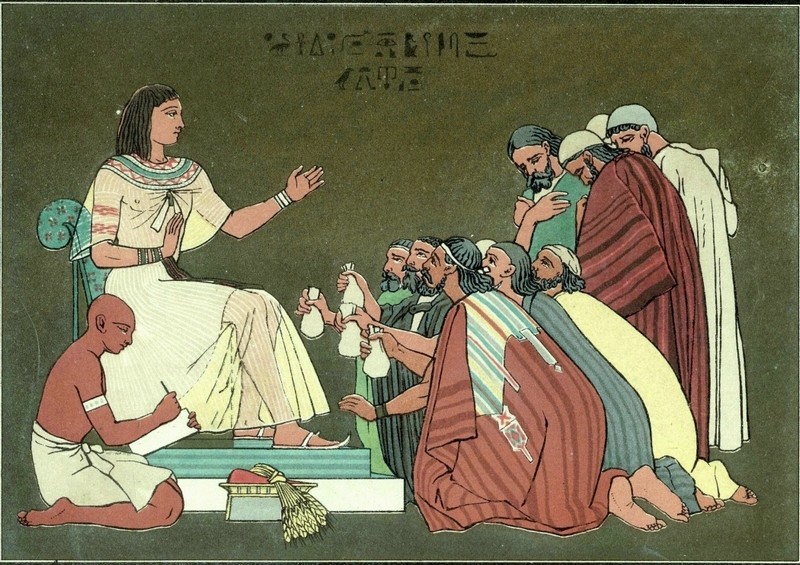
Joseph with his brothers in Egypt

And we know that God causes all things to work together for good to those who love God, to those who are called according to His purpose. (Romans 8:28 NASB)

Trust me, I understand how hard it can be to believe that something good can come out of a bad situation, but time and again in the Word of God, we see examples of the Lord giving truth to this promise.

Perhaps one of the most amazing stories of God working bad things to the good happens in the life of Joseph, whose drama reads more like a soap opera than the real life that it is. Despite all the terrible things that happen in his life, Joseph always does the best he can do according to the abilities God has given him, acknowledges God’s superiority in all things, and is thankful above all else.

You recall Joseph’s challenges and triumphs:

  • Joseph, a favorite of his father Jacob because he is the son of Rachael, is betrayed by older brothers, who argue over killing him or just throwing him down an empty well.
  • Having determined to spare his life, the brothers sell Joseph into slavery with a band of travelers, ensuring that the young man will never see his father again.
  • Once Joseph arrives in Egypt, he becomes a slave to the captain of the guard. Joseph could wallow in the misery of being all alone in a foreign land and no longer free, but instead he works to the best ability God has given him and rises to be second in the house.
  • Before Joseph can settle into too fine a life, he is faced with another betrayal. His master’s wife, trying and failing to seduce Joseph, falsely accuses him of attacking her and gets Joseph sent to prison.
  • In prison, stuck inside a dank, dark cell, Joseph could give up, but instead, he becomes the best at what God has given him the ability to do at the prison. Once again, he is given much responsibility.
  • While Joseph is in prison, the Pharaoh’s baker and cup bearer are thrown into jail with him. Each has a dream. Joseph agrees to tell them what God says the dream means if they will only remember him to the Pharaoh. When the men try to give Joseph the credit for his interpretations, he is quick to correct them. Not I, he tells them, but only God can interpret dreams.
  • Surely, Joseph held on to a hope that he would be remembered to Pharaoh, especially as the first month passed, and the second month, and the third. But, the cup bearer, upon returning to his duty to Pharaoh, quickly forgets all about Joseph–for two whole years.
  • While Joseph continues to do his best in the situation he is in, even in a place where he is wrongly imprisoned, Pharaoh has a dream no one is able to interpret. The cup bearer finally remembers his promise and brings Joseph to Pharaoh. Once again, Joseph is able to interpret the dream because he gives full credit for the act to God.
  • Because of his interpretation, now Pharaoh entrusts Joseph with much indeed. Through the years of abundance and then severe drought, Joseph becomes second in all of Egypt only to Pharaoh himself. Under God’s guidance, Joseph keeps Egypt and the surrounding areas from starving to death.
  • Finally, when Joseph’s brothers come to get grain in Egypt because that is the only place where grain is available, Joseph exhibits his love of God once more. Instead of refusing his brothers food and shelter as would certainly be his right considering the way his brothers had treated him, Joseph offers them forgiveness and even goes so far as to ensure their future welfare in Egypt.

As Joseph proceeds with this ultimate act of forgiveness, he explains his attitude about the ultimate sovereignty of God in his life:

 Then Joseph said to his brothers, “Please come closer to me.” And they came closer. And he said, “I am your brother Joseph, whom you sold into Egypt. Now do not be grieved or angry with yourselves, because you sold me here, for God sent me before you to preserve life. For the famine has been in the land these two years, and there are still five years in which there will be neither plowing nor harvesting. God sent me before you to preserve for you a remnant in the earth, and to keep you alive by a great deliverance.  Now, therefore, it was not you who sent me here, but God; and He has made me a father to Pharaoh and lord of all his household and ruler over all the land of Egypt. (Genesis 45:4-8 NASB–emphasis added)

Not only does Joseph believe that God’s ultimate plan will be accomplished no matter how many twists, turns and dips our lives take, he also believes that all good things that have happened in his life come from God.

The next time you find yourself in the valley of the shadow, remember to reflect on a life spent like Joseph, who not only lived every day according to the principle that the God who wants good for us is the One Whose will triumphs, but who was also always thankful to God for the gifts He offers, including His grace.

Posted in Faith

Diving In

sunny-summer-lake-river-medium

In the climax of the old time radio show, the villain whined to Dick Powell that his hair had been pulled too hard. Powell responded, “The way things are looking, the state is going to have to shave your head.”

It dawned on me as I listened to the radio that many listeners, especially younger ones, might not get what Powell was actually saying, that the bad man would likely be convicted for his crimes and sentenced to die by the electric chair, which would require the state to shave the man’s head to carry out his sentence.

In the song, “Harper Valley P.T.A.,” one of the admonitions the singer makes against a P.T.A. board member is that she seems to use a lot of ice whenever her husband is away. You would have to know there was  a time when people had ice delivered to their homes to understand that this statement implies that the ice man goes to the woman’s house very frequently whenever the woman’s husband is out of town.

If we can lose the ability to understand phrases and metaphors in just a generation or two, I thought, is it any wonder that large chunks of the Bible often seem just outside our grasp? Why would combining two kinds of material in one piece of clothing be a bad thing, for example? Why should Elisha get so irritated with some smart-mouthed youths for teasing him about his bald head that he would sick bears to maul them in revenge?

Even more so than in life, the Bible is layers of meaning. The core messages are irrefutable, black and white musts that even the most contentious believers can agree upon: salvation is a gift we receive when we repent of our sinful nature, accept our need for Jesus’ interference on our behalf to put us back into relationship with God ( a relationship broken by our sin), and make a public declaration of our renewed relationship through baptism.

When we reach out to the farther layers of the Bible’s meanings, our ability to come to a consensus is less clear. Does this “blurred” layer mean the Bible is not the word of God or not to be trusted? Of course not! Theologians have many wonderful, thoughtful answers to the Bible’s sometimes ambiguity, especially for us modern world readers. I have two, much more simple, reasons to believe you can trust the Bible as the Word of God.

One of the first people on record to question God is Job, the ancient man whom God allowed Satan to torture by stripping him of all the earthly wealth, health and family he had accrued. Job never berates God, even though he knows he hasn’t done anything to deserve so much devastation. He does, however, have some tough questions for God about what the way the world works. God’s answer underscores how silly it is that we humans, with a very finite perspective on the world and all that is in it, are always trying to proceed as if the answers to all the universe’s questions are actually within our grasp:

Where were you when I laid the earth’s foundation? Tell me, if you understand. Who marked off its dimensions? Surely you know! Who stretched a measuring line across it? On what were its footings set, or who laid its cornerstone—while the morning stars sang together and all the angels shouted for joy? “Who shut up the sea behind doors when it burst forth from the womb, when I made the clouds its garment and wrapped it in thick darkness, when I fixed limits for it and set its doors and bars in place, when I said, ‘This far you may come and no farther; here is where your proud waves halt’?  “Have you ever given orders to the morning, or shown the dawn its place, that it might take the earth by the edges and shake the wicked out of it?  Job 38:4-13

We believe in the Bible’s veracity because the God who knows so much more than we can ever imagine knows why there are sections of the Bible that make us go, “huh?”.  In the end, do the places where you don’t quite get it really make or break your relationship with Him? My guess is no. And, when you finally get the answers to those questions in the realm of the angels, will the questions even matter anymore, anyway?

If you have trouble leaning into the truth of God’s Word, perhaps you need to take a clue from some of our modern “disciples.” Singer Nicole Nordemann asks in one of her records, “What if your wrong? What if there’s more? What if there’s hope you never dreamed of hoping for?” She encourages the non-believer to close his/her eyes, jump and wait to fall into the arms of Jesus. Steven Curtis Chapman likens his belief to diving into the river of faith, sink or swim.

This approach to a relationship with God, in which the believer spreads wide the arms and releases into the unknown is just the picture of faith that Christ offers us:

Truly I tell you, anyone who will not receive the kingdom of God like a little child will never enter it. (Mark 10:15)

Have you ever met a cynical child? The child’s brain hasn’t been wounded by failed expectation, hasn’t suffered the agonies of mistaken conclusions, hasn’t learned to distrust. Rather than closing off their inner selves from the outside world because they have been hurt, children have the wide open hearts that accept love and give it unconditionally. By embracing the truth of God’s promises with the same kind of openness as we had when we were children who had not been wounded by a fallen world, we practice the kind of faith that was credited to Abraham as righteousness.

Only a faith that is willing to dive in to a relationship with God will survive the bumps and bruises of this life and reach toward the unknowable with a feeling of peace.