Posted in Christian Living, Faith

His Faithful Love Endures

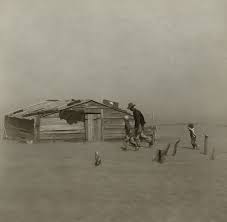
Challenges like the dust bowl of another generation are just one of many things we humans endure.

As a person with anxiety issues, I avoid the news as much as possible.  Being a fan of history, I realize the potential fallacy of this head-in-the-sand attitude.  But, since most days I have to overcome the challenge of worrying about what my logical mind knows are silly things–like the pine needles on my roof or whether the sugar ants I thought I had conquered in my kitchen will return again–I feel validated in my choice to remain mostly oblivious.

But, I do occasionally watch the news.  My first memory of seeing a newscast is standing in the kitchen of our 75-year-old house as the 13-inch black and white television flashed images of Russian soldiers with weapons moving through the woods as if they might burst through the back pantry door any moment.  The newscaster said that Russia had developed some kind of weapon that was superior to what our soldiers had in this time of relative peace known as the cold war.

In my fifth grade classroom, first my teacher told us about being a girl our age and hearing about Pearl Harbor.  She was a passionate storyteller who painted a vivid picture of her own, innocent world collapsing in around her.  Suddenly, the blue sky over the front lawn where she played on the tire swing or rode her bike was an ominous void where planes might bomb her into oblivion at any moment.

That same year, I stood in the library as a television blared reports that our President had been shot.  One of my classmates cheered.  There were rumors that the teacher standing next to me in the library had snuck out to her vehicle and cried.

I once told a friend of another generation that mine felt like one of the first generations in many to not really be challenged.  She, after all, had lost her fiancé in Vietnam.  I conveniently forgot that one of my own high school classmates had died serving our country in a war we are for all intents and purposes still fighting.

So, there is nothing new under the sun, it seems.  Each generation faces its own share of challenges, whether they be wars against brothers-turned-enemies, economic hardships, or the truly unrelenting power of nature.  Each generation must forge its own path to the perseverance that builds character.  And every day we choose to take one more step forward, we prove our own heroic spirit.

But the most heroic spirit of all is the humble one that realizes all things good come from the ONE who breathed everything into existence.

I was reminded of this truth as I read through the Psalms this week.  In these prayers to God, we learn what it is like to be created and yet in relationship with our Creator.  The various authors of the Psalms praise God, plead with God, bargain with God, and even get angry with Him!  But, they always, always, submit to God’s superior role in the petitioner’s life.

In Psalms 107 and 118, for example, we see the heights and the depths of the human experience:

Give thanks to the LORD, for he is good!  His faithful love endures forever. . . . Let them praise the LORD for his great love and for the wonderful things he has done for them. (Psalm 107:1, 8)

In both these Psalms, besides telling the story of all the good things God has done, the Psalmists also acknowledge their own failings, especially in the face of a perfect God.  They know they do not deserve help.  They know that they have been punished and may still continue to be punished.  But, they also believe in God’s faithfulness.  Even though we created things repeatedly reject Him, God never forgets us.

Believing that God is ever faithful, the Psalmist makes a declaration of belief, asking for success even though the Psalmist knows God may not immediately or ever grant it.  Still, in the end, the Psalmist knows that God will always love:

This is the day the LORD has made.  We will rejoice and be glad in it.  (Psalm 118:24)

Like Job who refused to curse God, even when it seemed like God had taken everything from him, for those who remain constant in the belief that God is faithful, the crazy things that happen in our fallen, cursed world can be placed in the always open hands of a loving Creator.  Somehow, knowing that makes facing a fallen world possible.

I commend those who endure so much, but I also acknowledge that any life is a certain act of endurance.  Since I have problems with anxiety, your mole hill is probably my mountain, but we both still endure.  In the end, the act of being human is not a contest of who had the greatest challenges.  It seems to me that the act of being human is all about enduring through our faith in a faithful God.

In a world full of headlines, I think I’ll stick with the banner that hasn’t changed in centuries:  HIS faithful love endures forever.

I hope we all walk in stronger faith in the coming days.  And if we stumble, then let us turn to the words of others who have gone before us along this same journey.  Open His Word to the Psalms and be ready to find a familiar friend who also loves God.

The LORD who shepherds David shepherds all of us.  I choose to fear no evil when I choose God.

Posted in Faith

3 Ways to Fertilize Your Faith

Grow your mustard seeds of faith

That the communication of your faith may become effectual by the acknowledging of every good thing which is in you in Christ Jesus.  (Philemon 1:6)

 1: Know WHAT You are Fertilizing

When it comes to plant products that have been bottled to be sold as food supplements in a health store, I can tell you more than you ever wanted to know.  But, when it comes to real plants in the real world?  Well, I’ve been known to kill bamboo!

Despite my brown thumb, my West Texas roots have taught me that knowing your crop is the beginning key to success.  When to plant, when to harvest, when to pray for rain–these are just some of the elements that go into the very hard job of being a farmer.

Just like knowing the plant you want to grow before you can expect to succeed in growing it, you should also begin your goals to grow your faith by understanding what faith means.

Hebrews 11:1 tells us that faith:

is the substance of things hoped for, the evidence of things not seen.

Ralph Waldo Emerson states it this way:

All I have seen teaches me to trust the Creator for all I have not seen.

The heroes of faith are further examples to help us define the concept.  From Noah who believed enough to build an Ark to Mary who had the courage to bring the Son of God into the world, the Bible is replete with people who understood faith in the most profound way possible, by believing and doing.

The most important step of faith in this modern world is the one you take to submit your life to Christ as your Savior.  When you admit to Him that you are a sinner who has no chance of redemption without Him, you climb the first rung of the ladder toward a closer relationship with God that is the ultimate goal of faith.

“I believe in Christianity as I believe that the sun has risen: not only because I see it, but because by it I see everything else.”
― C.S. Lewis

Faith is believing in God when things are bleakest as well as when things are going well for you.  Faith is the beginning of hope, which is the most important quality for us to have if we expect to make it through the valleys of this life.  Faith is knowing that God IS and the He loves me.

2: Know HOW to Fertilize


With faith as small as this mustard seed, Christ says we can move mountains.


“God will not look you over for medals, degrees or diplomas but for scars.”  –Elbert Hubbard

As Elbert Hubbard explains, in order to grow a belief in God, we cannot expect to proceed easily.  Christ promises us a light yoke, but not a life without trouble.  In fact, it is through troubles that we learn perseverance, which builds character and ultimately leads to hope (Romans 5:4).

Faith is not the belief that God will do what you want. It is the belief that God will do what is right.
― Max Lucado, He Still Moves Stones

In order to grow our faith, we have to exercise it, like a muscle.  As with all things concerning our relationship with God, we can begin that exercise by studying His word, spending time in prayer with Him and joining in fellowship with other believers to share our belief.

“Never be afraid to trust an unknown future to a known God.”  ― Corrie ten Boom

Other ways to fertilize our faith is to learn to listen with intent to the voice of the Holy Spirit in us.  When we feel the pull to reach out to help a stranger or say something about our beliefs to our acquaintances, we should become more accustomed to following those feelings.  The more we know about what the Bible says, the more we will know it is God talking to us and not our own interests.

Fertilizing our faith will often be uncomfortable because it will mean stepping outside our normal comfort zones.  Sitting in my recliner writing a blog is not the easiest thing to do on a Sunday afternoon, since sitting here doing nothing at all would be easier, but writing has always at least been comfortable for me.  Making my way to church on Sunday is stepping outside my comfort zone.  As an introvert, I am highly challenged in group settings, and large groups can lead to sensory overload for me.

But, going to church improves my faith.  Besides learning things about the Bible I didn’t already know, my church attendance has also allowed me to meet a wide variety of people who share my same goals and struggles but who approach them in ways I would have never thought of but greatly admire.  I have learned better ways to approach life’s problems and even to pray by participating in church, fertilizing my faith.

3: Make Faith Personal

The beginnings of this blog post came when I was thinking about how helpful God has been to me in my life, despite my literally clinical problem with worry.

I have Generalized Anxiety Disorder, which comes with unhealthy bouts of depression.  With the proper medication, nutritional support, and help from my family and friends, I lead a pretty productive life.  But the thought that I had earlier this week was thinking about how I spend so much time worrying about things that are going to happen, but when something really does happen, I am somehow able to be really strong and make it through the bad thing.

My power in times of crisis doesn’t come from medicine or me, but from God.  So, as I was thinking about this earlier this week, I was asking myself, how come I’m not doing a better job at remembering how often God comes through for me when I let worry win out over my faith? 

So, when I suggest making your faith personal, I mean just that.  However you do it–journaling, scrapbooking, or making time to remember on a regular basis–make your faith stronger by building on your personal experiences with faith.  We don’t have to be prophets to have real experiences with God.

In fact, when Christ sent the Holy Spirit to dwell in us, He made it more possible than ever for “regular” people like you and me to experience God every day.  Of all the people in history, we can have as close a relationship with God as any of the heroes of faith you’ll find in Hebrews 11.

I will say of the LORD, “He is my refuge and my fortress, my God, in whom I trust.”  –Psalm 91:2

In Nicole Nordeman’s song, What If?, the singer asks:

What if you jump, just close your eyes?  What if the arms that catch you, catch you by surprise?
What if He’s more than enough?  What if it’s LOVE?

Faith is personal, but it’s not something to be hoarded.  Sharing our experiences of faith with others is what helps us spread God’s love in a broken world.  Faith has the courage to admit that what good we do comes from God and not ourselves.  Faith has the courage to step out knowing we may stumble.  Faith knows that even if we wind up with egg on our face, God catches us and always loves us.

“I know now, Lord, why you utter no answer. You are yourself the answer. Before your face questions die away. What other answer would suffice?” ― C.S. Lewis

Each time I hit post, I risk offending somebody, looking foolish, or making an actual mistake in a cyberspace where they say nothing ever actually goes away.  But faith without works, as James tells us, is a dead faith.  How can I not risk everything for the One who gave everything for me?

Grow your faith muscle this week.  If we truly believe, what other choice have we?

Posted in Faith

A Mustard Seed Idea for Halloween

KSBJ

Many years ago, my local, Christian radio station was offering free “seed” cards to give away at Halloween along with whatever other treats you had ready for the costumed minions who traipsed to your door.  Since one of the pick-up points for the seed cards was right by where I work, I stopped in and got some.

It took just an extra moment to add the card to the candy I was handing out.  Some of the kids would ask me what it was.  Others were too eager to get to the next house.  A few said they listened to KSBJ as well.

The next year, when I was handing out candy, more than one kiddo remarked, “Hey, you’re the card lady.”  That made me smile.

In the past few years, I haven’t been handing out candy at my door.  For one, I had a curious cat who might just slip out if I wasn’t careful.  For another, I’ve had other things I have had to do.

But, this morning, I was asking God to give me some much needed guidance because I’ve been feeling in a rut lately.  I wasn’t even thinking about Halloween being this week.  It was just one of those times when I really wanted one of His angels to be right there in front of me so I could have a two-way conversation and get some answers.  You all know the kind of praying I am talking about here.

Anyway, hours later, the memory of my seed card experience of years past popped into my mind.  The only thing I had never liked about it was trying to get the cards separated fast enough and candy out too so the kids could keep going.  I don’t want to slow down their excitement.

So, I realized that if I got some of those treat bags like you do for parties and filled them with goodies and the card, I could quickly pass out a fun treat for the kids who have been growing in numbers on our street as they want to enjoy the kind of old-fashioned Halloween fun like I had as a kid.

Now all I needed were the cards.  I popped open my Publisher program, picked a pre-design and created what you see above.  I had the blank business card forms on hand, so that was easy enough to print.  Now, I’m ready to put together my bag of goodies, which includes candy, funny rings, rubber balls, and more.

Maybe no one will look at my little card promoting a truly awesome Christian radio station.  But, I like to think that the one person God needs to see that message will get it because I asked for an answer, I think I got one, and I acted on it.

So, I guess what I’m saying is, don’t be afraid to put a lot of God into your celebration of a secular holiday.  What we’re really celebrating here is the coming of Fall, cooler weather, and colorful leaves wafting to the ground in orange and red piles to jump in.

Jumping into our faith is just what any day living with God at the center of your life is all about.  Focus on HIM, and you will not be lead astray.

Posted in Christian Living, Faith

Why Don’t I Learn?

693px-Circle_diagram1

As I’ve mentioned recently, my Bible reading currently finds me in the cycle of stories of the Old Testament, where God’s people love Him, forget Him, mock Him, and turn back to Him again in waves of joy and grief that often leave me wanting to scream at my Bible as I might yell at the television set–“What do you think you’re doing?  How can you be so stupid that you would worship a man-made idol or other people’s gods when you have a history of covenant with the one and only God?”

But, I usually remind myself how easy it is to armchair quarterback history.  A perspective from thousands of years in the future, after all, can easily see where others stumble, especially since my perspective includes knowledge of the New Covenant, which was completed when Christ came and sacrificed Himself for us.

Before Christ, the closest any individual came to God was through the High Priest, who was allowed to cleanse himself and enter the Holy of Holies, the most sacred place in the Temple, the place where God dwelled, only once each year in order to offer sacrifices that would give the people a way to forgiveness from God.  When Christ died on the Cross, that curtain that separated the rest of the people from that Holy of Holies literally split in two!  From that moment on, those who ask Jesus to be their Savior have entrance into the Holy of Holies through the indwelling of the Holy Spirit, which means that we can call on God anytime, anyplace, anywhere.

But, since human nature really never changes, how often do we also cycle through loving God, forgetting Him, and even mocking Him before we remember just how special the gift of Grace and Salvation are and return to Him again?

Modern culture likes to concentrate on a kind of non-religion where everyone can feel good about him/herself so long as we give everybody enough room to believe whatever they want, and we don’t get in anybody else’s way.

Even though Christ loves all of us so much that He died so that we all would have the chance to choose everlasting life with Him, He did not negate following God’s commands:

Woe to you, teachers of the law and Pharisees, you hypocrites! You give a tenth of your spices–mint, dill and cumin. But you have neglected the more important matters of the law–justice, mercy and faithfulness. You should have practiced the latter, without neglecting the former.   (Matthew 23:23)

There is no way to God the Father except through our belief in Christ the Son.  Christ commanded that we love God first, with everything that is in us, and to love others as we want ourselves to be loved.  Between these two commands, He covered every other rule laid out for human behavior in the Holy Word.

Yet, despite the simplicity of God’s plan for our salvation, don’t we manage to make everything so very complicated?  We judge when we should be silent.  We offer disapproval when we should be extending a helping hand.  We let ourselves off the hook when we should be listening to the voice of conscience that tells us we just messed up.  We hold onto our pride when we should submit to God’s ultimate power over us.

Despite the many downs in the history of the Jews, theirs is the ultimate victory in human history because it is through them that God chose to make Himself known to the rest of us.  I feel sorry for those who stubbornly refuse to believe that God is because, in the end, they miss out on the pinnacle-moments of knowing a loving Creator.

Through his many psalms, David, the man after God’s own heart, expresses as well as anyone the joy of knowing, truly knowing, God’s love for us:

The Lord is my rock and my fortress and my deliverer, my God, my rock, in whom I take refuge, my shield, and the horn of my salvation, my stronghold and my refuge, my savior; you save me from violence. I call upon the Lord, who is worthy to be praised, and I am saved from my enemies. (2 Samuel 22:2-4)

Like intersecting circles in a graph, we humans may have different perspectives about the world, but the one thing that should center us is coming back to our true center, which is Christ.

So, even though I want to chastise the people in the stories I read in the Old Testament, I know that I, too, am constantly on a path of winding toward and away from God, even though I have Jesus in my heart.  The main lesson I have to learn is to keep going on my knees and asking God to keep guiding me and bringing me back to center.

Posted in Christian Living, Faith

3 Lessons from David

David's_Grief_Over_Absolom_(Bible_Card)

After removing Saul, he made David their king. God testified concerning him: ‘I have found David son of Jesse, a man after my own heart; he will do everything I want him to do.’  (Acts 13:22)

When you read about one of Israel’s greatest heroes, David, you can see his passion for God, but you also see his humanity.  Despite David’s love for God, he still does things that go against God.  He takes another man’s wife.  He takes a census of his people, even though that denied God’s claim that Israel would become a nation so large, it could not be counted.   He lives a life of such violence to secure the Israelite nation that God leaves the building of His temple to David’s son, Solomon, whom God promises will be able to live in a peaceful kingdom.

There are many lessons to learn from the story of David’s life.  Here are three pointers that have stuck out for me in the previous weeks:

Lesson 1: Repent with everything you’ve got

When David returns the Ark to its home in Jerusalem, he rejoices in God’s glory with his whole self, dancing with such exuberance in front of all his people that one of his wives reprimands him for it because she finds his actions undignified.  But God, who sees the heart, knows the truth of David’s love for God and actually punishes the woman for her attitude towards David.

When David messes up, he repents with the same kind of passion with which he rejoices.  He wears burlap, he fasts, he begs for God to forgive him, he doesn’t try to blame anyone else or his circumstances for what he ultimately did.  Most importantly, his repentance means something because he really intends not to mess up in the same way again.  He wants to do what is right in God’s eyes.

David was conscience-stricken after he had counted the fighting men, and he said to the LORD, “I have sinned greatly in what I have done. Now, LORD, I beg you, take away the guilt of your servant. I have done a very foolish thing.” (2 Samuel 24:10)

Lesson 2: Acknowledge God’s Sovereignty

David had plenty of opportunities to let his worldly successes go to his head.  Even though he had to fight many, many battles during his lifetime, he won.  As a young shepherd, he even took on a giant an entire army didn’t want to fight and killed Goliath!  Women fell at his feet, men bowed to his will, and almost no one had a bad word to say about him.  Think about how we Americans idolize the famous in our country and how few of them even believe in God, and you will begin to realize the real challenges David faced to not let his successes make him think he was close to being a god himself.

But, because David did have a heart for God, he didn’t fall into the trap of claiming his worldly successes for himself.  As you read through David’s story, he always gives God the credit for any success he has.  He asks for God’s permission before making battle plans.  He begs for God’s help for every problem that he faces.  In short, David understood that every step he took was under the protection and oversight of his heavenly Father.

I will extol the LORD at all times; his praise will always be on my lips. (of David, Psalm 34:1)

Lesson 3: Believe in God’s Love for YOU

No matter what bad things happen to David in his life, whether he felt he deserved them or not, he never doubted that God loved him and would see him through according to God’s ultimate plan.  When David’s son born out of his sinful relations with Bathsheba ultimately dies, David rises from the fasting he had been doing to ask God to change His mind, cleans himself up and begins the hard task of living again.  Because David accepts that God knows best and realizes that God loves him, he can continue to live by trying to follow God’s edicts and worship God for the One and Only God that He is.

Throughout the story of David, in even his most despairing Psalms, David always expresses the belief that God is good, God loves him, and God’s will being done is what is ultimately the best thing to happen–even when what happens really hurts.  Ultimately, I think, it is David’s sincere commitment to believing in God’s love for us that makes David’s heart like God’s own.

Have mercy on me, O God, according to your unfailing love; according to your great compassion blot out my transgressions.   Wash away all my iniquity and cleanse me from my sin.  For I know my transgressions, and my sin is always before me.  Against you, you only, have I sinned and done what is evil in your sight;  so you are right in your verdict and justified when you judge.  Surely I was sinful at birth, sinful from the time my mother conceived me.   Yet you desired faithfulness even in the womb;  you taught me wisdom in that secret place.  Cleanse me with hyssop, and I will be clean;  wash me, and I will be whiter than snow.  Let me hear joy and gladness;  let the bones you have crushed rejoice.  Hide your face from my sins  and blot out all my iniquity.  Create in me a pure heart, O God, and renew a steadfast spirit within me.  Do not cast me from your presence  or take your Holy Spirit from me.  Restore to me the joy of your salvation  and grant me a willing spirit, to sustain me.  Then I will teach transgressors your ways,  so that sinners will turn back to you.  Deliver me from the guilt of bloodshed, O God,  you who are God my Savior,  and my tongue will sing of your righteousness.  Open my lips, Lord, and my mouth will declare your praise.  You do not delight in sacrifice, or I would bring it;  you do not take pleasure in burnt offerings.  My sacrifice, O God, is a broken spirit;  a broken and contrite heart  you, God, will not despise.  (Psalm 51:1-17)

The Next Step

Being like David, flawed but loving God with all your heart, is a really grand goal.  You might consider it a first step toward the ultimate goal of being like Jesus, who had nothing to repent, but loved God, acknowledged His sovereignty and followed His will as an example for all of us.

Luckily for us Christians, we have Christ’s sacrifice so that the wrath we so deserve He took upon Himself on the cross.  With the indwelling of the Holy Spirit, we have a guide to help us be more Christ-like each day.  Following David’s, and Christ’s, examples, we should find ourselves praying more, throwing our whole selves into our relationship with God, and growing our faith.

Be strong and courageous. Do not be afraid; do not be discouraged, for the LORD your God will be with you wherever you go. (Joshua 1:9)

Posted in Christian Living, Faith

Don’t Judge THIS Book By Its Cover

 20121125-152849.jpg

Have you ever read some of the stories in the Bible and thought, why did God put THAT in HERE?

Reading through the first part of Judges in this last week, I found myself asking just such a question more than once. Let’s face it, if you are looking for action, adventure, drama, and pictures of humanity both poignant and repulsive, Judges is a roller-coaster ride of reading that will take your breath away.

In the course of just a few pages, we are introduced to strong lead characters (like Deborah or Samson), confused anti-heroes like Micah who hires his own Levitical priest, creates his own idols to worship and thinks he is setting things right with the Almighty God.

Samson kills a thousand (a round number often used in Hebrew writing to indicate a very large amount) of the Israelites’ oppressors with the jawbone of an ass but succumbs to the wiles of a pretty face, easily giving away the special gift of power that was his alone through the grace of God.

Another story tells about a man, Jephthah, who has been told to go away by his brothers because his mother was a prostitute. Not one to be put down, Jephthah found a new life in the mountains, becoming the leader of a group of desperadoes who gain such a reputation for their ability to defeat enemies and hold on to the land they claim as their own that the brothers who had once rejected Jephtha decide he is just the man they need to help save them.

The exchange that follows would make a great scene in a Western. “Let me get this straight,” says Jephthah. “I wasn’t good enough for you before, but now that you are in trouble, I’m suddenly worth talking to?”

After striking a deal that satisfies his need to feel vindicated, Jephthah uses his band to defeat his people’s enemies, all the while acknowledging that his success is dependent on God.

But, the roller coaster soon dips to an all-time low. A certain Levite takes a concubine who runs away and back home to Jerusalem to her father. The Levite goes after her. For five days, the girl’s father manages to delay the Levite from heading back home, but on the fifth day, the Levite says it is past time to go.

All of this lolly-gagging creates a situation where the Levite with his concubine and servant have to travel a little farther in one day than they might have liked in order to reach the Jewish village of Gibeah. (The servant wants to stop sooner at a non-Jewish village, but the Levite assures the servant that they will be safer among their own kind).

Hours later, as the Levite, his concubine and his servant languish in the town square of Gibeah, an Ephraimite (non-Jew) who lived in the village and had been out tending his flock comes across the traveling band and asks them what they are doing out in the open.

“We have enough food for ourselves and our animals,” the Levite explained, “but no one will give us a roof for the night. We will be OK out here in the square.”

The Ephraimite responds, “You will not be out in this square overnight. Come stay with me. You will eat my food and save your own.”

Not long after the travelers and their host settle into the latter’s home, a pounding starts at the door. The men of the town want the Levite given to them so they can abuse him. Instead, the Levite throws the concubine out the door.

After being used by the men in the town, the concubine manages to crawl to the doorstop of their host, lay her hand on it, and die. The Levite opens the door the next morning, finds his dead concubine and throws her onto his horse to complete the journey home.

Once he gets there, the Levite chops his concubine into twelve pieces that he sends to the rest of the tribes of Israel. Upon getting the message, the tribes gather and decide to go to war against the tribe of Benjamin, which is the people who were in the village where the murder took place.

In this civil war, the people go to God, who sends them into battle. In wave after wave, thousands of the Jews are killed by the Benjamites before the conflict is finally settled.

But then, the Israelites have another problem.  They figure out they have wiped out one of their own tribes!  Solution?  Since they have vowed that none of their daughters will marry a man from the Benjamin tribe, they scramble to find ways to get brides for the remaining men of Benjamin so that the tribe is not completely lost.  First, they figure out which clan had not been to the initial meetings about the Benjamites and go to their village to slaughter everyone except the 400 virgins who had never laid with a man.

When that solution still does not provide a way to give the remaining Benjamites enough brides, they scheme to find a way for the men of Benjamin to kidnap enough women from one of the tribes that had vowed not to marry their daughters to the Benjamites.  Since the women will have been kidnapped, the Israelites will not be seen to have broken their vow not to allow marriage with the tribe of Benjamin!

In the fantasy classic, The Princess Bride, the outer story, where the grandpa is reading the fable to his sick grandson, there is a point where the grandson questions his grandpa in complete exasperation, “Grandpa, why are you reading me this?”

When I found myself asking God, why are these stories in Your Bible, I was happy to find that He showed me a very plausible answer.

Last week, I wrote about Jotham’s parable of the trees. But also, throughout the book of Judges, the author tells us that

In those days Israel had no king; all the people did whatever seemed right in their own eyes. (Judges 17:6 NLT)

It struck me as I read Judges that the king that verse is referring to is not a human one. Especially when you keep in mind the truth of Jotham’s parable, you realize that the one and only King God intended man to have was Himself.

As if to underscore this point, the book of Judges ends with the ominous truth it has repeated throughout the book:

In those days Israel had no king; all the people did whatever seemed right in their own eyes. (Judges 21:25 NLT)

Taking stories in the Bible out of their full context is easy to do, especially when we are looking for ways to validate our own ill behavior.  But, as the book of Judges teaches us, this is a dangerous practice that violates the will of God.  For, if you find yourself excusing your own bad behavior by comparing it to some of the valleys of the Israelite story and bypass the point that God was not approving of these actions, you miss the vital key to walking in Christ’s shoes as you live this life.

God shows us the good, bad and ugly in humanity through the stories in Judges to prove the very important lesson that at any time we make a King out of anyone or thing instead of making God our King, we are doomed to misery and failure.  Worst of all, we will have disappointed God.

It seems much wiser to begin and end each day by reminding ourselves that God is our King.  The Israelites would have done a far sight better had they remembered to do so.  And that is the lesson we should be taking away from any reading of the book of Judges.  God is not only good.  God is our only King.

In the roller coaster ride of Judges, what we see is a people who have NOT made God their King.

Posted in Christian Living, Christianity, Faith

3 Lessons from Numbers for Christians

??????????????????????????????

My Bible readings have me in the beginning of this only Book that truly matters, and so I am asking God to help me see the lessons I should be learning from what can sometimes seem tedious study, since so much of the story of the Jews’ time in the desert is filled with specifics about measurements for building the tabernacle, the specific punishments for different crimes, etc.  Still, I believe God is showing me some pretty interesting things because I have asked for Him to, in faith.

Reading in the book of Numbers, I tried to see myself in the shoes of the Jews.  They might have had the privilege of witnessing God’s miracles and seeing His presence up close–like having manna and water delivered to them out of nothing and seeing God appear in a great cloud and column of fire to guide them, but I have the knowledge of God’s greatest miracle: that He gave His only Son to die for our sins.

Knowing this, can I see my own worries and misplaced concerns about everyday life as the same kind of backsliding that I scoff at when I read about the Jews and their golden calves or whining about being tired of the same kind of food every day?  Reading the early parts of Numbers in this way, I have come up with three conclusions I can try to apply to my walk with Christ.

  1. God keeps His promises
    • God said He would rescue the Jews from Egypt and take care of them.  But, every time you turn around, the Jews keep wanting to go back to Egypt, back to slavery and harsh taskmasters.  However, the Jews don’t remember these negative sides to life in Egypt when they are whining to Moses.  All they remember is having a variety of food there and not just manna.
    • Don’t we Christians do similar things?  Christ promises that He will be with us always.  Christ admonishes us to look toward treasures in heaven and not on earth.  He wants us to understand that our relationship with Him is what matters most, not the car repair we have to find a way to pay for.  And yet, how many times do we fret instead of trusting that Christ also keeps His promises?  He brings us through the storms in this life, often not in ways we expected, but usually we can look back and see the good Christ works in the things that happen to us, especially when we approach those things by putting our belief in Him first.
  2. God doesn’t want us to fail.
    • I think it is a mistake to place on an omnipotent God an understanding of emotions that is limited by our human perceptions.  In other words, when God gets angry, it is in no way the same as when we humans get angry.  There just isn’t a way for us to understand God’s “emotions” unless He chooses to reveal them to us.
    • I say all that to propose that the punishments that God metes out when the Jews fall short should not necessarily be seen so much as an anger response as a disappointment that borders on mourning.  And what, exactly, is God mourning except the loss of those who fail to have faith in Him despite everything He is doing to show the Jews that He alone is God?
    • If God mourned the failure of the people He had chosen to establish Himself as the one and only God of the universe, how much more must he mourn when people reject Christ, or when we Christians reject the lessons Christ worked so hard to teach us?
    • The bottom line of the cycle of lack of faith and punishment as the Jews wandered in the desert is the lesson that God does not want us to fail.  Think about how many times God allowed the Jews to begin again with their relationship with Him.  Then, think about how Christ allows us to awake each morning as a new creature.  As long as we acknowledge our sins to Him and repent of them, we get to walk with Christ in the presence of God once again!
    • No greater love….
  3. God wants our BEST.
    • Every sin or uncleanness in the book of Numbers requires sacrifices that begin with the offering of the best that the person has to offer.  Lambs with no defect, the best grain, the finest incense.  Only by giving the very best that a person owned could the person really feel the sacrifice required to make things right with God again.
    • The Jews’ relationship with God in the desert always involved barriers.  God spoke to Moses directly, who then conveyed God’s messages to the people.  Thick, wonderfully made curtains separated the unconsecrated masses from the inner sanctuary, where only the anointed, clean priests could enter to present the best of the best to God to redeem those who had sinned.
    • With Christ, the inner curtain has been rent in two!  With the Holy Spirit dwelling in us and with Christ as our High Priest, we can speak to God directly and know that He is listening and hears us.
    • If God wanted the best of what the Jews in the desert had to offer, what do you think He wants from those of us who have chosen to accept the Grace and gift of the Cross?  Do you give Christ your BEST every day?  Do you at least think about giving Him your BEST?
    • If you are wondering what the BEST is for a Christian, begin with a study of the Sermon on the Mount, where Christ expounds what it looks like to be a true citizen of the kingdom of heaven.  He doesn’t promise that it will be easy, but He does promise to be with us every step of the way.

There are lessons in the Bible for all of us, not just in the New Testament.  Even though the Old Testament books include some cultural references and ways of life that are thousands of years removed from modern life, people still retain the same basics of human nature that can bring us closer to God or push us farther apart from Him.

The choice, as always in a fallen world where free will exists, is ours to make.  As you study the Bible, remember to ask God to show you ways you can apply what you read in your every day life, no matter how far removed the events you are reading about seem to be from your usual experiences.  God keeps His promises.  And one of those promises is that those who ask, believing, will receive.

Posted in Christianity, Faith

This Cup of Wrath: Part 3 of 3

wrath

We all get angry, some more than others.  Think about the last time you got really, really angry, the kind of angry that makes your whole body shake as you clench your teeth.  Chances are the person who made you so angry is someone related to you or someone you otherwise know quite well.  Why is that the case?  Perhaps because we feel safe to be angry at that person.  They can’t make themselves unrelated to us, can they?  Perhaps it is because we share a past that is so similar that we do not understand how the person who made us angry could have made decisions so different from what we might have done.

But none of these examples of anger are comparable to the wrath of God.  He who made all things is the only One who has the right and full knowledge to be angry.  Pride, jealousy, hatred–the human emotions connected to anger have nothing to do with the wrath of God.  His wrath is reserved for those who refuse to follow His edicts, no matter how patient He is in explaining them to us.  The great essayist Annie Dillard explains it this way:

A high school stage play is more polished than this service we have been rehearsing since the year one. In two thousand years, we have not worked out the kinks. We positively glorify them. Week after week we witness the same miracle: that God is so mighty he can stifle his own laughter. Week after week, we witness the same miracle: that God, for reasons unfathomable, refrains from blowing our dancing bear act to smithereens.

Who can believe it?

The greatest wonder of all is that the same God whose wrath can and has wiped out the entire human race (don’t forget Noah), is tempered by an even greater love.  Because of God’s love for us, He sent His one and only Son, who took on the wrath of God unto Himself, the wrath that you and I deserve, so that we would be saved from it.

In his series on the book of Revelations, preacher Rick Atchley spends some time discussing the cup of wrath that is mentioned throughout the book.  Rick makes a clear connection between the full, judgmental wrath of God that will be poured out on all who do not repent at the end of times with the cup that Jesus prays to God about in the garden of Gethsemane before He was sacrificed on the cross:

“Father, if you are willing, take this cup from me; yet not my will, but yours be done.”  Luke 22:42

In dying on the cross for my sin, Christ drank the cup of God’s wrath for me.  None of us is perfect.  None of us can say we are without blame, without reason for God to be angry or disappointed with us.  But because Christ drank from the cup of wrath, we are free to face God and feel the full force of His love for us. 

As you take your next Lord’s Supper, think about the cup you drink not only as a symbol of Christ’s sacrifice, but also as a symbol of the wrath of God you so deserve but from which you have been so lovingly spared.  You may, as I, find it hard to actually swallow.

There is no greater knowledge than this: that God’s love for us is such that He gives us what we need and not what we deserve. The cup of wrath is real, but not a thing to fear for those who believe in Christ.  Instead, we Christians should use the cup of wrath as a reminder to be more patient, more loving with others, just as Christ is patient and loving with us.  We have been saved from God’s wrath.  Shouldn’t we long to help Him in His quest to see that all are saved?

Because of Christ, God’s wrath is like words scrawled on the sandy shore, where the waves can wash them out to sea over and over again, holding nothing against us.

Posted in Christianity, Faith

This Cup of Wrath, Part 2 of 3

large stone jars

I have to write some hard things.  I have to ask some questions that have no clear-cut answers.  I have to begin with the assurance that despite what I have to write today, the end of any thoughts on the cup of wrath is the promise of the mercy of God that gave us Christ to save us.

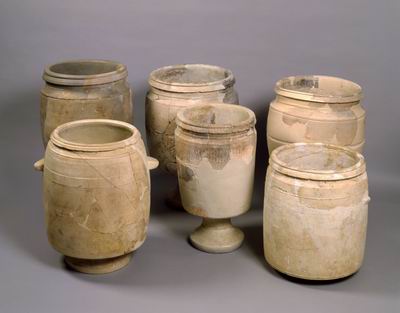
Before the New Testament, people who sinned had to “get right” with God through the offering of different sacrifices.  The Book of Leviticus spells out what sins call for different animal or grain offerings and just how those offerings were to be carried out.  Then, Leviticus starts to spell out what makes a person unclean.  Touching dead animals, being a woman in her cycle, even having a boil can make a person unclean, requiring yet another set of procedures–different procedures for each different circumstance.  In one instance, the poor, afflicted person had to go around with a shaved head outside of the camp for a week or more, covering his/her mouth and saying out loud, over and over, “unclean, unclean.” 

Maybe 4000 years ago, people didn’t get acne like we do today.  Maybe words didn’t carry the same power so that a person having to call out their uncleanness all the time would really believe their own cleanness when the priest finally declared it.  These are questions God knows the answers to, and my faith has to leave at that.

But, what I realized as I read through Leviticus this morning was that once the book covers the sin offerings, it very clearly delineates that the cleanliness procedures have to do with ceremonial cleanness.  When God saved the Jews from Egypt, He was beginning to establish the practice of worshipping one God, HIM.

Part of establishing monotheism among a people who had always believed in Him but also still worshipped other gods was making those people understand just how perfect, pure, powerful and different the God of the Jews really was.  Remember how there were several of the plagues in Egypt that even the Egyptian magicians could imitate?  As slaves, the Jews had been surrounded for more than 400 years with masters who worshipped a pantheon of gods.

To set Himself apart, God rightfully wanted His people to understand the Holiness of His temple.  Only Moses spoke with Him directly, and afterward Moses’ face glowed so that he had to cover it because the glow scared the Jews.  To enter even the outer sections of the temple that was dedicated to the one and only LORD, therefore, God needed to make very clear-cut delineations between what was clean and unclean.  Those who did not take God’s commands seriously, literally died.

Fast-forward to a New Testament world, and I come to the tough questions.  These are the kind of questions that can keep Christians apart, even though they really shouldn’t be “deal breakers.”  I only ask them because they came to me as I contemplated the importance placed on ceremonial cleanliness in Leviticus.

First, the only reason we have the right to enter the Holy of Holies is through the sacrifice that Christ made for us.  With the indwelling of the Holy Spirit that comes from our acceptance of Christ as our Savior, we have full access to the one and only God.  But, in a modern world where we have tried so hard to make our churches “welcoming,” have we gone too far away from the symbolic importance of the Holiness of the worship sanctuary?

In the church I attend, some people wear jeans, others wear dresses and suits.  The church has a coffee bar in the Atrium, and people bring their coffee into the worship service.  It is a friendly, comfortable environment, but is it Holy?  In other words, I’d like to think that we humans have advanced in the last 4000 years, but I also know that in the 2000 years since Christ declared His kingdom, we haven’t put forth the greatest track record.  We are all stubborn and stiff-necked people.

Would wearing our best (or the equivalent of the Sunday best that the least affluent member of the church is able to wear so that church doesn’t become a glamour contest) and entering the sanctuary with only our Bibles in our hands make us more cognizant of the honor we have in being able to worship God in this way?  Have we lost a bit in translation by making our worship centers more comfortable than sanctified?

I’m not making any judgments or trying to start any arguments here.  I think this is a practice each person can decide for him/herself.  I, for one, am going to stop the habit I had begun of taking a drink into the sanctuary just because others were also doing it.  I didn’t feel right about it for myself from the get-go.  After being reminded about the importance of ceremonial cleanliness to God in the time of the Old Testament, I feel that I need to uphold the sanctity of the sanctuary  in this way even though I am already sanctified by Christ.

As I heard a preacher once remark, if God wanted this much from us before He sacrificed His one and only Son, what makes us think He would want less of us now that that sacrifice has been made?

It seems like foregoing a beverage and dressing with care before entering the sanctuary on Sunday are some simple steps I can take to remind myself of the holiness of the worship in which I am about to partake.  Leviticus serves as an awesome reminder of the depth of God’s love for His people and the extent of His wrath when His very, very long patience finally wears out.

Posted in Christianity, Faith

This Cup of Wrath, Part 1

Photofunia cups

My Bible reading in the last week has brought me back through the Exodus and into Leviticus.  These books are filled with the story of an omnipotent God establishing His singular status among a people He had claimed as His own generations before, but who were stubbornly clinging to the idols of this world.

Even after He parted the Red Sea for them and then closed it over their enemies, the Egyptians, even after He led them through the desert, feeding them and giving them water when they cried out for it, the Jews continued to mess up.  While Moses stayed 40 days on the mountain speaking with the one and only God, his compatriots created a golden calf to worship!

We humans are a stupid lot, unworthy of the grace and patience and mercy that God continues to show us.  But, unless you have brazenly broken a commandment of late, when was the last time you really took a long moment to feel the depth, and height, and breadth of your need for God’s forgiveness?

Reading the graphic descriptions instructing the Jews on how to perform their sacrifices that Exodus portrays, I realized a benefit to reading the Old Testament that I had not exactly thought about before.  If you put yourself in the shoes of a “pre-Christ” Jew, you begin to understand with even further depth just what His sacrifice on the Cross signified.

I’m a city girl, despite the very country roots of my ancestry.  Truth be told, if I had to kill my own meat, I would be a vegetarian (which makes me a hopeless hypocrite, but that is beside the point).  The Jews were nomads who relied on their ability to farm and herd to survive.  Slaughtering an animal was a regular thing.

But, how regular would it be to take the very best of your flock, carefully kill it, dismember it, and watch it burn, realizing that you had just watched a month’s worth of eating rise in smoke rings to the sky because of your own sin?  Here was a real choice between the Spirit and the flesh.  The only way to right the individual’s relationship with God was to follow His instructions for sacrifice, to watch the very bread from your table, and the very best bread at that, go behind the curtain into the Holy of Holies, where only a select few could ever go.  Then, and only then, would you be right with God again–until the next time you sinned.

Believing in your need to sacrifice was believing in your own failings, and that meant, in part, knowing the awesome wrath of the God who made you.  Throughout the Old Testament, the people of God remember and forget, in a sort of bell curve of cycles that truly depicts the stubborn and stupid nature of the human race. At one point, they even lose the Word of God altogether, gathering to have it read to them in rejoicing wonder when it is discovered again.

It is easy to look back and criticize.  How can you be so stupid, you rail at the Jews as they wander in the desert for 40 years, victims of their own folly.  Did you not see God in the fire and the cloud?  Did you not experience the plagues that rescued you from Egypt?  Do you not remember Sodom and Gomorrah?

The answer is, of course, that we are all of us stupid on a regular basis.  And with Christ’s message of love, it is easy to put aside the potential of God’s wrath.

But, God’s wrath does play a very important role in our relationship with Him.  How Christ took that cup of wrath upon Himself for us is a thought for another day.  Though, have no doubt, His taking on of that cup of wrath is the most important thing of all.