Posted in Christianity, Love

Gratitude with a Capital G

20131221-152513.jpg

Joy to the world, the LORD has come. Let earth receive its King. Let every heart prepare Him room, and Heaven and Nature sing.

Christmas is the time when we celebrate the greatest miracle ever–the willingness of an all-powerful God to become like one of us in order to save us.

He has shown the depth of His patience and His wrath throughout the history of His interactions with us. In Old Testament times, He called His chosen people “stiff-necked” and punished them with as much passion as He subsequently forgave them. Through chance after chance, the Israelites moved toward and away from Him in an ebb and flow that lasted thousands of years.

When a baby was born to a virgin in a manger, God’s people were marking off almost 400 years of silence from Him. Further, if a Messiah had come, they expected Him to be a champion who blazed against their enemies and allowed the Israelites to rule the world, overthrowing their Roman oppressors and making sure they never again were slaves.

Intead, what they got was a man who instructed them to “turn the other cheek.” The Kingdom Jesus came to establish had absolutely nothing to do with earthly rule as the Israelites understood it.

More than 2000 years later, some have still not heard His word, and some might argue that we of His Kingdom are at a stage where we are also “stiff-necked,” turning away from Him in a time when we most need what He has to offer.

For those who have accepted the salvation Christ offers, a gratitude based on the humble realization of just how little we deserve God’s love and sacrifice should be the first thought we have upon rising each morning and before we lay down to sleep each night. It should also be a gratitude that colors the way we treat everyone around us.

No one’s love is greater than God’s love for us. And the best news of all time is that His love is available to all of us, no matter who we are or what we have done, as long as we are willing to reach out with both hands and grab it–gratefully.

Posted in Christian Living, Love

The Patience Principle

20131214-191919.jpg

I did some errands earlier today, and it being a little over a week before Christmas, the parking lot of the shopping center I was in was full to overflowing. On any other weekend, I could pull into this center and easily find a parking space, but today I took the first spot I could find, a fair walk away from the store I was actually there to shop. I knew I had to be ready to wait and not be in a hurry if I was going to have a decent time shopping.

This evening, my cat, who is more than well-fed, decided to take an interest in my pizza supper. When it was obvious I wasn’t in a mood to share, she laid her head on my lap table and waited for me to finish. She purred and did her best to convince me with her eyes that she was deserving of some cheese, but she didn’t whine or meow.

These events were at the end of a week that had begun with me reading the book of Daniel and being struck by the patience he had, a patience that showed his faith in God and actually saved his life on more than one occasion.

I am a person who likes to have things that make me nervous over with as soon as possible, which often makes me “jump the gun,” seeking quick solutions instead of completely analyzing a situation. More importantly, in trying to find the solution quickly, I don’t give God a chance to guide me!

Daniel didn’t make this mistake. When King Nebuchadnezzar had a bad dream and called all his “prophets” to decipher it for him, none of them could manage the job. The King actually killed them in his frustration at their inability, ordering the execution of all such “prophets” in his kingdom.

Stuck under Nebuchadnezzar’s rule, Daniel went before this king with a plea to have his chance to explain the dream before also being executed. Now, I would have been tempted to interpret the dream then and there, but Daniel asked to have an evening before telling the king about the dream. Daniel then returned to his three friends, and they all prayed to God to help them. In the end, God revealed the dream and its meaning to Daniel to tell the king.

The Bible is full of stories about patience. Even those who spoke with God Himself had to practice this very important virtue. Over and over again, the Bible shows that God’s time is not the same as ours. When He makes a promise, He will keep it, even if it takes Him 40 years or 400!

A quick search brings up an abundance of verses on the virtue of patience:

Be still before the Lord and wait patiently for him; do not fret when people succeed in their ways, when they carry out their wicked schemes. Refrain from anger and turn from wrath; do not fret—it leads only to evil. For those who are evil will be destroyed, but those who hope in the Lord will inherit the land. (Psalms 37:7-9)

Those who hope in the Lord will renew their strength. They will soar on wings like eagles; they will run and not grow weary, they will walk and not be faint. (Isaiah 40:31)

This website offers many more verses on the importance of patience for Christian living.

No one, of course, was more patient that Christ. How did He achieve it? The few times He expresses impatience with His disciples underscores the patience Christ otherwise practiced every day He was on this earth. Imagine trying to get a steady stream of ants to change direction without being able to touch them or put anything in their way, and I imagine that you have just a small idea of what it was like for The Lord of all things to come to earth as man and try to teach us the art of LOVE.

In this season of LOVE, when it is so much easier to feel good about the human race, let us all practice patience–with God and with each other.

Posted in Christianity, Love

Unmask Yourself

20130713-161244.jpg

We all need a little bit of protection now and again, a face we put on for the world at large to keep our innermost self from being wounded. But I wonder how often the protections we put on daily, those invisible masks and personality traits that we have used to wall ourselves away from the potential hurts of this world, actually keep us from truly reaching out to others as God intended us to do? After all, He is more interested in us showing love to others than in keeping our sense of pride in tact.

Actually, God is quite against pride, a fact I seem to often forget. Pride keeps me from saying “I love you” to people who may need most to hear it. It keeps me from sharing my doubts with others when realizing that we all have similar questions about this world and our places in it might have been just what somebody else needed to hear. Pride lets me fall into the trap of thinking that I am doing a pretty good job in my Christian walk, blinding me to my own sin and making me judgmental about the sin it is so easy to see in others. I believe Jesus said something about a log and a toothpick.

I learned the value of stripping away masks when I began my yoga class several years ago. Having never been an athletic person, I pre-determined that I was going to be the worst student in the class and that THAT WAS GOING TO BE OK. Approaching my exercise in this way freed me to concentrate on what was most important for my yoga, which was paying attention to what my own body was telling me as I tried the exercises. This decision to strip away my masks also allowed me to share when it was asked of me in a way that would benefit both me and my sharing partner. I have become a more open person in all aspects of my life, just because I decided to be myself in an otherwise intimidating exercise class.

As for the protection part of masks, Paul gives us directions for a far superior form of protection, available to us through the grace of God. In Ephesians 6, he writes that we should put on the full armor of God:

14 Stand firm then, with the belt of truth buckled around your waist, with the breastplate of righteousness in place, 15 and with your feet fitted with the readiness that comes from the gospel of peace. 16 In addition to all this, take up the shield of faith, with which you can extinguish all the flaming arrows of the evil one. 17 Take the helmet of salvation and the sword of the Spirit, which is the word of God.

Our enemy isn’t really each other, after all. We are all in this same struggle together, and none of us escape the ultimate destiny of every human existence. Instead of masks that cut us off from each other, we should be banding together against our true enemy, the evil one who would keep us from the Ultimate One.

No mask is worth keeping someone else from the love of Christ. Next time your pride or insecurities tempt you to put one on, think about that. Loving others may mean looking a bit silly sometimes, but the ultimate goal of salvation far outweighs any indignities we might suffer.

Posted in Christian Fiction, Faith, Love

Thank GOD we don’t get what we deserve

Goodchristianfiction need versus deserve

Our Father’s mercy and generosity toward us has not been what we deserved, but what we desperately needed. Surely, then, those who have received such grace are called upon to deal with others, not on the basis of what they deserve, but what they need.
–Paul Earnhart, Invitation to a Spiritual Revolution, p. 136

If God gave you what you deserved, what would your judgment day look like? If you had to live every day of this life knowing you were going to get exactly what you deserve when you pass into the next life, how would your perspective on living change?

These are the questions that popped into my mind as I read Earnhart’s section on the Golden Rule in his book about the Sermon on the Mount. I also realized that, too many days, I subconsciously work off a different definition of deserve, the one in which I see the world through the rose-colored glasses where my sin does not keep me from thinking I deserve better things: more free time, the latest technological toy, a new purse.

Thankfully, God, in His omnipotence, knows the real difference between what we need and what we deserve. He loves us enough to give us what we need when we ask for it in faith, including our own salvation, and not to condemn us to what we deserve.

When was the last time you asked yourself if you really needed something, or just thought you “deserved” it? How much more often do you tend to think of others in terms of what they deserve instead of what they might need?

I think this distinction between deserve and need is partly what made Christ accepted even among the “lowest denominations” of His society. When Christ told the truth to prostitutes and tax collectors, He did it in such a way as to speak to the sinner’s needs, not to make the person feel small because they had sinned.

If we could master this love of others in such a way as to see them only in light of their needs, not what we think they need but what we would need if we were in their shoes, certainly we would be as close to following the Golden Rule as we are going to get.

In the way of wondrous things, my Bible reading this week also helped me out with the deserve versus need dilemma. In 2 Corinthians, Paul writes:

. . . we are taking every thought captive to the obedience of Christ (10:5b). . . . But he who boasts is to boast in the LORD. For it is not he who commends himself that is approved, but he whom the LORD commends (10: 17-18).

If we see ourselves rightly through eyes that are obedient to Christ, knowing that any good thing we do is through the grace of God and not by anything remarkable of our own accord, then we will do away with the thoughts that make us contemplate what we “deserve” and blind us to what we and others really need.

I have to admit to some bad days this week, but I am happy to report that pulling out my copy of Psalm 143 and reading through it helped me pass through the valley and back up to the mountain. In this Psalm, David is running from very real enemies (his own king wants to kill him). For me, the enemies mentioned in the Psalm are not people, but the anxieties, fears, and “deserving” temptations that plague me on bad days. David begins the Psalm by praising God’s goodness. Then, he cries out his pain to God, followed by remembering all the good works God has done. In studying the Psalm, it strikes me that David’s equation for deliverance runs something like this:

my servitude + His majesty = my deliverance from my enemies!

So, what I need is to love God with my whole heart, first and foremost. I may deserve the anxiety and emotions that are a combined result of my sin and genetics, but what God gives me instead is what I need, His love, as long as I have the faith to open my arms wide and lean.

Let me hear Your lovingkindness in the morning;
For I trust in You;
Teach me the way in which I should walk;
For to You I lift up my soul.
Deliver me, O Lord, from my enemies;
I take refuge in You.
Teach me to do Your will,
For You are my God;
Let Your good Spirit lead me on level ground.
Psalm 143: 8-10

Posted in Christian Living, Love

A Mother’s Day In Christ

20130511-164458.jpg

The true message of Christ, the power of love, has perhaps its closest parallel in the perfect picture of a mother’s love for her child, the kind of love we honor on Mother’s Day. Like every mother who has stayed up nights by sick beds, given up her own freedom for the sake of the ultimate good of her children (taking away the car keys means mom has to drive, after all), or spent countless hours on her knees praying for the safety and happiness of her family, Christ did not merely state His message of love. He lived it. He continues to live it, especially through those who choose not to see the baptism by water into Christianity as an ending but a beginning.

Living a Christ-like life means always striving to be more, but not more in the sense of this world. In this world, filled with television, movie, and internet messages, more means better cars, faster electronics, fancy clothes, bigger houses, high-paying careers. In Christ’s world, more means better sharing, increased love of others, joy in what one has, faith that one is where he/she is meant to be and the discipline to walk in the narrow path of God’s truth.

When you have to spend so much time in the world, it is all too easy to fall into the trap of being of this world, all too easy to grab the more expensive brand of something because the commercials have convinced us it’s better instead of saving those extra nickels and dimes to share with those who have even less than we do. When you are of this world and not just in it, it’s too simple to fall into the wide and easy ways of this world. When we choose based on what everybody else is doing instead of what Christ would do, we make our lives simpler in that moment, but we also buy into the devil’s marketing plan, as it were, and his way leads only unto death.

We’ve all fallen victim to it, especially often during the holiday times, when so many ads want to convince us that what they are selling will make us better, happier, more peaceful. But, think about the times you have fallen victim to this marketing. Do you really feel happier? Maybe for a moment, but what then? When you rely on the devil’s marketing plan, don’t you always have to go searching for peace and happy again?

Christ’s marketing plan was simple: love. If we follow this plan, we don’t take actions that will hurt others. We strive to perfect ourselves in aspects of life that really count, like helping others, doing good, being kind, taking joy in nature and each other, including our differences. How different would the world be if these were the messages that flashed across our televisions and movie theatres and computer screens?

We can’t change the whole world, but we can change our own actions and the ways that we interact with those with whom we come into contact. What steps are you taking to grow in your walk with Christ? I will be working this week to set up my goals to mature in Christ. I believe I will start in Galations with the list of the fruit of the Spirit. What about you?

Posted in Love, Poetry

National Poetry Writing Month #10

The Marriage Dance

When once we waltzed as one,
nothing went unsaid,
not praises plenty or sorrows,
the painful bursts of that
we should not utter, even what
we would take back,
all absolved, binding us
like the musical patterns we wove
in our living room carpet nights.

Now, the country between us
pitches and yaws like the cool breeze,
our constant companion, no middle ground,
only these miles of weeds and stickers,
our aloneness a wall we will not tackle.

This waltz by myself is not easy,
casting me in shadow, slicing the happy
of others to my heart’s core,
beating rapid rhythms around me,
as I lumber like one dancing in the dark.

Was it days blended into days,
sugared coffee and oatmeal and the sound
of the sprinkler splatting the back door,
that brought us to this black, soundless chasm?
Or was it forgetting to keep the music at our center
the One and Only keeper of the light?

Ramona Levacy
April 10, 2013

Posted in Christian Living, Love

Happy “God Is With Us” Day

20130216-131730.jpg

Like many of you, my personality is challenged by several contradictory natures. One of them is that I like to write and read a good, clean romance, but when it comes to real life, my practical nature doesn’t allow me to fully enjoy the art and beauty of things “romantic.”

Because of this contradictory nature, I have a hard time fully appreciating Valentine’s Day, which at its best is a celebration of the romantic kind of love that occurs between a man and woman who have committed before God to “become one flesh” in a covenant that lasts a lifetime. Most of the time, I take the cynic’s view of this holiday, meaning I see it more as a creation by the flower and card industry to drum up business after the let-down of the Christmas buying season.

But, romantic love aside, there is a kind of love that supersedes anything we mere humans can achieve on our own, and it is available to any one of us, as long as we are willing to ask for it. I am referring, of course, to the love of God, manifested in the life and sacrifice of Jesus, that is made available to us through grace. Once we accept that love, nothing we can do or say or think can ever truly separate us from the connection to God His love provides.

Paul describes God’s love for us and the kind of love we should work to provide to each other in 1 Corinthians 13. This love is patient, kind, humble, slow to anger, seeks truth, and keeps no record of wrongs. Paul concludes, this love “always protects, always trusts, always hopes, always perseveres” (v. 7).

As humans, how can we achieve this kind of love for each other? We can’t. We can only hope to achieve a pale reflection of this kind of love through the power of the Holy Spirit in us. In fact, the more we are truly able to lean on God, the more He will be able to work through us to show this kind of love to others through us, and the more WE will truly feel God’s love in us.

The first Beatitude tells us that those who will have the kingdom of heaven must first be poor in spirit, which most understand to mean we must first feel how truly empty spiritually we are without God in our lives in order to actually let Him in. Once we do, the love that helped Moses lead his people to a promised land, helped David slay a giant, and saw Jesus through a suffering He didn’t deserve but was willing to take on for the sins of everyone else, will be available to we who seek Him.

Paul promised us the lasting power of that love in Romans 8:38-40: “For I am convinced that neither death nor life, neither angels nor demons, neither the present nor the future, nor any powers, neither height nor depth, nor anything else in all creation, will be able to separate us from the love of God that is in Christ Jesus our Lord.”

So, as you celebrate the romantic love of your life this Valentine’s week, don’t forget about the love that never fades. God is truly the only ONE who knows everything about us–and loves us anyway!

Posted in Christian Living, Love

Love Without Limits

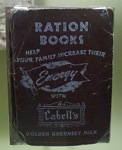
20120907-182803.jpg “I have too much to do and too little time.”

This phrase is something anyone who knows me will recognize as a regular litany coming from me. I don’t think I’m alone in feeling this way, though I am quite sure there are many more people who bear this universal challenge with more fortitude and less verbosity than I tend to manage.

The Ration Book, an artifact from the World War II era, reminds us of a time when the idea of too much to do and too little time (not to mention resources) took on depths of meaning that only those who experienced it can truly understand. For those of you who slept through your history classes, Ration Book coupons were required throughout the second world war to buy the supplies that were scarce, from sugar to gasoline. My old-time radio station even played a vintage commercial the other day where the spokesman urged housewives to save their used grease to turn in for making rubber! Households planted Victory Gardens to reduce the load on agricultural resources. The public was provided with toll-free numbers to contact in order to learn pointers about canning. There was so little to go around, it became everyone’s job to make sure nothing was wasted.

Like a country fighting a global-wide war on multiple fronts, each of us has only so many resources with which to accomplish what we feel is required of us in this life, whether that be work goals, family responsibilities, maintaining our households, or writing a blog! The choices we make every day determine how much we have available for the next thing we have to do. If we don’t prioritize well, we may wind up using all our resources on things that really don’t matter too much in the grand scheme of things.

Making the effort to map out what we do and why we do it might just give us an insight into better resource management. We should create our own Ration Book, making sure the items on our to-do list that are really important actually get done. And shouldn’t God and His goals be at the top of our resource and to-do list?

I am thankful as I reflect on the struggles and sacrifices that were required during World War II that God alone has no Ration Book. His resources are limitless. The love and support He has to offer are without end. We can dip into the truths of His word and go to Him in prayer as often and as long as we like, and we will never run out of “coupons.” The armor of God that Paul encourages us to put on will never fail us. And, many times, God’s love provides us with resources we didn’t realize we had in order to accomplish His will.

In this finite reality, only our ability to reach toward the Infinite through the intercession of Christ makes it possible for us to expand our Ration Books so that His love may be experienced by non-believers through us.

Posted in Christian Living, Faith, Love

Symbiot Or Parasite?

20120622-192329.jpg Standing proudly outside my back window is a visual lesson even a non-botanist such as myself can understand. Twining around one stalky plant with large leaves and seasonal flowers is a vine-like weed that can take over your backyard if you let it. (I told you I was no botanist.)

In biology, we learned that two living things so entwined have a win-lose or win-win situation. In other words, my backyard plants are either in a parasitic or symbiotic relationship. Parasites live off their hosts at the host’s peril. In a symbiotic situation, both parties benefit from the intertwined relationship.

As I spent my twenty minutes on my stepper looking out at this situation, I pondered what lessons I could learn about my own life from this picture of nature. I am, after all, entwined with God much like my two plants. But is that relationship symbiotic, or am I just a parasite, taking from God without giving anything back?

How do I increase my own value to God? How did I do it this week? Some of the quick answers that came to me were the too few times I expressed love to others through my words and actions during this week. Also, I have spent time praising God in my prayers this week.

Knowing that loving and helping others, especially strangers, is a sure way to please God is a pretty easy answer to the symbiotic question. Studying the prayers of the Bible, especially the Psalms, also lets us know that God relishes our praise. He may not need it, but He gets something from it. Why, after all, did He create us in the first place, then give us the free will to choose to worship Him?

I know that I am only saved by grace and not through any action that I take other than the action of accepting that grace, but I certainly don’t want to live my days being a parasite to God. I would much rather have a symbiotic relationship.

So, thank you, God, for creating a world so beautiful and reflective of Your wonder, that is even awesome at its most terrifying and destructive moments, and that always manages to offer us glimpses of Your peace. May we believers live in ways that somehow reflect that wonder.

Posted in Christian Living, Faith, Love

Just Listening

20120608-210710.jpgIt’s funny how things in life seem to happen in bunches. Thomas Pynchon wrote about this phenomenon in The Crying of Lot 49, the way that, once your mind is drawn to the attention of a certain idea or symbol, you suddenly seem to run into that very thing all the time. Pynchon’s point is that the idea or thing was really around you all along. You just didn’t bring it into your perception of reality until you actually acknowledged it.

When I seek to learn about and better understand God, this very same phenomenon seems to happen for me. Truths that were always right in front of me but never really seen by me suddenly become glaringly visible. Some people like to claim God is speaking with them when this type of thing happens, and who am I to disagree? However, since God is there for us all the time, I like to think it is more a factor of my finally listening.

Case in point:

Sunday service this last week focused on the uncomfortable subject of materialism. The pastor used as part of his text the parable from the twelfth chapter of Luke in which a man with abundance makes plans to build larger storehouses for his stuff, not realizing that he would die that very night. Jesus concludes in verse 21: “This is how it will be with anyone who stores up things for himself but is not rich toward God.”

Now, just a few days before that sermon, I had gotten a compulsion to gather up some like-new stuffed animals from around my house and give them to a friend of mine who volunteers with an organization that, among many other things, puts together kits for hospitals to hand out to sexual assault victims, who have to leave all their personal effects with the police as evidence. My stuffed toys were for the growing number of children the hospitals are seeing as victims of assault.

In the class following the sermon, the subject of materialism remained the topic. I was able to share the need for these kits as part of the natural discussion of the class, for which I was glad. Until my friend had told me about this program, I had never thought about that as a need before. And I was pretty sure several of the people in the room hadn’t thought of this need before I mentioned it either.

On Monday, as I sat doing my daily Bible reading, which just happens to have me in the book of Psalms at the moment, I happened upon this verse–

Psalm 49:20–a man who has riches without understanding is like the beasts that perish.

I sat up straighter in my chair. Luke 12:21 loomed in the back of my brain–“This is how it will be with anyone who stores up things for himself but is not rich toward God.” The “understanding” of the Psalms surely means the same as being “rich toward God.” My ears were being called upon to listen.

What was I going to do about it?

One of the first things I did was to keep listening and reflecting as I continued in the Psalms. These were the other truths I heard:

Psalm 51:5-6–Surely I was sinful at birth, sinful from the time my mother conceived me. / Surely you desire truth in the inner parts; you teach me wisdom in the inmost place.

Psalm 51:10-12–Create in me a pure heart, O God, and renew a steadfast spirit within me. Do not cast your presence or take your Holy Spirit from me. Restore to me the joy of your salvation and grant me a willing spirit to sustain me.

Psalm 51:17– The sacrifices of God are a broken spirit; a broken and contrite heart, O God, you will not despise.

Living in the most materialistic country in the world, in a world where just having clean water, a roof over my head, and some money in the bank makes me rich compared to the majority of the planet’s population, it is a daily struggle to make sure God comes before everything else. Too many times I fail. But, if I listen, I know that God will provide me with the steadfast spirit and contrite heart that will bring me closer to Him and make it so much easier to give, storing up my true treasures in heaven, the only home we’ll ever have forever.