Posted in Christian Living, Love, Uncategorized

Seeing Our Lives In God’s Story

I think the book of Judges is one of those parts of the Bible that people use for excuses to disdain or discard the Word of God. After all, if that is one’s intent, there seems to be plenty of horrible human behavior to choose from: strangers subject to assault in the towns they visit, people creating idol gods and pretending they are the God of Israel, a concubine chopped into twelve pieces and shipped across Israel, sparking a civil war. Everywhere you look in Judges, you find examples of improper living.

But those who feel that God somehow condones these wayward, even shameful, behaviors just because they are in the Bible to begin with are missing a very simple “clue” that emphasizes the position between these horror stories of human behavior and the sovereignty of God’s story. “At that time there was no king in Israel,” Judges explains. “People did whatever they felt like doing” (Judges 21:25–the Message). Other versions translate it as everyone doing what he thought was right.

When God says there was no king in Israel, He really means that Israel refused to accept Him as their king, which is why every person in Israel did what was “right” by human, and NOT Godly, standards. Remember, only God is holy, a perfection we humans cannot achieve without the intervention of Christ to wash us clean of our sins and mediate for us before the holy throne of the Almighty.

When we act on our own, we leave ourselves vulnerable to disrespecting ourselves as well as others, acting on our anger, lying, cheating, hurting the innocent, promoting the agenda of the evil one instead of the Great One. In other words, we get the kind of world that we see in Judges.

But even in a world where man denies God, God finds a way to continue His story of redemption and love. Thanks be to God, He is so patient, so slow to anger, lest we all be condemned to hell. Peter writes,

Don’t overlook the obvious here, friends. With God, one day is as good as a thousand years, a thousand years as a day. God isn’t late with his promise as some measure lateness. He is restraining himself on account of you, holding back the End because he doesn’t want anyone lost. He’s giving everyone space and time to change.

2 Peter 3: 8-9 (the Message)

As we come to understand that our lives only attain importance (even to ourselves) when we see them in respect to God’s story and not the other way around, we discover an overriding theme that will help us read the Bible while learning practical ways to apply its lessons in our lives. We will start to see and think about the events of our lives as they pertain to God’s Story.

Ruth’s story begins without God being a part of it. A Moabite by birth, she has grown up in a pagan country, learning to worship manmade idols. But then she marries a Jew who has migrated to her country during a time of severe famine in Israel. She lives with her husband’s family, including his parents, his brother and his brother’s wife. Perhaps she would have spent many years like this, learning about the God of Israel from her new family, but the evils of this world intervene.

Having lost first her father-in-law and then her husband and brother-in-law, Ruth finds herself at a fork in the road. Her mother-in-law, Naomi, decides to go back to her homeland. Knowing she can bear no more children, assuming that her life is completely over, Naomi encourages her two daughters-in-law to return to their family homes and even to their idol gods.

Orpah takes Naomi up on her offer, heading back to Moab. But Ruth makes a two-prong decision that will change the course of her life as well as fit that life quite neatly into God’s story of redemption. She decides to never leave Naomi, and Ruth promises to make Naomi’s God her God as well.

Everything that follows reads more like a sweet romance than a story of “biblical” proportions, proving how even ordinary lives such as our own are important to the fabric of the grand tapestry God continues to create because of His love for us.

To feed herself and Naomi, Ruth goes to gather grain from gleanings, coincidentally in Boaz’s field. Without at first knowing who she is, Boaz treats her with great respect anyway. Imagine Ruth’s surprise when Naomi tells her Boaz is actually a relative of Naomi’s late husband! That means Boaz can redeem Naomi and Ruth by marrying the younger woman, saving them from their precarious position.

Living up to her commitment, Ruth continues to strive to follow her mother-in-law’s instruction as well as honoring God. When Naomi instructs Ruth in the art of letting Boaz know that she is ready for marriage, Ruth doesn’t hesitate. She goes to the grinding floor and stretches out at Boaz’s feet, just as Naomi has told her.

When Boaz awakes with a beautiful, young woman at his feet, he too acts in a way that shows he believes in and follows God. He admits to Ruth that one relative has the first right to marry Ruth and carry on the name of her father-in-law’s family. Boaz loses no time in confronting this relative with the offer of his redemption rights. When that relative refuses, Boaz marries Ruth.

And here is where Ruth’s ordinary life, lived in obedience to God, lends itself to the purpose of redemption in God’s story. It turns out she is the great-great-grandmother of King David, the man with a heart like God’s from whose lineage Jesus will enter the world to save it.

God’s story, as I have been emphasizing these past weeks, is a love story between Creator and that which He has created. Everything God does from beginning to end is because of His love for us. Who among us believers could want anything different or better than having our lives entwined in the greatest story of love ever to be told, a story that God continues to write because He is patient and abounding in mercy, a story that continues because of lives just like our own?

In Christ,
Ramona

Photo by Alexander Grey:

Posted in Uncategorized

Love from God’s Perspective

Often when I pray, I like to take a moment to ponder all that God has done to make it possible for me to come into His presence. I especially appreciate this privilege when I read about the journey God’s chosen people took from slavery in Egypt to the fulfillment of God’s loving covenant, first in the Promised Land and ultimately in the sacrifice Jesus made of Himself to free us all from our slavery to sin and tie us to the Reverent Holiness of God.

But I’ve jumped ahead of myself because God’s love for us, as well as His desire to be in relationship with us, has its roots in the very beginning, when He created man and woman to care for all that He created. In the beginning, God even walked in the Garden with Adam and Eve, conversing with them without having to shield them from His full glory.

Unfortunately, this privilege was short-lived, for once Adam and Eve broke their bond with God by taking from the Tree of Knowledge of good and evil, they lost the ability to walk in step with God, who is all Holy. Having partaken of the fruit that revealed goodness and evil to their innocent minds, Adam and Eve were no longer innocent, but rather sinners in need of redemption before an all-Holy God, sinners who could not enter into the presence of God and expect to live.

Banned from their perfect life because of their own choices, Adam and Eve learn the hard way that life without holiness, life that is enslaved to sin, is a hard, cruel life. One son slays another. Crops fail. Childbirth sometimes leads to death. And through it all, how much they must have longed for the luscious Garden and those cool, loving walks with their Creator God.

Once we took that step away from God’s holiness, the further we fell into darkness, that existence in sin that takes us farther and farther away from God. At some point, humans fell into such depravity and so far away from God, that He chose to destroy the planet and start all over again, washing away every living thing in a flood that covered the earth. Except for Noah, whom God chose because of Noah’s faithfulness to the Lord, all other families were wiped out. Only Noah’s family, gathered in the Ark God told Noah to build, survived the torrential rain lasting 40 days, as well as the many months it took for the earth to dry out again.

When animals and humans alike descended from the ark to begin human history on earth anew, God was there, loving us and longing for us to seek relationship with Him. The Bible tells us He makes a covenant with Noah, his sons, and every living thing on earth, promising never to flood the earth again. He even places a rainbow in the sky as a sign that He would never again use a flood to destroy us, the rainbow serving as a reminder to us and to God of this covenant.

God cements His love for all humanity when He makes a covenant with a faithful and devout man named Abram (later known as Abraham). God promises Abram, a childless man well past the prime of life, that God will make him into a nation whose descendants will number beyond all the grains of sand on the seashore. God also promises to bless all of humanity through Abram’s direct line of descent, a promise that comes to full fruition when Jesus, coming from the line of Abraham, gives His perfectly-led life as sacrifice for all the wrath humanity deserves, so that we all may enter into a Holy Covenant with God, one that frees us from our slavery to sin and offers us the gift of the Holy Spirit in us, to guide us and to open the door to that Holy Sanctuary where God sits enthroned, always ready to listen.

I find myself going back and forth between the Old Testament and the New, if you will, because as many times as I have read the Bible, this time reading through the Old Testament, I see the most clearly how much the theme of God’s love is there, in every part of the Bible, even in the Old Testament stories that might seem the most brutal.

As John tells us,

The Word was first,
    the Word present to God,
    God present to the Word.
The Word was God,
    in readiness for God from day one.

 Everything was created through him;
    nothing—not one thing!—
    came into being without him.
What came into existence was Life,
    and the Life was Light to live by.
The Life-Light blazed out of the darkness;
    the darkness couldn’t put it out.

(John 1:1-5, the Message)

then,

The Word became flesh and blood,
    and moved into the neighborhood.
We saw the glory with our own eyes,
    the one-of-a-kind glory,
    like Father, like Son,
Generous inside and out,
    true from start to finish.

(John 1:14, the Message)

God, the Father, God, the Son, God, the Holy Spirit, always there, always working together for the purpose of reuniting the One and Only, Most Holy God with the creations He loves despite all our flaws and failures. Only Jesus on the Cross made atonement for my sinful nature. I am redeemed when I choose to follow Jesus and submit my will to His own. Only by the Holiness granted to us because of our belief in and submission to Christ and His sacrifice for us can we come before God and open up the depths of our hearts. We can “look” upon the Most Holy God and live.

But that only touches the surface of the story of God’s love for us. Next time, I will begin where we have left off. The beginning of the story of God’s chosen people, how He uses Abraham’s descendants to establish Himself as the Most High God in the minds of all humanity, a jealous God who loves us so much He wants us to love Him alone, not the idols and things of this world that distract us from our only, true need: knowing and embracing the love of God.

In Christ,
Ramona

Photo by Pixabay:

Posted in Uncategorized

When the Faith You Need is a Hard Faith Be Ready: Foundations

Faith is what we choose to believe despite what we can or cannot see. It begins with a childlike acceptance that God loves us so much, He was willing to come to the earth as a Son, to walk among us as one of us, subject to the same temptations and doubts we all bear. He live a flawless, sinless life, a Son who gave up His life on the cross, bearing the weight of the wrath of God for each one of us who chooses to believe.

As we grow in faith, we practice obedience to God’s Word and Ways as we come to understand that Word more and more. We know that God shows up whenever we call to Him. We experience the answering of prayers, even when those answers are no. We learn the value of seeking and enacting God’s will in our lives, especially when times get tough for us.

The foundations of faith are this.

  • God alone is our perfect Creator. He cannot lie or be double-minded. He cannot be all good and allow what is evil in his presence. He will do what He says He is going to do. By studying His Word, we learn more and more about the things that God will and will not accept from us and about the times when God has kept His promises.
  • God wants a relationship with us. He formed the earth and created a paradise garden, in which He placed one man and one woman, a couple who walked with God in that garden, who had a relationship with God that He actively sought. Later, after the Garden, God selects Abram, promising to not only be Abram’s God, but to also make a covenant with Abram’s descendants, a nation larger than all the grains of sand on a seashore. Much later, Jesus comes to earth as God’s perfect Son, the promised descendant of Abram, Who lives a sinless life, and dies on the cross for all the sins of humanity, the ultimate step between our one and only Creator and we whom He has created, the most important relationship any one of us can accept and choose to obey.
  • God hates sin. God is perfect, omnipotent, holy. His one goal for us, evident in the Old Testament every bit as much in the New, is to become holy as God is holy. Books like Exodus and Leviticus are filled with laws laid down by God to help us achieve that holiness. So, to sin against His holiness is to sever oneself from the holiness of God. Once severed, the relationship can only be amended by an act of atonement, which in Old Testament times meant sacrifice, the spilling of the blood of a perfect specimen, to honor God when He had been dishonored.
  • Sin requires redemption. God wants to be in relationship with us, but He cannot be in relationship with anyone who has chosen to disobey Him, stepping outside of holiness. Christ came to earth to live as a human, knowing He would be tempted, knowing His purpose in living would be to act as the sacrificial offering, a more perfect Lamb than had ever been offered, to atone for humanity’s sin once and for all. That means that Jesus has also become the High Priest for us. He intermediates between us and God, and He is always there to serve that role. The Holy Spirit that dwells in all who believe in Jesus helps guide us as we pray and as we listen for God’s still, quiet voice. The Apostle Paul writes that we are slaves to sin or slaves to righteousness. He concludes that living to sin is a heavy burden, but that freeing oneself from sin by seeking to obey Christ, we experience a much lighter burden, just as Christ promises.
  • To be redeemed is to be obedient to God and His Word. Following Jesus is so much more than saying one believes. The only way to become holy as God is holy requires submitting one’s will to the will of God. We seek that will by knowing His Word, God’s Holy Bible, and not just someone else’s interpretation of it. We also pray often, listening for the Holy Spirit in us, not the yearnings of our own hearts. We gather together to lift each other up, striving toward the same goal. Holiness.
  • The only way to salvation is through one’s atonement of sin through Christ’s sacrifice and our belief in His Godly Authority. All have sinned and fall short of the glory, the holiness of God.  When we accept Christ as our savior, we accept that His sacrifice on the Cross redeemed us all from our sinfulness. We also join in a covenant with Jesus that we will take on His yoke by being ready to do what He says to do.  We will love God as the one and only God and obey Him with all our hearts, and minds, and souls. And we will love and treat other people as we love and treat ourselves.

This time of year, when our stores are filled with eggs and bunnies instead of Crosses and lambs, it’s important to think about the real reason for the season.  Like the perfect lamb of Israel’s tabernacle and temple days sacrificed in the presence of God to redeem the repentant of his sin, Jesus, the perfect Lamb on the Cross, took on the wrath of God for us. He suffered the punishment for sin, the absence of God. His dead body went into a tomb as a heavy stone sealed Him in. 

But the good news we celebrate at Easter is this: He is risen indeed! Jesus lives. And as a risen Christ, He makes us holy, holy so that we can come before God and speak to Him whatever is on our hearts, including seeking guidance on the way that we should go. This is a gift almost beyond our understanding.  Before Christ made His sacrifice, only the High Priest could come before the holy presence of God. He met God in the inner sanctum, behind a curtain that separated the holy from the holiest of holies. This was such an important moment, that the High Priest never just walked behind the curtain. He prepared by cleansing himself, putting on a special, holy wardrobe, and finally tying a rope around his ankle in case he profaned the altar and died there, so others could pull him out and not risk dying themselves. 

I try to remember how precious it is that Jesus works as my intermediary every time I choose to bow my head.  I think hard faith begins in those moments when we find the courage to admit our failings to a holy God and accept that He will actually forgive us because of what Jesus has done for us. I think this precious communication is why Jesus instructs us not to pray with mindless repetition, but to acknowledge God’s holiness and our need for Him to accomplish anything at all. 

The first step toward hard faith is having any faith, even if it is a tiny, fluttering spark waiting to break into a flame.  And that small seed of faith, laid in good ground, can turn into a wonderful, lifelong relationship with God. 

In Christ,
Ramona
Photo by Pixabay: 

Posted in Uncategorized

Waste Not, Want Not

Every morning in the Billingslea house, we wake up to the plaintive cries of our adorable Ragdoll cat, who does her best to herd us out of bed and straight to the kitchen, where she knows we will give her a special morning food topper to start her day off correctly.

This special treat comes in a tube. Opening one and sometimes both ends, we carefully empty the liquid wonder with its tiny chunks of fish onto a plate, rolling the tube so that we squeeze out all the good bits.

Inevitably, I do not finish the job of preparing my cat’s special treat soon enough. She meows and even stretches against the cupboards, trying to reach up to the counter, anything to make me hurry up.

Explaining the situation to her the other day, I told her, “Waste not, want not.” I was thinking about the idea of valuing what we have and not throwing out things that are perfectly good. But the old adage struck a different chord in me as well.

At Christmas time, we celebrate the birth of God-come-to-earth, Jesus, Who came to love the world and offer it the one gift it could never give itself: redemption.

How often do I waste the grace and the faith that Jesus offers me every day and in abundance? I let the fears and worries of this world weigh me down, even though Jesus promises me that His burden is light and His love never-ending.

But there is another thing I do, and that is try to earn my salvation, instead of practicing faith. I waste faith and wind up yearning for it.

In Romans, Paul explains, “Whereas Israel, [though always] pursuing the law of righteousness, did not succeed in fulfilling the law. And why not? Because it was not by faith [that they pursued it], but as though it were by works [relying on the merit of their works instead of their faith]. They stumbled over the stumbling Stone [Jesus Christ]” (9:31-32).

It’s important to recognize my tendency to subconsciously pursue salvation through my works instead of using my works to render me closer into the image of Christ. When I function in the former paradigm, I create a constant tension that actually keeps me from doing my best for Jesus.

But when I walk by faith, I trust that God is actively making His will come true in my life because I concentrate on following Jesus’ example, growing with the help of the Holy Spirit instead of condemning myself for not being perfect all the time.

Sin is. In any given moment, I can choose to lean on Jesus, or give in to the temptations of the flesh. But if I don’t want to waste the gift of grace that saves me, I will practice the faith-filled ways that keep me closer to Jesus. I will pray often. I will praise God at every turn. I will study His Word. I will show His love to others through compassion and hospitality. I will ask God for guidance and learn to be comfortable in the silences between answers.

24 hours. That’s all we have in a day, and one day at a time is all we get. “Let tomorrow take care of itself,” Jesus says. “Today has enough troubles of its own.” Squeeze as much Jesus as you can out of each day, hour, minute.

Waste not, want not. When it comes to loving Jesus, faith means never being in want. Believe it.

Photo by Arina Krasnikova from Pexels
Posted in Uncategorized

Mind Your Heart

I’m thinking about how the Pharisees’ hypocrisy can teach us to love God’s Word.

Back then, they wanted to know why Jesus’ disciples weren’t following the “rules.” Before they sat down to eat, the disciples didn’t ceremonially clean their hands. Jesus’ response is that what comes out of us, our words and actions, make us unclean, not failing to ceremonially wash according to traditional rules.

But the Pharisees were master rule keepers. Besides the commandments God gave Moses, the Pharisees upheld a weighty list of dos and don’ts, accumulated through years of traditional practice, but not founded in God’s word.

These traditional rules were so cumbersome, in fact, that many people worked at finding loopholes in the rules. One loophole that Jesus points out to the Pharisees is this: even though God tells us to honor our father and mother, the Pharisees’ traditional rules allowed them to deny help when their parents asked for it, as long as they said that money or resource had already been promised to God.

The prophet Isaiah warned against this practice of relying on traditional rules rather than God’s Word, “The Lord says: ‘These people come near to me with their mouth and honor me with their lips, but their hearts are far from me. Their worship of me is based on merely human rules they have been taught'” (Isaiah 29:13; NIV). Jesus says this plethora of traditional rules lead men astray, representing themselves as coming from God when they really come from the hearts of men.

But whatever [word] comes out of the mouth comes from the heart, and this is what defiles and dishonors the man. For out of the heart come evil thoughts and plans, murders, adulteries, sexual immoralities, thefts, false testimonies, slanders (verbal abuse, irreverent speech, blaspheming). These are the things which defile and dishonor the man; but eating with [ceremonially] unwashed hands does not defile the man.”

Matthew 15:18-20 (amplified version)

Before we condemn the Pharisees for being hypocrites, we should look to our own record when it comes to living by the Word of God instead of being directed by how we think and feel. In the world that surrounds us, doing what feels right has rapidly outstripped doing what God says, so much so that even people who claim to be Christian okay behavior that the Bible says God hates.

But in order to live by God’s will rather than our own, we first have to know God’s Word. The Bible is our roadmap to thinking and acting in ways that please God. Paul underscores the importance of the Bible in this way:

All Scripture is God-breathed [given by divine inspiration] and is profitable for instruction, for conviction [of sin], for correction [of error and restoration to obedience], for training in righteousness [learning to live in conformity to God’s will, both publicly and privately–behaving honorably with personal integrity and moral courage]; so that the man of God may be complete and proficient, outfitted and thoroughly equipped for every good work.

2 Timothy 3:16-17 (amplified version)

Being human, we are destined to make choices based on our hearts, but that doesn’t mean we have to fail God. We can create hearts that will honor God rather than defile us by knowing God’s Word, studying it and living it so that what He says is ingrained in us. In this way, we will make choices that are clean in God’s eyes, not just our own.

In Christ,
Ramona

Posted in Uncategorized

Keeping On

Ask and keep on asking and it will be given to you; seek and keep on seeking and you will find; knock and keep on knocking and the door will be opened to you. For everyone who keeps on asking receives, and he who keeps on seeking finds, and to him who keeps on knocking, it will be opened.

Matthew 7:7-8

As long as I live, God continues to show me new things about His promises. These verses from Matthew took on more meaning for me this week as I read them in the Amplified Bible for the first time. If you compare the Amplified Version above with the New International Version below,

Ask and it will be given to you; seek and you will find; knock and the door will be opened to you. For everyone who asks receives; the one who seeks finds; and to the one who knocks, the door will be opened.

you’ll notice what struck me as significant. The simple phrase, keep on, which the Amplified Version includes in these verses gave me an important reminder about the nature of faith and the practical steps of making my belief in God a way of life, not just something I give lip service to.

Keep on asking, Jesus told His listeners during the Sermon on the Mount. Keep on seeking. Keep on knocking. No matter what challenges I am facing in this world, if I keep on going to God with them, I will eventually make it through any and every crisis I face. I know this because of what Jesus says next:

Or what man is there among you who, if his son asks for bread, will [instead] give him a stone? Or if he asks for a fish, will [instead] give him a snake? If you then, evil (sinful by nature) as you are, know how to give good and advantageous gifts to your children, how much more will your Father who is in heaven [perfect as He is] give what is good and advantageous to those who keep on asking Him.

Matthew 7: 9-10

God will give what is good and advantageous to those who keep on asking Him. That doesn’t mean God will always give me exactly what I ask for, but I can keep on asking and seeking and knocking knowing that when God gives me an answer, it will be the answer that does the most good for me.

Herein lies a formula for living without the worry of this world taking over my mind and wounding my spirit:

  1. I know that God is able to do anything in the world. He parted the Red Sea when His people needed to escape the Pharaoh. He saved Daniel from the Lion’s Den, and Shadrach, Meshach, and Abednego from the flames. He turned water into wine, raised Lazarus from the dead, and showed Thomas the nail holes in His hands.
  2. I know that I am able to do anything God-willed through my faith in Christ Jesus. “I can do all things through Christ, who strengthens me” (Philippians 4:13). Jesus tells us He came to heal those who are willing to admit their unrighteousness and repent of their sin. Through Christ’s strength, Paul nurtured churches and helped them grow, even when he suffered imprisonment and debilitating physical problems. Peter became the cornerstone of Jesus’ church and bore the ignominy of crucifixion even after denying he knew the Savior three times as Jesus lay mocked and beaten at the hands of His enemies.
  3. If I really want a plan of mine to succeed according to God’s standards, I must keep on asking, seeking and knocking. Keeping on helps me continue to place God at the center of my thoughts. If I ask, seek, and knock in full knowing of God’s intention to answer my requests in a way that brings the most advantage to me according to God’s perspective, my daily, or hourly, or minute-by-minute asking, seeking and knocking keep God in the moment with me. How can I be afraid knowing God means well for me and knows what is best for me? Asking, seeking and knocking without giving up keeps me moving in faith as a way of life, right where God wants me to be.
  4. If I really want to get the best solution for my problems, I have to hand them over to God and break the habit of worrying instead of believing. No matter what God’s answer is to my current dilemma, even if His answer is no to my question, I know His answer will lead me in the right direction for my life, a direction that may take much work but that will also make me ultimately into the best version of me that can serve God.

Keep on keeping on. It’s a phrase we throw out there, sometimes in response to those mundane, “what you up to?” questions. But keep on keeping on before Jesus, and you’ll find that your daily worry decreases while your faith in God’s good answers for your life keep on growing.

God is able. Through Christ, I will continue to ask on, seek on and knock on until all my uncertainties and daily stressors are put to rest. Abraham asked on, even as he led his son Issac to slaughter. Jesus asked on even as he prayed knowing exactly the bitterness of the cup from which He was soon to drink in the Garden of Gethsemane.

If I really want to walk my talk and not just pay lip service to my beliefs, then I must keep on loving God and seeking Him, keeping Him in my heart and mind until there is no place left for worry to stick around and keep me from fulfilling my God-given purpose.

What practical steps do you use on a daily basis to help you stay in God’s will and maintain your faith? I’d love to know what works for you, especially since I suffer from anxiety disorder, making managing my worry a constant problem.

There’s another keep on that’s important to this lesson, and that’s the keeping on we do when we continue to study God’s word, reading the Bible over and over, knowing our favorite texts and more by heart. In today’s fast-paced world, slowing down to ask, seek, and knock is more important than ever. Try it and see what results you notice in your spiritual life and your daily walk with Jesus Christ our Lord.

In Christ,
Ramona

The verses in this post were accessed online at Biblehub.com.

Posted in Uncategorized

Verses I’m Glad I’ve Read: You Gotta Serve Somebody

But now that you have been set free from sin and have become slaves of God, the benefit you reap leads to holiness, and the result is eternal life. For the wages of sin is death, but the gift of God is eternal life in Christ Jesus our Lord.  (Romans 6:22-23)

Autonomy is so ingrained in the American psyche, it is practically sacred. We want to believe that we are free to make the choices in our life, free to make true whatever grand dream or scheme we might conjure. We want to know that rags to riches stories are not only possible but reality.

But autonomy is a lie.

In the song, You Gotta Serve Somebody, Bob Dylan explains it this way, “it may be the devil, or it may be the Lord, but you’re gonna Serve somebody.” The words point out an ultimate truth. No matter your pursuit, you will always be accountable to someone or something bigger than you, something that requires you to bend your will in one way or another in order to achieve your ultimate goal.

The lyrics of the song give several examples of the illusion of power. You might be someone’s heir, you might like to sleep on silk, you might be a congressman, you might like to gamble, you might like to dance. In each instance, no desire can be fulfilled without ultimately making concessions to appease the person or powers that help make your desire possible.

At the furthest extent of this truth that we serve somebody is the reality that we humans too easily fall into the trap of letting the things we desire rule over us. I am a Diet Coke addict. If you don’t see me with a Route 44 in my hand, something is seriously wrong with my day. I use the drink to help me cope with my ever-present anxiety. (And yes, I know the caffeine is only fueling it.) Too often, I am a slave to my Diet Coke needs. I have to get in the car and drive to Sonic or Whataburger when I would rather be doing other things, but I need my drink more.

What Paul writes to the Romans applies just as much to me. I would be so much more at peace if I aligned my desires with those things that are of God. When I focus on the things of this world, like fine dining or acquiring wealth or movie stars, I unwittingly give myself over to the service of the Evil One, who uses these desires to distract me from the love God longs to give.

God’s love differs from the world’s view of love. In this world, people want to think love means letting everyone do whatever feels “right” in the moment. With this view of love, a God who calls us to a standard of goodness and morality doesn’t click. But God’s love calls us to believe in something bigger than we are, so much bigger that we have no way to comprehend its vastness.

God’s love, the love Jesus offered while He was on earth, the love that healed and showed compassion and empathy to cheaters and tax collectors, requires us to submit to God’s will at the same time its grace takes away the condemnation we deserve when we sin.

Unless you actually give serving God a try in your life, it may be hard to understand how God’s love means sticking it out with a spouse when you think you’re in love with somebody else, how God really loves you even when His law, His morality means you can’t do some of the things your heart tells you you desire most. The world may try to tell you God made you that way. Perhaps He did. I can’t keep my mind from responding with anxiety to everyday situations, even though worry goes against God’s admonishment to trust in Him each day. But, I can continually strive to submit to Jesus’ way of facing challenges rather than giving in to my anxiousness.

Because I can proceed in life knowing I will not be condemned, I can trust in Jesus’ love for me to help me live a life in submission to God’s will, which is where true peace exists.

I heard someone say recently that grace, like life, isn’t fair. It’s on offer to anyone who is willing to accept its gift, no matter their past. Aren’t we grateful for this unfairness?

Serving Jesus isn’t the popular thing to do, but it sure beats anything the devil has to offer. I’m picking Jesus. Whom will you serve?

In Christ,
Ramona

Posted in Uncategorized

Verses I’m Glad I’ve Read: Hope

In the sweet by and by, the old hymn choruses, we shall meet on that beautiful shore. The lyrics to this beloved expression of faith reflect the struggle between meeting life’s challenges and believing in our heavenly resting place:

There’s a land that is fairer than day,
and by faith we can see it afar;
for the Father waits over the way
to prepare us a dwelling place there.

We shall sing on that beautiful shore
the melodious songs of the blest;
and our spirits shall sorrow no more,
not a sigh for the blessing of rest.

Too often, the challenges of day-to-day living can leave us feeling soul-tired. Just when we think we have one problem solved, three more crop up out of nowhere. Wanting silence, instead we are constantly bombarded by information from our cell phones, radios, computers and televisions, conflicting information that promises clarity but only increases our confusion.

When so many problems surround us, it can be easy to lose sight of the one, true Light that guides us toward peace. But making God the center of our lives is exactly the key to holding on to the only thing that can keep us going when things are toughest–hope.

Isaiah tells us the reason why hoping in God is so important: “But those who hope in the Lord will renew their strength. They will soar on wings like eagles; they will run and not grow weary, they will walk and not be faint”  (Isaiah 40:31). 

I need reminders about hope. These days, when I am sometimes tempted to ask God why my race isn’t done, when I feel so tired from life’s challenges and losses that I find it almost impossible to see any good reason to keep pushing to follow my faith, the promise of hope keeps me pushing forward anyway.

Hope involves what is most important to me, which is fulfilling the purposes God put me on this planet to do: “For I know the plans I have for you,” declares the Lord, “plans to prosper you and not to harm you, plans to give you hope and a future” (Jeremiah 29:11).  God knew me before I was a twinkle in my mother’s eye. He knew what He had planned for me, and He knew exactly how I would please and disappoint Him as I go through this life. When I least feel like getting out of bed in the morning, the knowledge that God giving me another morning to wake up to means He still has work for me to do is sometimes the only reason I push back the covers and rise.

Hope also helps me when I am most down, when life is at its darkest. Losing my mother to perhaps the most terrible disease on the planet has brought me dark days indeed, but through it all, I tried to give myself hope by reminding myself of one of my favorite verses of all, this one thanks to Paul:

And we know that in all things God works for the good of those who love him, who have been called according to his purpose. (Romans 8:28)

Remembering this verse helps me look for the positive things, the little moments of joy amidst the sorrow, the sharing of my tough times that I have forced myself to do to try to bring some help to others from the lessons I have learned and am still learning.

Hope is also central to the core message of God’s love for us, a love expressed through the sacrifice of Jesus so that all who believe may find that sweet shore where praise for the Creator will flow from all lips. Making sure that all the people I know somehow learn that message of hope from my actions and words oddly increases my own hope in our eternal resting place, that sweet by and by:

Through the LORD’s mercies we are not consumed, because His compassions fail not. They are new every morning; great is Your faithfulness. “The LORD is my portion,” says my soul, “therefore I hope in Him!” —Lamentations 3:22-24

In Christ,
Ramona


Posted in Uncategorized

Exciting News and Other Adventures

I didn’t want to place this post directly in my Verses series, even though I promise to offer a favorite verse or two in the course of this post, because I want to let you know that I’ve published a new novel!

A Love of Her Own is a story that began as my project for 2017’s National Novel Writing Month. I valiantly, or vainly, posted a first draft segment of the novel I was writing during that November’s challenge to share with you, my blog post readers.

2017 was part of the three-year stretch where life got serious and overwhelmingly challenging. As I wrote on that first draft, my mother battled ALS, and my family worked together to make her comfortable and try to enjoy each other as much as we could, treasuring small moments and counting as victories everyday things most of us take for granted. More than once, I wondered aloud why I had so stupidly committed to writing a novel in the midst of the chaos that was my life. I was juggling work, spending time at my family home nine hours away from my husband, and taking business trips out of town to boot.

Once I finished the initial project, the novel sat in the ether as my world continued to spiral. Eventually, I returned to the first draft to begin editing it, wincing at the lazy language and inadequate development that marked my first attempts at this story. After three additional edits, this novel is finally something I’m proud to offer as a finished piece of work for your assessment. You can find out more about the story here.

But, I promised a verse or two, verses I am glad that I’ve read, especially when it comes to continuing to pursue this dream I have of writing, even when I have to make time for this dream outside of a life already full of obligations. My earnest prayer is that I write because this is the gift God has given me to share with others and NOT because I seek my own glory:

There are different kinds of gifts, Paul tells the Corinthians, but the same Spirit distributes them.There are different kinds of service, but the same Lord. There are different kinds of working, but in all of them and in everyone it is the same God at work. (1 Corinthians 12:4-6)

Sometimes, though, I get discouraged. I certainly don’t break any land-speed records selling novels. I don’t have thousands of followers or glowing reviews. Maybe God has a different gift in mind for me to be utilizing for His glory. Then again, maybe God’s idea of utilizing my writing is a different picture than the one I envision:

It is not for you to know times or seasons that the Father has fixed by his own authority (Acts 1:7).  But do not forget this one thing, dear friends: With the Lord a day is like a thousand years, and a thousand years are like a day (2 Peter 3:8). And let us not grow weary of doing good, for in due season we will reap, if we do not give up (Galatians 6:9).

Most days, I work hard to trust that, if I do my part, God will use my efforts in the way that He sees fit:

For we are God’s handiwork, created in Christ Jesus to do good works, which God prepared in advance for us to do (Ephesians 2:10). Each of you should use whatever gift you have received to serve others, as faithful stewards of God’s grace in its various forms. If anyone speaks, they should do so as one who speaks the very words of God. If anyone serves, they should do so with the strength God provides, so that in all things God may be praised through Jesus Christ. To him be the glory and the power for ever and ever. Amen (1 Peter 4:10-11).

In the end, if I help even one person with the words God gives me to write, isn’t that really worth all my effort? And besides, as hard as writing truly is, I enjoy finding the right word and not its second cousin. I love telling a good story that hopefully makes people think without telling them what to think.

I hope you too find joy in practicing the talents God has given you to help bring glory to our awesome Savior. If we never lose sight of the source of those talents, we should stay on track with using those talents for the purpose for which they were intended.

To God Be The Glory.

Thank you for taking the time to read these words of mine, whether you like my blog posts or my novels. I hope you find them useful in your own walk with Jesus.

In Christ,
Ramona

Posted in Christianity, Faith, Uncategorized

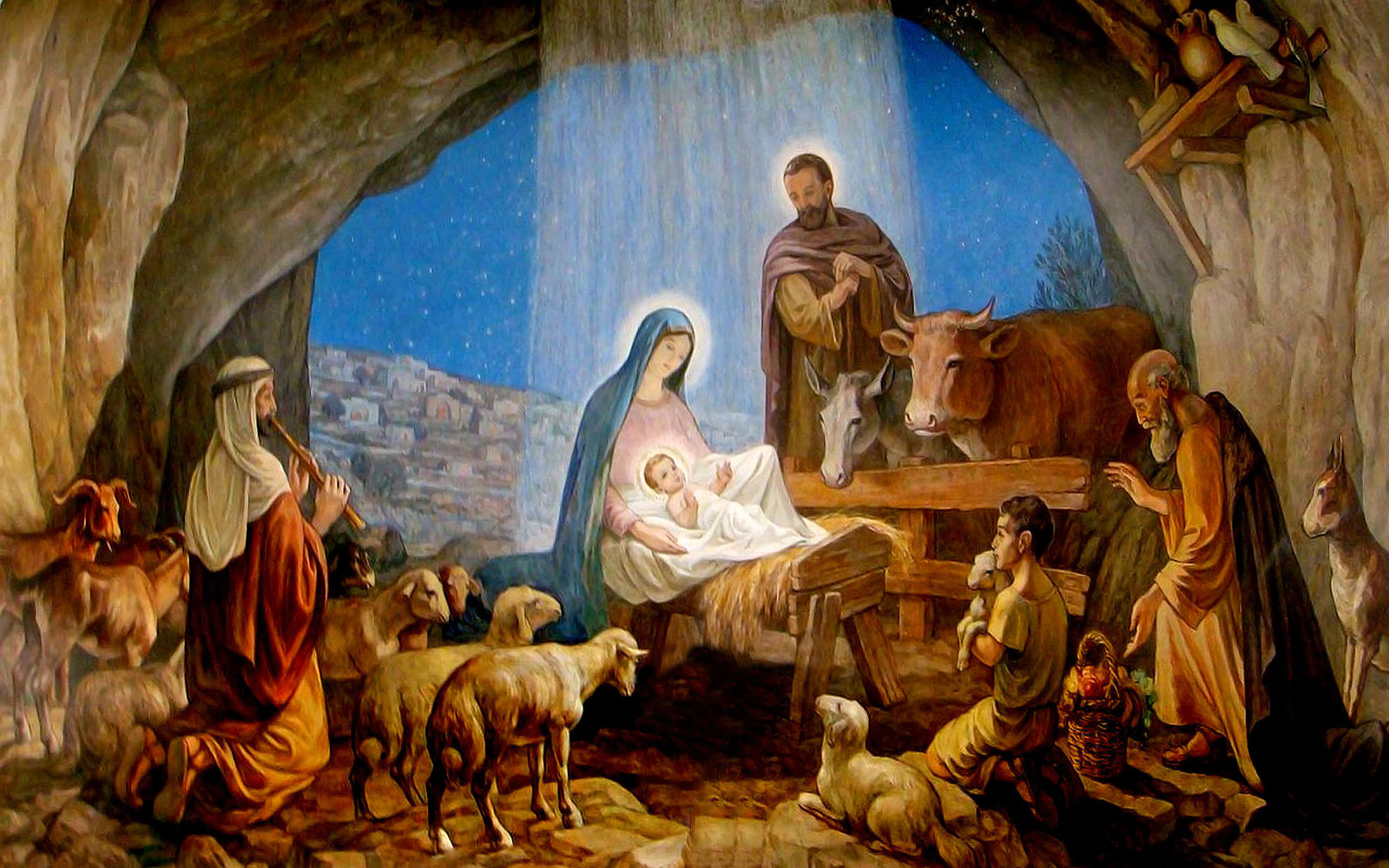
This Christmas

Nativity-Scene

How amazing is it that the God who created the universe was willing to take on the form of a mortal man, suffer the indignities of being human, and even let Himself be ridiculed and hung like a common criminal–all so we might be forgiven and brought back into relationship with Him?

Think about everything you hate having to do. God took out the trash, washed the dishes, fed the donkeys, and even bathed other people’s feet. He who could call upon a legion of angels to verify His power allowed Himself to be mocked by much lesser beings. He allowed himself to be whipped, spit upon, crucified.

He who could raise the dead allowed Himself to experience the horror of a last, desperate breath. He watched His own earthly mother mourn for Him. He knew the motley crew He called disciples would trudge home after His death in an unknowing sense of defeat.

Do you love someone? Are you willing to make yourself into the lowest common denominator for that someone? Would you be ridiculed for that someone’s sake? Would you stand in front of your longest rivals and let them call you a fake, fraud, loser? Would you really?

We humans like to humanize God. Yet, even though we are made in His image, we cannot even begin to fathom how far down the scale of existence our Lord traveled to become our Savior. Fortunately, we don’t have to understand it.

We just have to believe.

Christmas is about the most amazing birth that will ever happen in our world, when He who has the power to move mountains, took on the shell of a being incapable of lifting a pebble.

But if we fail to recognize His glory, even the rocks will cry out.