Posted in Poetry, Writing

For National Poetry Writing Month

20130401-161151.jpg

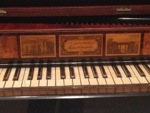
Because Poetry IS Music

Having neither time nor energy,
but only desire fueled by love
of words that dangle on the page
waiting for breath,

I fall with arms
wide-open into the black cavern
of this promise to wax poetic
daily for a month, celebrating
fellow dreamers, those who hope

with total spirit, whose hearts
are worn at the edges,
exposed on sleeves threadbare
but comfortable, living in skins
to which mostly loneliness
clings, who labor

for the right word as other men
sweat blood, all for the tinkle
of a syllable from lips whose masters
understand the value of sound
produced like ivory lovingly fingered.

Ramona Levacy
April 1, 2013

[A special note to my “followers:” If the title, tag, and poem weren’t clues enough, let me explain that I have decided to take up the challenge of writing a poem a day in April in honor of it being National Poetry Writing Month. I still plan to do my weekly post and apologize in advance for the extra emails you will get of poetry this month if you don’t particularly care for this genre. Thanks in advance for giving it a shot. Ramona 🙂 ]

Posted in Writers, Writing

Fuzzy Wuzzies

20130202-154529.jpg
Writing is like a stab in the dark, the results often more like trying to see the world through a poor camera lens on a cloudy, moonlit night than the crystal-clear image snapped by a fine, digital camera on a sunny day.

We writers are observers, and what we craft is our version of reality, a view colored by our individual experiences, our cultures, and the worlds in which we live. Some of us write for the love of language, for the poetic rhythms that only a fellow lover of words can truly appreciate. Others feel compelled by an inner message they wish to share or a story they just have to tell.

For the longest time, writers truly crafted in a sort of tunnel. Maybe, like the expatriates of Hemingway’s day, they found fellow wordsmiths with which to share fledgling works before finally publishing for a general audience. Many, like Dickens, found a sort of immediacy by publishing stories in installments in newspapers of the day. Today, we can gain responses to our writing in face-to-face groups, chat rooms, and blogs. The rapidity and ease with which we can express ourselves and get feedback sometimes tempts us into sharing a piece before its time.

Every writer needs a reader, else we might as well be standing at the edge of the ocean and scream into the wind, our words floating away and into nothing on the salty breeze. As a writer, it means something to get responses to what you have written. For one, you want to know if readers got the meaning out of your writing that you wanted them to get. For another, you want to know if what you are toiling to do well is actually making a difference. No one is an island. People need people.

Yet, no matter how much we share in this modern-day writing world, the craft of writing is most often a lonely business. Words flow best in the quiet, in the immersion of experience that only a set amount of time with just you and your blank computer screen allows as you delve into the depths of your brain for just the right turn of phrase or action to make your idea a reality.

“Find the right word,” Mark Twain advised, “not its second cousin.” That kind of dedication to creating a well-written work is really a rare quality. We can’t all create the great American novel.

But that doesn’t keep us from trying.

Posted in Uncategorized, Writing

One Small Step. . . .

Potential cover for "The Texas Stray"  Writing even a decent story takes time, especially when writing is the thing you do because you love it, the thing you do when you have finished doing all the tasks required of you for the job that pays the bills.  Even when you put the final period to a manuscript over which you may have slaved for definitely months and, more often, years, your work is far from done.  I would argue it is at that moment that the really hard work for your writing actually begins.

It is difficult to be one’s own editor, but the best of writers do just that.  Being a good editor means first giving yourself time between finished first draft and beginning revisions.  You need to be able to hold your finished work at arm’s length to view it, not still be in the stage where you are cuddling your words to your breast like a new-born child.

Once you have given your work a good three- or four-time-critical eye, it’s a good idea to have some test readers before you unleash your latest jewel on the unsuspecting public.  These test readers are ideally not your grandmother, who loves everything you do, or even your best friend.  The best test readers are people just like the ones you wrote your book for in the first place.  If you can manage it, a quick critique form to go along with your test book might offer you some very valuable information about just what your book needs to take it to that next level.

But still, your job is just beginning.  While others are perusing your work, you should be writing up the cover material for your work, the synopsis that will give the readers an idea of what your book is going to be about and that will make them want to read it.  What is the gist of your story?  What is the main thing readers will get out of reading your book?  Does your main benefit actually appeal to your target audience?

Next, you get to become a marketing expert as well as a writer.  You need to design cover art that will appeal to people flipping through ebook lists or scanning shelves at a physical bookstore.  Are the images you are using legal for you to use?  Again, does the art work convey a message that meshes with what happens between the covers?  Will it appeal to your audience?  How many possible great reads have you passed up because the cover did nothing to compel you to read more about it?

Besides the visual appeal of the cover, the actual title of your novel needs to be catching.  It is your hello to potential readers.  A dull title gets you ignored every time.  Titles are a bit easier to test than other aspects of your book.  People in your church, a survey of your friends on Facebook, even a few phone calls, can give you a pretty good idea if your title makes people interested, confused, or bored.

Of course, all this action has to proceed as you also strive to live your life.  You still have to earn a paycheck, wash the clothes, feed your family, clean your house, work on your blog and other outreach vehicles, keep up on paying your bills.  And, probably, you’re also already beginning the next, great project–for who among us doesn’t always have at least two or three ideas rumbling around in our heads that we want to finish some day?

As you might have guessed, I am finally reaching the point where I am closer to publishing my second novel, The Texas Stray.  The picture above is my second cover.  I’m not sure it will be the cover.  I still need to write up a decent sales pitch, and I am just beginning my third serious edit.  So, now is the time for me to practice patience.  I want to offer fiction that is worth reading and that gives a positive message about living a Christian life, even as it looks at the challenges every Christian faces.  Just because it is easy to self-publish these days does not mean that I should jump so quickly into publishing that I actually offer an inferior product.

So, here’s to all of us trying to grow an audience of readers who enjoy what we do, wearing all the hats in the publishing spectrum while we do so.  Thanks to all of you who support this blog by reading it each week.  I hope that your experiences are enhanced by what you find here.  I know my writing and life journey have been greatly blessed through the gift of having the opportunity to do this–on my own terms and in my own time.

God bless.

Posted in Christian Fiction, Writing

Actions Make or Break Your Characters

Actions speak louder than words, in life and in the characters that we write about. Isn’t it ironic that even though our readers will only know our characters through our words, that it is truly through the actions that our characters take that our readers will come to know them?
There are so many different ways to approach and develop a story. Some people have all their major plot moments mapped out before they begin to write. Others have a general idea and sort of let things grow organically as they work through the first draft, taking later drafts to fine tune and give cohesive direction to their stories. But most all of us, I think, have to have a pretty good idea about the characters we are writing about before we begin. If we don’t, we can easily slip into the fallacy of the character’s actions not truly reflecting the person we are trying to represent.
I cringe any time I am reading a story and I discover that a character who had curly hair in the beginning is suddenly moaning over her straight locks. Usually, the gaffs are minor like this, evidence that the writer got caught up in the larger story and somehow missed the minor details on the re-run through. But what about when the thing that the character does, especially in those twist-at-the-end kind of stories, goes entirely against what the character has been throughout the story? When the twist becomes the main reason for the story, the characters fade to the background and, frankly, my interest in the story fades with them.
When you’re writing Christian fiction, your characters actions become even more important. Not that your characters should be perfect, because we live in a flawed world and we, presumably, want to create stories that will help people live better in that flawed world. However, the characters in a Christian story should match their actions to the words that define their faith. When they stumble, they should eventually recognize the stumble, confess it to their Maker and do the work it takes not to make the same mistake again. Their actions should seek Christ-like living as much as we are able in this flawed world and with the Holy Spirit’s assistance.
For a Christian, words should be married to action. When we are best at accomplishing this, surely we are closest to living as Christ would have us live.

Posted in Christianity, Faith, Writing

Setting Our Sights Higher

November is upon me, and that makes it a good time to reflect back on what I thought I would accomplish this year when it began, and to think about what I want to accomplish in the year to come. Who was it that said that a life left unexamined is not worth living? Well, I find that I do better when I do examine the life that I am living, and setting clear goals is part of that examination.
This past year, I wanted to continue to make time for my family, do an even better job at practicing my yoga exercise, and make more inroads with my writing. I feel very good about my achievements in this area. I not only go to my yoga classes, I also teach yoga a couple of days each week. I have had several good visits with my family besides daily conversation on the phone. (Thank goodness for unlimited calling plans!) I have also started this blog to help reach out to others interested in Christian writing and living a Christian life in a modern world.
I am also pleased to say that I finished the first draft of my second novel and am halfway through the first draft of a third. The novel I just completed is a contemporary Christian romance, while the third book is an historical mystery.
So, I’m already well on my way to setting some goals for the coming year. First of all, my second novel has naturally lent itself to a spin-off story–something I hadn’t planned or even realized until I finished the book. Secondly, I want to complete the first draft of my historical mystery.
I’m not sure that I will be completing my second novel for publication by the end of 2012. The one thing about creating truly good writing is to give time to yourself between that first draft and your serious editing. After all, when you first complete something, you really feel close to it. It’s your baby, that you snuggle close, too close to see the flaws and improvements that must be made. Because I want to make sure that what I write is good Christian fiction, I have to give myself distance between my first draft and my editing process. I also have to pray about the message the book should be giving and hope that God gives me enough insight to ensure that I achieve that message through my story.
When it comes to personal growth, I find that turning to my Bible is the best place to start for goal setting. For example, all I need to do is contemplate the fruit of the Spirit or one of Paul’s letters to the early churches to come away with a clear list of the kind of race to run in this walk with Christ.
How do you approach your daily living? Does goal setting make a difference in your life? In your relationship with God? Before the holidays are upon us, take a moment or two to reflect on where your life has been this past year, and where you think God wants it to go in the year to come.

Posted in Writers, Writing

Fish or Cut Bait?

I am working on a short story collection, among other things, and in doing so, I have dredged up some of my former “masterpieces” to consider. I have begun by typing up one of the older ones that I no longer had a text file on, at first just typing what was on the page and doing some small edits here and there.
But, as I came to the conclusion of my previously written story, I realized that I hadn’t done quite as good a job as I thought at the time. In fact, I might even have written a total bomb. I can only say that my creative writing instructor at the time must have taken mercy on me, or given me a pass for the totality of my work.
So, now is the time to make the decision ever writer has to make at some point in the process of most works. Do I have something worth fighting for as a final product, or should I file this one in the round cabinet, where so many of my lost hopes have found their final resting place?
For this story, I find that there are several elements in the original story when it comes to the characters and even the action that I just failed to fully develop. I, being much younger and less experienced in the world, simply let the ball drop. The problems and conflicts and possibilities of the characters and plot, I find, do still intrigue me. And, I know that I am more qualified than I was at the time to further explore the relationships that I barely skimmed the surface of on my original attempt.
The downside to my story is I have a central action that needs to take place that I know very little about and have very little interest in personally. So, I have to get the discipline to study this area enough to make the details of the action believable, or I have to decide to change the setting and circumstances of the story to avoid having to do the research to ring true. How important is the original central conflict to the true conflict I find developed as I drafted the piece, the conflict that I think I could develop into something much more fulfilling?
These are important issues to any story re-write. Becoming a good writer is so much more than just dreaming up a storyline and characters. We have to also be winnowers, shifting the chaff from the wheat. And that is always a bit easier to do the longer it has been since you first wrote something. Even Ernest Hemingway said that the first draft of anything is trash. That’s so hard to take to heart when you are in the early drafts of anything new. But, when you have the luxury of time to reflect on your writing, it’s actually so right.
For now, I’m going to keep fishing on this short story. Only time will tell if I should truly let all or part of the story go.

Posted in Christianity, Writing

Pursuing Gentleness

Paul admonishes Timothy to pursue righteousness, godliness, faith, love, endurance, and gentleness. I am no Timothy, but if I am trying to use my writing to share Christianity, then surely I should also take these pursuits to heart. It goes without saying that righteousness and godliness are challenges every day. However, I think one of my biggest challenges from this list is actually gentleness.
Why would I say that gentleness is the hardest pursuit? I believe it is because gentleness is the one admonition that truly requires us to remove all judgment, see things from others’ perspectives, and gain our best hope of leading someone out of the darkness and into the light.
In other of his writings, Paul admonishes to lead other’s gently, especially those who have turned away from God in the things that they do. He also warns to be careful not to fall into the same trap of evil as the one you are trying to turn back to God. Sin is so tempting because it is the easy way. Trying to make the right choices is much more challenging, which is why we must have Jesus in our lives in order to have a chance of doing what is right. The easiness of sin is also why being gentle when we are trying to instruct in ways that are opposed to sin is so important.
Of course, Paul makes it clear in other texts that there are times, once gentleness has been tried unsuccessfully, when a person must be handed over to the devil in the hopes of shocking that person into coming back to the light.
But this kind of heavy hand is not the purview of a writer of fiction. No, I should reflect a gentleness that expresses the faith, love, endurance, righteousness, and godliness of a strong walk with Christ.
Thankfully, my writing is something I can edit, ponder, and “perfect,” not like my conversation, which is often quick to judgment and often not gentle. So, like all readers of Timothy, I must strive every day to be gentle, not just when I am trying to write something. And that may just take the most endurance of all.

Posted in Christian Fiction, Christianity, Writing

Defining Christian Fiction

Just what is good, Christian fiction, anyway? Should it be all sugary and simple, with clear black and white edges? Should there be major near-misses and only glimpses of tragedy? Or should it be all messy and obscure with very few answers and more questions than you can shake a stick at?
For myself, I like to break the phrase into its obvious parts. First, it is good fiction. Good fiction shows without telling, renders the reader through the experience, has vibrant language full of nouns and verbs, reflects the age in which it is set, leaves the reader with an enhanced sense of what it means to be human.
Christian fiction centralizes primarily on characters who believe in Christ and are striving to live accordingly or on characters who are coming to know Christ. Its characters should reflect their knowledge of the Bible, make choices according to its precepts, ask for forgiveness when they inevitably stumble.
Just as “a life worth knowing must be lived,” I believe good, Christian fiction must reflect what it means to really be Christian in any age. That includes making bad choices sometimes, having really bad things happen to really good people, and dealing with wanting God to say yes when you really know, deep down, that His answer is no.
Abraham Lincoln once said of Christianity, “it hasn’t been tried and found wanting. It hasn’t been tried.” The reality of that statement is what makes me want to write. I think God gave me a talent for writing so I could help myself figure out what it means to be Christian in this modern world. I also hope that I am supposed to be sharing that talent (and that I don’t just have some super ego that wishes that’s what He wanted from me).
I take very seriously the admonition that teachers of the Word are held accountable for what they teach. I also take seriously the power of fiction to make us think differently about the world in which we live. If I create good fiction and Christian fiction, hopefully I will help somebody besides just myself understand the challenges that stand between our own needs and the simple but powerful edict that sums up Christianity–to love.

Posted in Writers, Writing

Time is a powerful editor

If you ever wondered who your best critic may be, don’t plan on your present self for your most recent work. Also, don’t plan on your mother, or favorite uncle, or even your meanest aunt. For one thing, people who love you will always see your work through that love filter. For another, chances are these loving people also share a big cache of the same experiences you do. They can, in other words, read into what you may have actually failed to convey to an audience that hasn’t seen you in your nappies.

You can be your best editor, eventually. When you have just finished the first draft of something is not the time to be that editor. When you have just written something, it is still too new and fresh, your baby, cuddled in your arms and loved. Put it away for a time, as long as you can and still make your deadlines, before returning to it with an editor’s eye.

I was reminded of this advice, heard so often from experienced and successful writers, as I was digging through my old short stories this week to begin working on a collection to publish. Some of the stories are so old, I have somehow managed to lose the original files. In all honesty, some of them may have even been typed up on the old electric where I began to learn the keyboard in my high school days.

The point is not my age showing, but that, as I have begun to look at these stories afresh, I am seeing the nuances I failed to offer in language and structure the first time around. I can also see how much I have grown as a writer through the years, as real-life experiences have tempered my abilities to paint pictures with words.

Time can be the great healer, then, of hearts and wounds, and words.

Posted in Writing

Finding my writing feet

I have been writing stories and poetry since I learned to read and write. Before that, like all of us, I was writing stories in the childplay of sea-faring adventures where the living room couch became a schooner or the jungle-infested journeys where my stuffed animals were my companions.

I was never much one for the dress-up play. That was too “girly.” I was much more interested in the ideas that could be conjured from the history and culture that surrounded me in my home smack-dab in the middle of Indian Territory. There were flints and arrowheads to be found, after all. Or ghosts to discover in the attic or narrow closets of the 100-year-old home where I lived. My sister and I, entombed in the past, made secret plans to knock out the wall of the utility room, behind which we were convinced lurked a hidden room, full of treasure–or skeletons.

Was it any wonder I slept with a night light? When you are young and sometimes too smart for your own good, a great imagination can be as much a detriment as a blessing.

I learned to love the rhythm of words from the music I embraced. Old country songs, gospel hymns, and true rock-and-roll. Even though I was high school age in the 80s, I couldn’t tell you anything about the music of that era. My radio station was tuned to oldies radio, where Buddy Holly and Paul Simon taught me all I needed to know about the love of language and the ability to take people to another place through words.

In the beginning was the Word, John tells us. I embrace the full depth of that concept. For, without words, which even God used to breathe this world into existence, where would we be? How would we know anything? Define the self? Communicate the full breadth of what it is to love?

I celebrate with other wordsmiths our love of language and encourage us all to keep up the good fight of perfecting what it is to make meaning for ourselves and others through this very precious gift of language with which the good Lord has blessed us.