Posted in Christian Living, Love

For Those Whom We Remember

PhotoFunia-especially love

The people who make a difference are not the ones with the credentials, but the ones with the concern.  –Max Lucado, And The Angels Were Silent

In a world where a YouTube video can make a dancing toddler or wacky kitten “famous,” it doesn’t hurt to step back every once in a while to gain some much-needed perspective.  Max Lucado gives this perspective with just a few questions:

  • Can you name the last five Nobel Peace Prize Winners?
  • How about the Pulitzer Prize Winner from last year?
  • Name five people who had a profound impact on your life.
  • How about ten people you have a great memory about?

Like me, I’m sure you had a difficult, or impossible, time with the first two questions, but a much quicker response to the final two questions.  Lucado explains that the difference in your ability to answer these questions comes from the value of the second set of people in your life.

Nobel and Pulitzer Prize winners may be the best in their area of expertise, but knowing how to write a profound play, ultimately, doesn’t mean as much to me as experiencing the helping hand I really need from a person who knows me and cares enough to do something for me.

Isn’t the difference between credentials and concern summed up in Hosea, in the verse that Christ repeats during one of his encounters with the Pharisees?:

If you had known what these words mean, ‘I desire mercy, not sacrifice,’ you would not have condemned the innocent (Matthew 12:7).

The truth of Christ’s sacrifice for us is that God’s main desire is not the continued spilling of blood (Christ gave the ultimate sacrifice for us once and for all on the cross), but our earnest striving to be kind, to love, to show concern.

How do you measure your success?  Do you spend too much time, like I often fall into the trap of doing, measuring yourself against the kinds of jobs other people have, or what’s in your bank account, or what kind of clothes you wear?  Even when you think you are trying to measure yourself according to God’s standards, do you fall into the trap of thinking bigger is better?  In other words, if you aren’t building a church or working on a mission trip, do you consider yourself a failure?

Luckily for us, God has a different measuring stick.  If we can be that concerned person for even one other, then we have made strides in His kingdom we may never totally fathom.  Do you want to think according to God’s measurement of success or man’s?

I always answer God’s to that question, and I always find myself slipping back into a laundry list of credentials instead of concern!  So, I propose thinking about success from a concern perspective.  How will that look?  Where do I begin?

It seems one of the best places to begin is by thinking hard about the people, outside of my family, who have shown the most concern for me in my life.  What impact did they have, exactly?  What did they do to make me feel appreciated, worthy, loved?

I might begin with Miss Patty, who taught me the Bible every Sunday during a particularly trying time in my life.  She was the one who walked me through the path to salvation as it is explained in the book of Romans.  She pointed out the verse in Ephesians that assured me I had been “sealed in that holy spirit of promise” when I had my first doubts.  She checked up on me long after I was in her Sunday school class.

Then there were the “mighty four,” a group of women a generation older than I who befriended me as I entered full adulthood.  We worked together at a community college, shared meals and miseries, my first real gang of friends.  When they teamed up to surprise me for one of my birthdays, I felt like one of the most important people in the world.  They probably won’t even know that until they read this paragraph. These are the women whose love will be in me for the rest of my life.

Some of those who show concern are in my life for but a moment.  Every time a gentleman opens a door for me, I feel respected and thankful.  When I walk into a place I haven’t been in a while and yet someone remembers me, I feel “important.”  Even when more than one person seems genuinely interested in seeing me on a Sunday morning, I think, wow, maybe I’m not such a pain. Like Sally Field, my inner self thinks, “They like me; they really like me.”

And no, I am not always a pathetic dweeb whose self talk is negative.  I often have to humble myself or be humbled.  But, my point is that because others have focused on concern and not credentials, I have been drug out of many a down moment.  And don’t we all have down moments that could use a little concern now and again?

I think that’s the kind of love God uses to measure us by, the treasures in heaven that Jesus admonishes us to strive for.  So, the next time I try to berate myself for not doing enough, I think I’ll make sure my measuring stick is marked with concern and not credentials, with kindness and love instead of silver and gold.

In Christ,
Ramona

Posted in Faith

3 Ways to Fertilize Your Faith

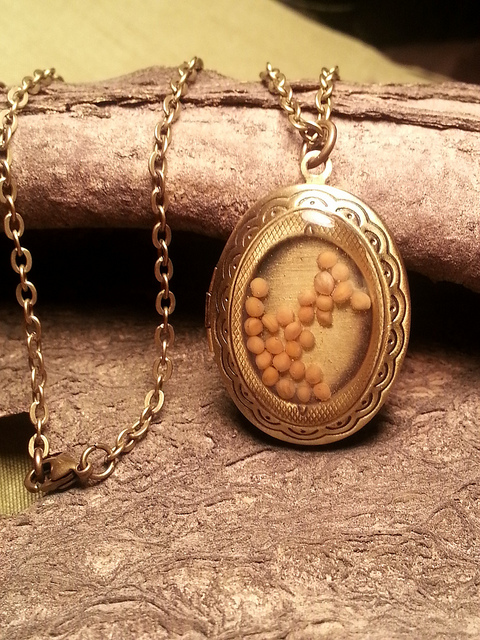
Grow your mustard seeds of faith

That the communication of your faith may become effectual by the acknowledging of every good thing which is in you in Christ Jesus.  (Philemon 1:6)

 1: Know WHAT You are Fertilizing

When it comes to plant products that have been bottled to be sold as food supplements in a health store, I can tell you more than you ever wanted to know.  But, when it comes to real plants in the real world?  Well, I’ve been known to kill bamboo!

Despite my brown thumb, my West Texas roots have taught me that knowing your crop is the beginning key to success.  When to plant, when to harvest, when to pray for rain–these are just some of the elements that go into the very hard job of being a farmer.

Just like knowing the plant you want to grow before you can expect to succeed in growing it, you should also begin your goals to grow your faith by understanding what faith means.

Hebrews 11:1 tells us that faith:

is the substance of things hoped for, the evidence of things not seen.

Ralph Waldo Emerson states it this way:

All I have seen teaches me to trust the Creator for all I have not seen.

The heroes of faith are further examples to help us define the concept.  From Noah who believed enough to build an Ark to Mary who had the courage to bring the Son of God into the world, the Bible is replete with people who understood faith in the most profound way possible, by believing and doing.

The most important step of faith in this modern world is the one you take to submit your life to Christ as your Savior.  When you admit to Him that you are a sinner who has no chance of redemption without Him, you climb the first rung of the ladder toward a closer relationship with God that is the ultimate goal of faith.

“I believe in Christianity as I believe that the sun has risen: not only because I see it, but because by it I see everything else.”
― C.S. Lewis

Faith is believing in God when things are bleakest as well as when things are going well for you.  Faith is the beginning of hope, which is the most important quality for us to have if we expect to make it through the valleys of this life.  Faith is knowing that God IS and the He loves me.

2: Know HOW to Fertilize


With faith as small as this mustard seed, Christ says we can move mountains.


“God will not look you over for medals, degrees or diplomas but for scars.”  –Elbert Hubbard

As Elbert Hubbard explains, in order to grow a belief in God, we cannot expect to proceed easily.  Christ promises us a light yoke, but not a life without trouble.  In fact, it is through troubles that we learn perseverance, which builds character and ultimately leads to hope (Romans 5:4).

Faith is not the belief that God will do what you want. It is the belief that God will do what is right.
― Max Lucado, He Still Moves Stones

In order to grow our faith, we have to exercise it, like a muscle.  As with all things concerning our relationship with God, we can begin that exercise by studying His word, spending time in prayer with Him and joining in fellowship with other believers to share our belief.

“Never be afraid to trust an unknown future to a known God.”  ― Corrie ten Boom

Other ways to fertilize our faith is to learn to listen with intent to the voice of the Holy Spirit in us.  When we feel the pull to reach out to help a stranger or say something about our beliefs to our acquaintances, we should become more accustomed to following those feelings.  The more we know about what the Bible says, the more we will know it is God talking to us and not our own interests.

Fertilizing our faith will often be uncomfortable because it will mean stepping outside our normal comfort zones.  Sitting in my recliner writing a blog is not the easiest thing to do on a Sunday afternoon, since sitting here doing nothing at all would be easier, but writing has always at least been comfortable for me.  Making my way to church on Sunday is stepping outside my comfort zone.  As an introvert, I am highly challenged in group settings, and large groups can lead to sensory overload for me.

But, going to church improves my faith.  Besides learning things about the Bible I didn’t already know, my church attendance has also allowed me to meet a wide variety of people who share my same goals and struggles but who approach them in ways I would have never thought of but greatly admire.  I have learned better ways to approach life’s problems and even to pray by participating in church, fertilizing my faith.

3: Make Faith Personal

The beginnings of this blog post came when I was thinking about how helpful God has been to me in my life, despite my literally clinical problem with worry.

I have Generalized Anxiety Disorder, which comes with unhealthy bouts of depression.  With the proper medication, nutritional support, and help from my family and friends, I lead a pretty productive life.  But the thought that I had earlier this week was thinking about how I spend so much time worrying about things that are going to happen, but when something really does happen, I am somehow able to be really strong and make it through the bad thing.

My power in times of crisis doesn’t come from medicine or me, but from God.  So, as I was thinking about this earlier this week, I was asking myself, how come I’m not doing a better job at remembering how often God comes through for me when I let worry win out over my faith? 

So, when I suggest making your faith personal, I mean just that.  However you do it–journaling, scrapbooking, or making time to remember on a regular basis–make your faith stronger by building on your personal experiences with faith.  We don’t have to be prophets to have real experiences with God.

In fact, when Christ sent the Holy Spirit to dwell in us, He made it more possible than ever for “regular” people like you and me to experience God every day.  Of all the people in history, we can have as close a relationship with God as any of the heroes of faith you’ll find in Hebrews 11.

I will say of the LORD, “He is my refuge and my fortress, my God, in whom I trust.”  –Psalm 91:2

In Nicole Nordeman’s song, What If?, the singer asks:

What if you jump, just close your eyes?  What if the arms that catch you, catch you by surprise?
What if He’s more than enough?  What if it’s LOVE?

Faith is personal, but it’s not something to be hoarded.  Sharing our experiences of faith with others is what helps us spread God’s love in a broken world.  Faith has the courage to admit that what good we do comes from God and not ourselves.  Faith has the courage to step out knowing we may stumble.  Faith knows that even if we wind up with egg on our face, God catches us and always loves us.

“I know now, Lord, why you utter no answer. You are yourself the answer. Before your face questions die away. What other answer would suffice?” ― C.S. Lewis

Each time I hit post, I risk offending somebody, looking foolish, or making an actual mistake in a cyberspace where they say nothing ever actually goes away.  But faith without works, as James tells us, is a dead faith.  How can I not risk everything for the One who gave everything for me?

Grow your faith muscle this week.  If we truly believe, what other choice have we?